Let’s be honest, it’s been lurking in the corner of your home office for years. That old office chair—the one with the permanent lean, the squeak that announces your every move, and the cushioning that’s more of a memory than a feature. You’re finally wondering What To Do With An Old Office Chair, not just because it’s an eyesore, but because your back, neck, and shoulders are sending you some not-so-subtle signals. Getting rid of it is one thing, but what comes next is the real game-changer for your health and productivity.
Before we dive into upgrading your seating situation, let’s tackle the immediate problem. You can’t just leave that old chair by the curb. Here’s a quick, responsible breakdown of your options.
First Things First: How to Responsibly Dispose of Your Old Chair
Figuring out what to do with an old office chair in an eco-friendly way is the first step. Most chairs are a mix of plastic, metal, and fabric, making them tricky for standard recycling.
Can You Recycle an Old Office Chair?
Yes, but it often requires a bit of disassembly. Your local recycling center or waste management facility will have specific guidelines. Typically, you’ll need to separate the metal components (base, casters, gas lift cylinder) from the plastic and fabric parts. A quick call or a visit to their website can save you a ton of hassle.
Donating Your Chair: Give It a Second Life
If your chair is still functional—even if it’s not doing your back any favors—someone else might be grateful for it. Consider donating it to:
- Local charities or thrift stores like Goodwill or The Salvation Army.
- Community centers, schools, or non-profit organizations.
- A student in your neighborhood who needs a desk chair for their dorm.
Getting Creative: Upcycling and Repurposing
For the DIY-inclined, an old chair can be a new project. A fresh coat of paint, new fabric on the seat, or even transforming it into a quirky planter for your porch can give it a new purpose. It might not be fit for an eight-hour workday anymore, but it doesn’t have to end up in a landfill.
Why That Old Chair Was Holding You Back
Now that the old one is out of the picture, let’s talk about why this change is so crucial. That standard, one-size-fits-all chair was likely a silent contributor to your daily aches and pains. Most basic office chairs lack the fundamental features needed to support the human body for prolonged periods.
Think about it: they have minimal to no lumbar support, non-adjustable armrests that force your shoulders to hunch, and a seat pan that’s either too long or too short. Over time, this forces your body into an unnatural posture, leading to:
- Chronic lower back pain
- Neck and shoulder strain
- Reduced circulation in your legs
- Fatigue and a serious drop in focus
It wasn’t just an old piece of furniture; it was a barrier to your well-being.
The Ergonomic Upgrade: More Than Just a New Chair
This is where your journey truly begins. Replacing your old seat isn’t about finding another chair; it’s about investing in an ergonomic one. This is a tool designed to work with your body, not against it.
So, What Exactly Is an Ergonomic Chair?
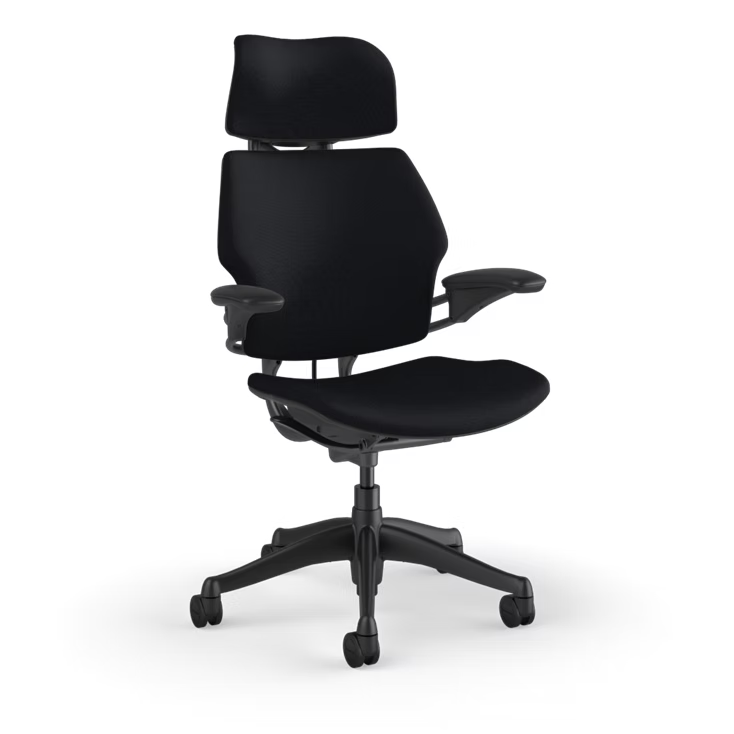
An ergonomic chair is a highly adjustable chair designed to support the natural posture of the human body, promoting health and efficiency. It’s built on the principle that your chair should adapt to you, not the other way around. Every curve, lever, and feature is there for a reason: to keep you comfortable, supported, and focused.
The Core Benefits: Why Your Body Will Thank You
Switching to an ergonomic chair isn’t a luxury; it’s a fundamental part of a healthy workspace. The benefits are almost immediate.
- Posture Correction: It actively supports the natural S-curve of your spine, especially the lumbar region, preventing you from slouching.
- Pain Relief: Proper support alleviates pressure on your spine, hips, and neck, drastically reducing the chronic pain associated with long hours of sitting.
- Increased Productivity: When you’re not constantly shifting to find a comfortable position or distracted by back pain, your focus and concentration skyrocket.
- Improved Circulation: Features like a waterfall-edge seat pan reduce pressure on the back of your thighs, promoting healthy blood flow.
What to Look For: Key Features of a Truly Ergonomic Chair
Not all chairs that call themselves “ergonomic” are created equal. To ensure you’re getting a chair that will genuinely support you, look for these non-negotiable features.
The Must-Have Adjustments
- Seat Height: Your feet should be flat on the floor with your knees at a 90-degree angle. The chair’s height must adjust to accommodate your leg length.
- Seat Depth: You should be able to sit with your back against the backrest and have about two to three fingers’ worth of space between the edge of the seat and the back of your knees. This prevents pressure on your arteries.
- Lumbar Support: This is the big one. The chair must have adjustable lumbar support that fits into the natural curve of your lower back. It should be adjustable in both height and depth.
- Backrest Angle (Recline): A good chair allows you to recline and lock the backrest in various positions. Periodically leaning back can help take the load off your spinal discs.
- Armrests: Look for armrests that are adjustable in height, width, and pivot. They should support your forearms, allowing your shoulders to relax. Poorly positioned armrests are a primary cause of neck and shoulder tension.
“I often tell my patients that an ergonomic chair is not a piece of furniture; it’s a piece of health equipment. The right chair can be as critical to preventing chronic pain as proper exercise. It’s an investment in your long-term physical well-being.”
— Dr. Emily Carter, Physical Therapist
Common Mistakes to Avoid When Choosing Your New Chair
Now that you know what to look for, let’s cover the traps people often fall into.
- Prioritizing Aesthetics Over Function: That sleek, minimalist chair might look great on Instagram, but if it lacks lumbar support and adjustability, it’s no better than the one you just got rid of.
- Ignoring the Materials: Breathable mesh for the backrest is great for airflow, while a high-density foam cushion for the seat provides durable support without bottoming out.
- Forgetting to ‘Test Drive’: If possible, try sitting in a chair before you buy it. If you’re buying online, check the return policy. Your body needs to feel the difference.
- Thinking ‘One-Size-Fits-All’: A great ergonomic chair for a 6’4″ person will be a terrible fit for someone who is 5’2″. Pay close attention to the recommended height and weight limits.
FAQ: Your Ergonomic Chair Questions Answered
Here are some common questions we get from people making the switch.
1. Is an expensive ergonomic chair really worth it?
Absolutely. Think of it as an investment in your health. A cheaper chair might save you money upfront, but it could cost you far more in physical therapy, lost productivity, and discomfort down the line. A quality chair is built to last for years.
2. How long does it take to get used to an ergonomic chair?
It can take a few days to a week. If you’ve been slouching for years, sitting with correct posture might feel strange at first. Your muscles need time to adapt to being properly supported.
3. How do I know if my chair is set up correctly?
Your feet should be flat on the floor, your back should be flush against the backrest with the lumbar support fitting into your lower back’s curve, and your arms should be resting gently on the armrests at a 90-degree angle. Check out [our guide to setting up your ergonomic workstation] for a step-by-step walkthrough.
4. Can an ergonomic chair fix my back pain?
While it can’t cure underlying medical conditions, it is one of the most effective tools for preventing and alleviating posture-related back pain. By providing proper support, it removes the daily strain that causes and aggravates pain.
5. How often should I replace my ergonomic chair?
A high-quality ergonomic chair from a reputable brand can last anywhere from 7 to 15 years. The lifespan depends on the quality of the components, like the gas lift, casters, and foam density.
The Takeaway: It’s More Than Just a Chair
Deciding what to do with an old office chair is the perfect catalyst for a much bigger, more important decision: the decision to prioritize your health. Tossing out that old, unsupportive seat is the first step. The next is to invest in a tool that will support you through every project, every deadline, and every long day of work. Your body will thank you for it, and your newfound focus and comfort will be the ultimate proof that you made the right choice.