If you’re a tall individual, finding an ergonomic office chair that truly fits your unique physique can feel like an endless quest. Have you ever settled into a chair, only to feel discomfort almost immediately? Often, the culprit isn’t just the height, but a less obvious yet equally critical feature: seat depth adjustment. This seemingly minor control is, in fact, a cornerstone of proper ergonomic support, especially for those with longer legs. Understanding why and how to correctly utilize seat depth adjustment is essential for transforming your sitting experience, alleviating pain, and boosting your productivity.
1. What is an Ergonomic Chair?
An ergonomic chair is far more than just a seat; it’s a sophisticated tool designed to support the human body in its natural, healthy posture during prolonged sitting. Unlike conventional chairs, ergonomic models offer a multitude of adjustments, allowing users to customize the chair to their specific body dimensions and preferences. This adaptability is key to preventing discomfort and promoting long-term well-being.
1.1. Definition of Ergonomic Chair
At its core, an ergonomic chair is engineered to maximize comfort, support, and efficiency by conforming to the user’s body. It features adjustable components that work in harmony with the natural curves and movements of your spine and limbs, thereby minimizing stress and strain on your musculoskeletal system.
1.2. Benefits of Ergonomic Chair
The advantages of investing in an ergonomic chair extend far beyond simple comfort.
- Posture Improvement: By providing adequate support to your spine’s natural curve, an ergonomic chair helps you maintain an upright, healthy posture, preventing slouching and its associated problems.
- Back and Neck Pain Reduction: Proper lumbar support, coupled with appropriate seat height and depth, significantly reduces pressure on your lower back and neck, common areas for office-related pain.
- Increased Productivity: When you’re free from physical discomfort, your focus and concentration naturally improve, leading to greater efficiency and output throughout your workday.
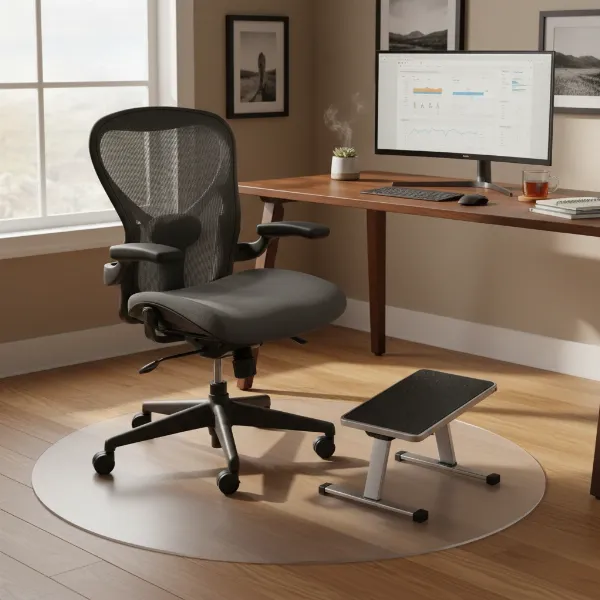
 Tall person sitting comfortably in an ergonomic office chair with optimal seat depth adjustment.
2. Key Components of an Ergonomic Chair
While every part of an ergonomic chair plays a role, certain components are particularly crucial for tall individuals and directly interact with seat depth.
2.1. Headrest
A well-designed headrest, often adjustable in height and angle, provides essential support for the head and neck, especially when reclining. For tall users, ensuring the headrest extends high enough to cradle the head comfortably is vital to prevent neck strain.
2.2. Backrest
The backrest supports the entire spine, and its adjustability is paramount.
- Lumbar Support: This critical feature supports the natural inward curve of your lower back. For tall individuals, adjustable lumbar support ensures that this crucial area receives tailored cushioning and pressure relief, irrespective of your torso length or seat depth setting. Some chairs also feature “back depth adjustment,” which effectively moves the backrest forward or backward, providing a similar outcome to seat pan adjustment by altering the available seated space.
2.3. Armrests
Adjustable armrests, typically allowing for height and sometimes pivot or width adjustments, are important for supporting your arms and shoulders, taking pressure off your neck and upper back. For taller users, ensuring they can be set high enough to keep elbows at a 90-degree angle while typing is essential.
2.4. Seat Cushion
The seat cushion’s material and design significantly impact comfort and pressure distribution. High-density contoured foam cushions, for example, can mold to your body’s shape, distributing pressure evenly and alleviating discomfort. For tall individuals, particularly if a chair has a shallower fixed seat depth, a quality cushion with pressure-relieving properties becomes even more important to prevent pressure points under the sit bones and avoid pelvic tucking.
2.5. Chair Base
A stable chair base, typically a five-point star design with smooth-rolling casters, ensures safety and ease of movement. For taller individuals, a robust base is necessary to support their potentially greater height and weight, providing reliable stability during all movements.
3. Why Seat Depth Adjustment is Crucial for Tall People
For tall individuals, seat depth adjustment is not just a luxury; it’s a fundamental requirement for ergonomic health and sustained comfort.
The Tall Person’s Predicament
Many standard chairs are designed for the “average” person, often leaving tall users in an awkward and uncomfortable position. If the seat depth is too shallow for your longer thighs, you’ll find that only a portion of your upper legs is supported. This creates high-pressure areas under your sit bones and behind your knees, often forcing you to tuck your pelvis or slouch forward in an attempt to relieve the pressure. This can make you feel like you’re sitting in a child’s chair or unable to recline properly, leading to significant discomfort.
Achieving Optimal Thigh Support
Adjustable seat depth allows you to extend the seat pan forward, providing full and even support for your entire thigh. This ensures your weight is distributed properly across the seat, preventing undue pressure on any single point. The goal is to have approximately two to three inches (or a clenched fist) of space between the front edge of the seat and the back of your knees when you’re sitting fully against the backrest. This gap is vital for proper leg positioning.
Promoting Healthy Circulation
A seat that is too shallow can cause the front edge to press uncomfortably into the back of your knees, restricting blood flow. This can lead to numbness, tingling, and even contribute to conditions like varicose veins over time. By adjusting the seat depth, tall individuals can ensure that the edge of the seat clears the sensitive area behind their knees, allowing for unobstructed circulation and reducing the risk of discomfort and long-term health issues.
Maintaining Correct Posture
With the correct seat depth, your feet can rest flat on the floor (or a footrest), and your knees will naturally form a 90-degree angle with your hips. This position aligns your spine, supports your pelvis in an upright posture, and helps maintain the natural “S” curve of your back, preventing slouching and reducing strain on your lower back and neck.
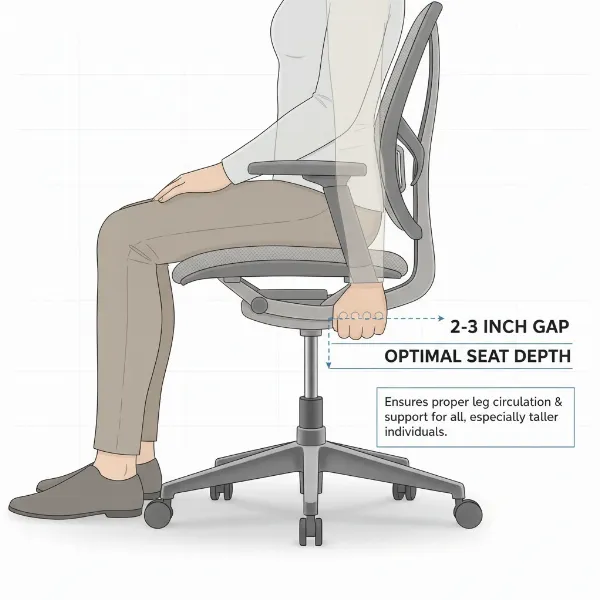 Person demonstrating the fist rule for optimal ergonomic chair seat depth adjustment.
4. How to Properly Adjust Seat Depth
Adjusting your ergonomic chair’s seat depth is a straightforward process that can dramatically improve your sitting posture and comfort.
Identifying Adjustment Mechanisms
Most ergonomic chairs feature a lever, knob, or switch typically located on the underside of the seat, often on the side. Some chairs use a “seat slider” mechanism that allows the entire seat pan to glide forward or backward horizontally. Other designs might adjust the backrest itself to provide more or less effective seat depth.
Step-by-Step Guide
- Locate the Mechanism: Feel under your seat for a lever or knob. It’s usually distinct from the height adjustment lever.
- Engage the Adjustment: Pull the lever up, turn the knob, or slide the switch to unlock the seat pan.
- Adjust the Depth: While seated, press your back firmly against the backrest. Then, slide the seat pan forward until you achieve the ideal gap. For tall individuals, this generally means extending the seat further out.
- The “Fist Rule”: Ensure there’s a two to three-inch gap (roughly the width of your clenched fist) between the front edge of the seat and the back of your knees. Your feet should remain flat on the floor with your knees at a 90-degree angle.
- Lock in Place: Once you’ve found the optimal position, release the lever or tighten the knob to lock the seat depth securely.
5. Choosing an Ergonomic Chair with the Right Seat Depth Adjustment
Selecting the perfect ergonomic chair, especially when considering seat depth, requires careful thought.
5.1. Identify Your Needs
Before shopping, consider your daily routine. How many hours do you spend sitting? Do you have any existing back, neck, or leg issues? What’s your budget? Tall individuals spending long hours at a desk will benefit most from a chair with extensive adjustability.
5.2. Essential Features
For tall users, adjustable seat depth should be a non-negotiable feature. Look for chairs that clearly advertise this functionality, often referred to as a “seat slider” or “seat pan adjustment.” Also, ensure the chair has a high backrest, adjustable height (allowing your feet to be flat on the floor or a footrest), and robust lumbar support.
5.3. Material
Chair materials affect comfort and durability. Mesh offers breathability, ideal for warmer climates. Leather provides a premium feel and durability, while fabric can be comfortable and varied in texture. Consider which material best suits your environment and personal preference.
5.4. Reputable Brands
Many leading ergonomic chair brands offer models with excellent seat depth adjustment suitable for tall individuals. Brands like Herman Miller, Steelcase, and Haworth are renowned for their highly adjustable and durable designs, often providing deeper seat pans or extensive adjustment ranges.
5.5. Testing and Trying
Whenever possible, try the chair in person. Sit in it for a few minutes, adjust all the features, and pay close attention to how your body feels, particularly your thighs and the area behind your knees. If an in-store visit isn’t possible, read comprehensive online reviews focusing on feedback from tall users.
Conclusion
The importance of ergonomic chair seat depth adjustment for tall individuals cannot be overstated. It’s a fundamental feature that directly impacts posture, circulation, and overall comfort, transforming a potentially painful sitting experience into one that supports health and boosts productivity. By understanding why proper seat depth is crucial, how to adjust it correctly, and what to look for when purchasing, you can unlock the full potential of your ergonomic chair. Don’t compromise on this essential adjustment; your long-term health and well-being depend on it.
Are you ready to experience the comfort and support a perfectly adjusted ergonomic chair can offer?
Frequently Asked Questions
What is the ideal gap for seat depth for a tall person?
The ideal gap for seat depth for a tall person is typically two to three inches (about the width of a clenched fist) between the front edge of the seat and the back of your knees when you are sitting fully against the backrest. This ensures proper thigh support and healthy blood circulation.
Can a shallow seat depth cause leg pain?
Yes, a shallow seat depth can absolutely cause leg pain for tall individuals. It often leads to the front edge of the seat pressing into the back of your knees, restricting blood flow, creating pressure points, and potentially causing numbness, discomfort, or even contributing to conditions like varicose veins over time.
How do I know if my chair’s seat depth is incorrect for my height?
You can tell your chair’s seat depth is incorrect if your feet can’t rest flat on the floor, if there’s no gap between the seat edge and the back of your knees, or if you feel pressure under your thighs or behind your knees. You might also find yourself slouching or tucking your pelvis to get comfortable.
Are all ergonomic chairs suitable for tall people?
No, not all Ergonomic Chairs are suitable for tall people, even if they claim to be “ergonomic.” Tall individuals need chairs with specific features like higher backrests, extended height adjustment ranges, and, critically, ample and adjustable seat depth to properly accommodate longer limbs and torsos.