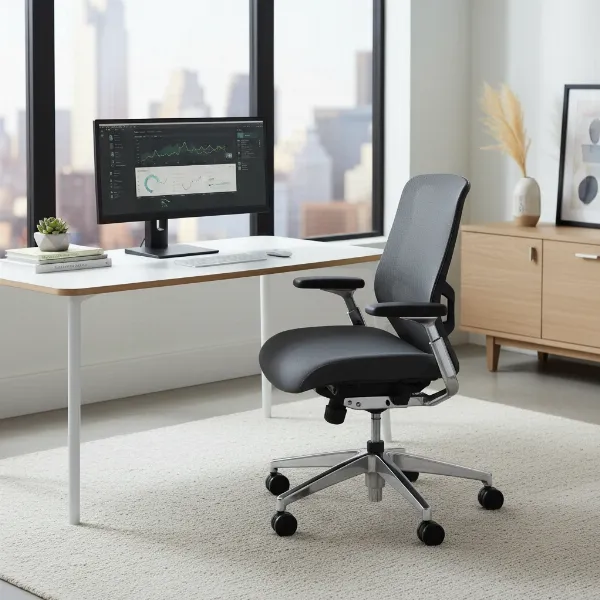
Spending countless hours seated in a standard chair can lead to discomfort, poor posture, and even chronic pain. While a high-end ergonomic chair might seem like the ultimate solution, it’s not always within everyone’s budget. The good news is that you don’t necessarily need to invest in an entirely new chair to reap the benefits of ergonomic support. With a few strategic adjustments and affordable accessories, you can transform your existing standard chair into a much more supportive and comfortable workspace ally. This guide will walk you through practical steps and essential add-ons to convert your regular chair into an ergonomic haven, promoting better posture, reducing strain, and boosting your overall well-being.
1. What is an Ergonomic Chair?
Understanding the core principles of an ergonomic chair is the first step in effectively converting your standard one. An ergonomic chair is more than just a comfortable seat; it’s a carefully designed tool engineered to support the human body in its natural posture, minimizing strain and promoting health during prolonged sitting.
1.1. Definition of Ergonomic Chair
|
Our Picks for the Best Ergonomic Chair in 2026
As an Amazon Associate I earn from qualifying purchases.
|
||
| Num | Product | Action |
|---|---|---|
| 1 | TRALT Office Chair - Ergonomic Desk Chair with Adjustable Lumbar Support, Mesh Computer Chair, Executive Chairs for Home Office Comfortable Lumbar Support (Black) |

|
| 2 | Marsail Ergonomic Office Chair: Office Desk Chair with High Back Mesh and Adjustable Lumbar Support Rolling Work Swivel Task Chairs with Wheel 3D Armrests and Headrest |
|
| 3 | Sweetcrispy Office Computer Desk Chair, Ergonomic High-Back Mesh Rolling Work Chairs with Wheels and Adjustable Headrests, Comfortable Lumbar Support, Comfy Flip-up Arms for Home, Bedroom, Study,Black |
|
| 4 | Ergonomic Office Chair, Mesh Seat Cushion with 3D Armrests and 3D Headrest, Adjustable Lumbar Support with 90-120° Rocking Function, SGS Class 4 Gas Clylinder, Black |
|
| 5 | Marsail Ergonomic Office Chair Ergonomic Gaming Chair with Lumbar Support, 2D Headrest, Adjustable Armrests, Contoured Seat Cushion, Computer Desk Chair with Wheels for Home and Office |
|
| 6 | PatioMage Ergonomic Office Chair, Big and Tall Desk Chair with Adjustable Lumbar Support & Seat Depth, High Back Computer Chair, Swivel Mesh Chairs with Wheels for Home Office, Black |
|
| 7 | TRALT Office Chair Ergonomic Desk Chair, 330 LBS Home Mesh Office Desk Chairs with Wheels, Comfortable Gaming Chair, High Back Office Chair for Long Hours (Black) |
|
| 8 | Fizzin Ergonomic Office Chair, 400 LBS Computer Chairs with Adjustable Lumbar Support, Breathable Mesh Desk Chair Ergonomic with Thickened Cushion, Comfy Home Office Desk Chair (Black) |
|
| 9 | Ergonomic Office Chair with Footrest - Adjustable Lumbar Support & Headrest, 90-160° Reclining Mesh Back Computer Chair - Home Office/Gaming, 350lbs Capacity (SGS Certified) |
|
| 10 | Ergonomic Office Chair with Footrest - Adjustable Lumbar Support & Headrest, 90-160° Reclining Mesh Back Computer Chair - Home Office/Gaming, 350lbs Capacity (SGS Certified) |
|
An ergonomic chair is specifically designed to provide optimal support to the body, particularly the spine, back, and neck, while seated. Its features are typically adjustable, allowing users to customize the chair to their unique body dimensions and preferred working posture. The goal is to facilitate a neutral spinal alignment, distribute body weight evenly, and reduce pressure points.
1.2. Benefits of Ergonomic Chair
The advantages of using an ergonomically sound chair extend beyond simple comfort. They play a crucial role in long-term health and productivity.
- Posture Improvement: By providing proper support, especially to the lumbar region, ergonomic setups encourage a natural S-curve of the spine, preventing slouching and promoting an upright, healthy posture. This reduces the likelihood of developing musculoskeletal issues.
- Back and Neck Pain Reduction: Many standard chairs fail to adequately support the lower back, leading to slouching and increased pressure on the spine. Ergonomic adjustments and accessories alleviate this by supporting the natural curvature, easing tension in the back and neck muscles.
- Increased Productivity: When you’re comfortable and free from pain, your focus and concentration naturally improve. Reduced discomfort means fewer distractions and a greater ability to engage with your tasks, ultimately leading to enhanced efficiency and output.
2. Key Components of an Ergonomic Chair (and how to simulate them)
Ergonomic chairs boast several adjustable components that work in harmony to support the user. While your standard chair might lack these built-in features, you can often simulate their effects with external aids.
2.1. Headrest
A headrest in an ergonomic chair supports the head and neck, reducing strain, especially during periods of recline or when taking a brief rest. While many standard chairs lack this, if your chair has a high back, ensuring your head is naturally aligned with your spine is key. For chairs without a high back, focusing on proper posture and occasional neck stretches can compensate.
2.2. Backrest
The backrest is fundamental for spinal health. Ergonomic backrests often feature a contoured design that follows the natural curve of the spine.
- Lumbar Support: This is arguably the most critical feature. It supports the inward curve of your lower back, preventing slouching and maintaining spinal alignment. In a standard chair, you can add external lumbar support using specialized cushions, a rolled-up towel, or a small pillow placed firmly against the small of your back.
2.3. Armrests
Ergonomic armrests are adjustable in height, depth, and pivot, allowing users to keep their forearms parallel to the floor and elbows at a 90-degree angle. This reduces tension in the shoulders and neck. For a standard chair, if the armrests are too low or too high, consider adding armrest pads that can elevate or soften them, or adjust your desk height to ensure your arms rest comfortably without shrugging your shoulders.
2.4. Seat Cushion
The seat cushion of an ergonomic chair is designed to distribute weight evenly, reduce pressure on the hips and tailbone, and often features a waterfall edge to promote healthy blood circulation in the legs. Standard chairs often have flat, sometimes hard, cushions. You can significantly improve this by adding a high-quality seat cushion made from memory foam or gel, which conforms to your body shape and provides better pressure relief.
2.5. Chair Base
An ergonomic chair’s base provides stability and mobility. Typically, it features five castor wheels for easy movement and a sturdy build for safety. While you might not change the base of a standard chair, ensuring its existing wheels are functioning smoothly and that the chair is stable at your desired height is important for overall usability. If your chair is stationary, ensure it’s positioned correctly relative to your desk.
3. Step-by-Step Guide: Converting Your Standard Chair
Transforming your existing chair into a more ergonomic setup doesn’t require complex tools or extensive modifications. It’s about smart adjustments and targeted additions.
Step 1: Assess Your Current Chair and Posture
Before making any changes, sit in your standard chair as you normally would and observe your posture. Do your feet touch the floor flat? Is your lower back supported? Are your shoulders hunched or relaxed? Identifying existing issues will guide your conversion efforts. Your goal is to achieve a posture where your feet are flat on the floor (or a footrest), knees at a 90-100 degree angle, hips slightly higher than your knees, and your spine maintains its natural S-curve.
Step 2: Optimize Lumbar Support
The lower back is a common area for discomfort in standard chairs.
- Add a Lumbar Support Cushion: These are specifically designed to fit the curve of your lower back. Choose one made of memory foam for adaptable support.
- DIY Solution: A rolled-up towel, a small blanket, or a firm pillow can be placed horizontally across the small of your back to provide basic lumbar support. Experiment with its position to find what feels most comfortable and supportive.
Step 3: Enhance Seat Comfort
A hard or unsupportive seat can lead to pressure points and discomfort in the glutes and thighs.
- Invest in a Quality Seat Cushion: A memory foam or gel seat cushion can significantly improve comfort and promote better weight distribution. Look for cushions with a cut-out for the tailbone if you experience coccyx pain, or a wedge shape to slightly tilt your hips forward, encouraging a more active posture.
Step 4: Adjust Arm and Wrist Position
Incorrect armrest height can cause shoulder and neck strain.
- Use Armrest Pads: If your chair’s armrests are too low, add adjustable pads that strap onto the existing armrests to raise them to an appropriate height.
- Desk Height Optimization: Position your chair close to your desk so your arms are at a 90-degree angle at the elbow when typing, with your wrists straight and flat. If your desk is too high or too low, consider a desk riser or lower your chair if possible.
Step 5: Ensure Proper Foot Placement
Your feet should be flat on the floor or a stable footrest, with your knees forming a 90-100 degree angle.
- Utilize a Footrest: If your feet don’t touch the floor comfortably after adjusting your chair height, a footrest is essential. This can be a dedicated ergonomic footrest, a stack of sturdy books, or even a small, firm box. The key is to keep your feet fully supported and flat.
Step 6: Fine-tune Overall Desk Ergonomics
Beyond the chair itself, your entire workstation setup impacts ergonomics.
- Monitor Height: The top of your monitor screen should be at or slightly below eye level. Use a monitor riser or stack of books to achieve this.
- Keyboard and Mouse: Keep your keyboard and mouse close to your body to avoid overreaching. Consider an ergonomic keyboard and mouse to reduce wrist strain.
4. Essential Ergonomic Accessories for Conversion
Many highly effective accessories can help you convert a standard chair, offering specific ergonomic benefits without the full cost of a new chair.
Lumbar Support Cushions
These are designed to fill the natural curve of your lower back, preventing slouching and maintaining the spine’s healthy alignment. They come in various materials, with memory foam being a popular choice for its ability to mold to your body. Look for options with adjustable straps to secure them to your chair.
Seat Cushions
From pressure-relieving memory foam to cooling gel, seat cushions can transform a hard or flat chair into a comfortable perch. Coccyx cushions, with a U-shaped cut-out at the back, are excellent for alleviating tailbone pressure, while wedge cushions can encourage a slightly forward-tilting pelvis, promoting an upright posture.
Footrests
A footrest is crucial for those whose feet don’t naturally rest flat on the floor when their chair is at an ergonomic height. They help maintain the correct knee and hip angles, improve circulation, and prevent dangling feet, which can lead to discomfort and poor posture. Many models offer adjustable height and tilt for personalized comfort.
Adjustable Armrest Pads
If your standard chair’s armrests are fixed or uncomfortable, adjustable armrest pads can be a game-changer. These often strap onto your existing armrests, providing extra height, padding, and sometimes even swivel capabilities to better support your forearms and reduce shoulder tension.
Monitor Risers
While not directly attached to your chair, a monitor riser is an indirect but vital accessory for overall ergonomic posture. By elevating your screen to eye level, it prevents neck craning and upper back strain, ensuring your head and neck remain in a neutral position while you work.
5. Cost-Effective Solutions and Accessories for Ergonomic Conversion
You don’t need to break the bank to make your chair more ergonomic. Many solutions are budget-friendly, ranging from clever DIY hacks to affordable accessories.
DIY Hacks for Immediate Improvement
- Rolled Towel for Lumbar Support: A tightly rolled towel or small blanket secured to the back of your chair with tape or a strap can serve as an effective, temporary lumbar support.
- Books for a Footrest or Monitor Riser: Sturdy books can be stacked to create a makeshift footrest, ensuring your feet are flat on the floor, or to elevate your monitor to eye level.
- Pillow or Blanket for Seat Padding: For a temporary fix, a folded blanket or firm pillow can add some padding to a hard seat.
Budget-Friendly Accessory Options
Many brands offer ergonomic accessories at accessible price points, allowing you to gradually build your ergonomic setup.
- Basic Lumbar Support Pillows: Simple, non-memory foam lumbar pillows are often very affordable and provide better support than nothing.
- Basic Foam Seat Cushions: While not as advanced as memory foam or gel, a basic foam cushion can still provide much-needed padding and lift.
- Plastic Footrests: Entry-level plastic footrests offer essential elevation for your feet without a significant investment.
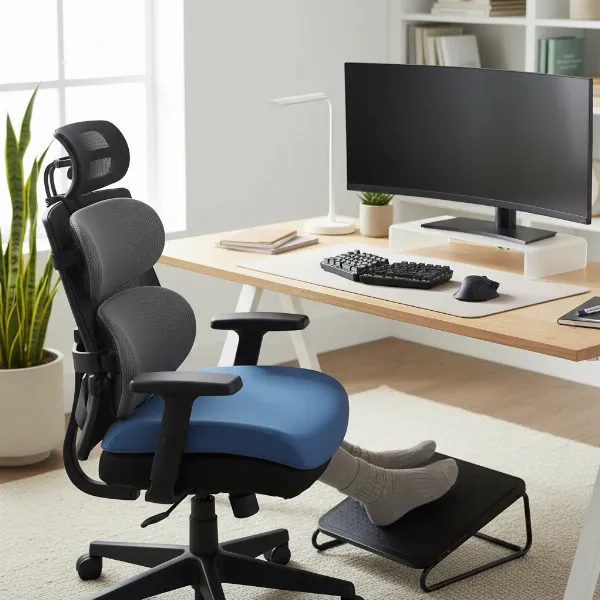 Essential ergonomic accessories transforming a standard chair for a comfortable workstation
“Small, incremental changes to your workstation can have a profound impact on your long-term health and comfort. You don’t always need the most expensive gear; smart adjustments are often more powerful.” – Dr. Emily R. Chen, Certified Ergonomics Specialist
Conclusion
Converting a standard chair into an ergonomic one is a practical and cost-effective way to improve your posture, alleviate discomfort, and enhance productivity without the immediate expense of a new high-end chair. By focusing on key areas like lumbar support, seat comfort, armrest positioning, and proper foot placement, along with overall workstation adjustments, you can create a much healthier and more supportive sitting environment. Investing in quality ergonomic accessories like cushions and footrests, or even implementing simple DIY solutions, can make a significant difference in your daily well-being. Are you ready to transform your standard chair into an ergonomic powerhouse?
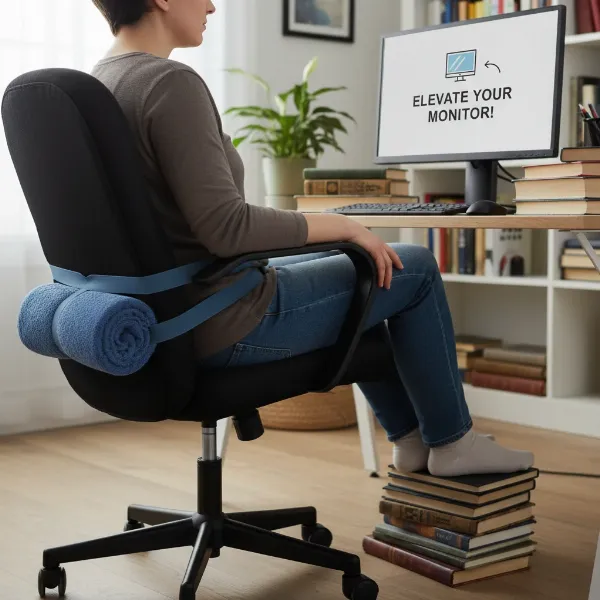 Person demonstrating DIY ergonomic hacks for a standard office chair
Frequently Asked Questions
Can any standard chair be made ergonomic?
While not every standard chair can achieve the full adjustability of a dedicated Ergonomic Chair, most can be significantly improved with the right accessories and adjustments. The key is to address critical areas like lumbar support, seat cushioning, and proper posture alignment through external means.
What is the most important accessory for ergonomic conversion?
The most important accessory often depends on the individual’s primary area of discomfort, but generally, a good lumbar support cushion is paramount. It directly addresses the critical need for lower back support, which is frequently lacking in standard chairs and is a leading cause of poor posture and back pain.