For many, spending hours at a desk is an unavoidable part of the workday. Yet, this sedentary routine often leads to discomfort, affecting everything from your neck to your lower back, and even impacting your overall productivity. Achieving correct sitting posture is not just about avoiding pain; it’s about optimizing your body’s mechanics to support long-term health and efficiency. This guide will introduce you to the fundamental “90-90-90 rule,” a cornerstone of ergonomic sitting that can revolutionize your desk experience. We’ll delve into what this rule means, its profound benefits, and provide practical steps to set up your ergonomic workspace for optimal support.
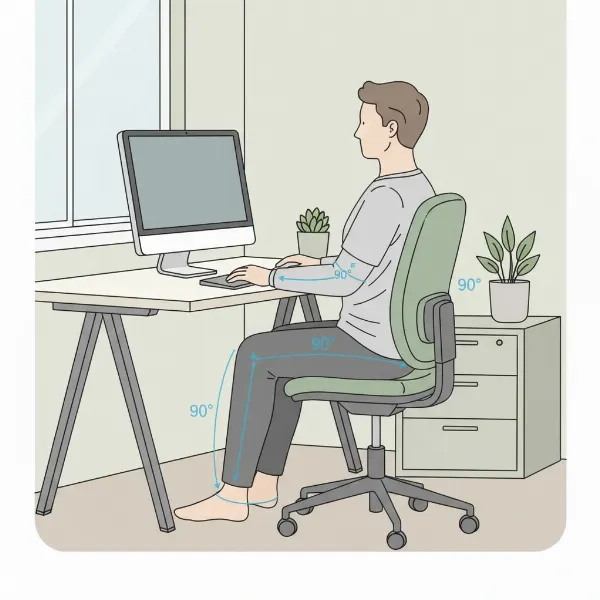 Diagram illustrating the 90-90-90 rule for ergonomic sitting posture at a desk.
1. What is an Ergonomic Chair?
An ergonomic chair is specifically designed to support the human body’s natural posture, providing adjustable features that allow individuals to customize their seating experience. Unlike standard office chairs, ergonomic models prioritize health and comfort, aiming to minimize strain and promote proper alignment during prolonged sitting. These chairs are a vital component in achieving and maintaining the 90-90-90 posture.
1.1. Definition of Ergonomic Chair
|
Our Picks for the Best Ergonomic Chair in 2026
As an Amazon Associate I earn from qualifying purchases.
|
||
| Num | Product | Action |
|---|---|---|
| 1 | Marsail Ergonomic Office Chair Ergonomic Gaming Chair with Lumbar Support, 2D Headrest, Adjustable Armrests, Contoured Seat Cushion, Computer Desk Chair with Wheels for Home and Office |

|
| 2 | Marsail Ergonomic Office Chair: Office Desk Chair with High Back Mesh and Adjustable Lumbar Support Rolling Work Swivel Task Chairs with Wheel 3D Armrests and Headrest |
|
| 3 | Sweetcrispy Office Computer Desk Chair, Ergonomic High-Back Mesh Rolling Work Chairs with Wheels and Adjustable Headrests, Comfortable Lumbar Support, Comfy Flip-up Arms for Home, Bedroom, Study,Black |
|
| 4 | Ergonomic Office Chair, Mesh Seat Cushion with 3D Armrests and 3D Headrest, Adjustable Lumbar Support with 90-120° Rocking Function, SGS Class 4 Gas Clylinder, Black |
|
| 5 | PatioMage Ergonomic Office Chair, Big and Tall Desk Chair with Adjustable Lumbar Support & Seat Depth, High Back Computer Chair, Swivel Mesh Chairs with Wheels for Home Office, Black |
|
| 6 | TRALT Office Chair Ergonomic Desk Chair, 330 LBS Home Mesh Office Desk Chairs with Wheels, Comfortable Gaming Chair, High Back Office Chair for Long Hours (Black) |
|
| 7 | Ergonomic Office Chair with Footrest - Adjustable Lumbar Support & Headrest, 90-160° Reclining Mesh Back Computer Chair - Home Office/Gaming, 350lbs Capacity (SGS Certified) |
|
| 8 | TRALT Office Chair - Ergonomic Desk Chair with Adjustable Lumbar Support, Mesh Computer Chair, Executive Chairs for Home Office Comfortable Lumbar Support (Black) |
|
| 9 | Fizzin Ergonomic Office Chair, 400 LBS Computer Chairs with Adjustable Lumbar Support, Breathable Mesh Desk Chair Ergonomic with Thickened Cushion, Comfy Home Office Desk Chair (Black) |
|
| 10 | Ergonomic Office Chair with Footrest - Adjustable Lumbar Support & Headrest, 90-160° Reclining Mesh Back Computer Chair - Home Office/Gaming, 350lbs Capacity (SGS Certified) |
|
An ergonomic chair is a specialized seating solution engineered to adapt to the user’s body and workspace. Its core function is to facilitate healthy posture, reduce the risk of musculoskeletal disorders, and enhance overall comfort and productivity by offering extensive adjustability for various body parts. Such chairs are crucial for anyone spending significant time seated.
1.2. Benefits of Ergonomic Chair
Investing in an ergonomic chair offers a multitude of benefits that extend beyond simple comfort, directly supporting the principles of the 90-90-90 rule and overall well-being.
Posture Improvement
Ergonomic chairs are instrumental in promoting a neutral spine alignment by providing adjustable lumbar support and encouraging the natural S-shape of your spine. This support helps counteract slouching and maintains the proper curvature of your back, even during long hours. With the right adjustments, an ergonomic chair ensures your body remains in optimal alignment, supporting the 90-90-90 angles at your hips, knees, and ankles.
Back and Neck Pain Reduction
By supporting the natural curves of your spine and facilitating correct posture, an ergonomic chair significantly reduces pressure on spinal discs and alleviates tension in your back and neck muscles. Features like adjustable headrests and lumbar support work together to keep your head aligned over your shoulders and your lower back adequately supported, mitigating common aches and pains. As physical therapist Carol Green explains, “Your ear should be aligned above the shoulder, and the shoulder should be aligned above the hip, for optimal spinal position.”
Increased Productivity
When you are comfortable and free from pain, your ability to focus and engage with your work dramatically improves. An ergonomic chair reduces physical distractions caused by discomfort, allowing you to maintain concentration for longer periods. This enhanced comfort translates directly into increased mental clarity and sustained productivity throughout your workday.
2. Key Components of an Ergonomic Chair
Understanding the essential components of an ergonomic chair is vital for selecting a model that effectively supports the 90-90-90 rule and your individual needs. Each part plays a critical role in promoting proper posture and comfort.
2.1. Headrest
An adjustable headrest provides crucial support for your head and neck, helping to maintain a neutral alignment with your spine. It prevents forward head posture, reducing strain on your cervical spine and shoulders. A good headrest should allow for height and angle adjustments to comfortably cradle your head, especially when reclining or taking short breaks.
2.2. Backrest
The backrest is central to spinal health, providing support for your entire back, particularly the lumbar region. It should ideally be contoured to match the natural curve of your spine and offer adjustable tilt and tension.
Lumbar Support
Lumbar support is arguably one of the most critical features of an ergonomic chair. It fills the natural inward curve of your lower back, preventing slouching and maintaining the spine’s healthy S-shape. Adjustable lumbar support allows you to customize the depth and height to fit your specific back contours, ensuring consistent support and reducing lower back pain.
2.3. Armrests
Adjustable armrests help maintain the 90-degree angle at your elbows, reducing strain on your shoulders, neck, and wrists. They provide support for your arms and should allow your shoulders to remain relaxed, not hunched.
Height and Angle Adjustment
The best armrests offer multi-directional adjustments (3D or 4D), allowing you to fine-tune their height, depth, and pivot. This ensures your forearms can rest parallel to your desk, keeping your wrists straight while typing and preventing undue tension in your upper body. Proper armrest placement is essential for achieving the “90” in elbow angle.
2.4. Seat Cushion
The seat cushion is where your body makes primary contact with the chair, making its design and material crucial for comfort and circulation.
Material and Comfort
A well-designed seat cushion distributes your body weight evenly across your thighs and buttocks, reducing pressure on the tailbone and promoting healthy blood flow. Materials like breathable mesh or contoured foam offer superior comfort, prevent heat buildup, and maintain their supportive properties over time. The seat should have a “waterfall” edge to prevent pressure on the backs of your thighs.
2.5. Chair Base
The chair base provides stability and mobility, allowing you to move freely within your workspace without compromising posture.
Wheels and Stability
A sturdy five-point chair base with smooth-rolling casters ensures stability and ease of movement. The wheels should be appropriate for your flooring type (e.g., hard floor casters or carpet casters) to prevent unnecessary effort when moving, allowing you to easily adjust your proximity to the desk while maintaining ergonomic angles.
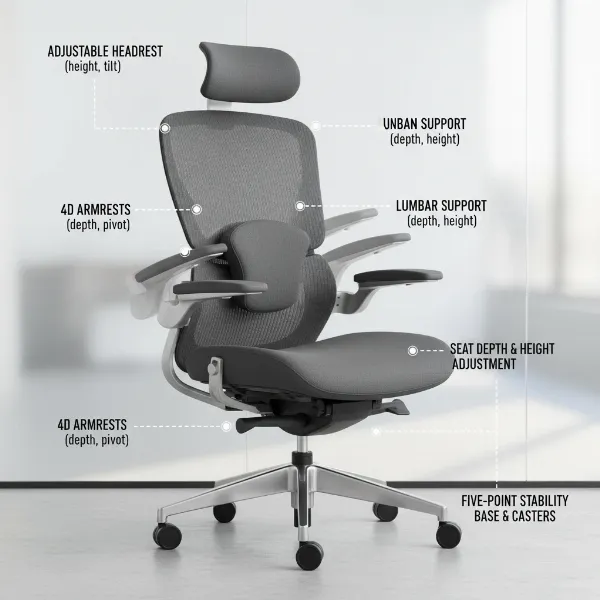 Close-up of a modern ergonomic office chair highlighting its adjustable components like headrest, lumbar, and armrests.
3. Comparison Table of Ergonomic Chairs
Choosing the right ergonomic chair can be overwhelming given the vast array of options. Here’s a comparative overview of some leading ergonomic chair brands and their general characteristics, focusing on features that support the 90-90-90 rule.
| Feature / Brand | Herman Miller | Steelcase | Haworth | Sihoo | FlexiSpot |
|---|---|---|---|---|---|
| Price Range | High-end ($$$$) | Mid to High ($$$) | Mid to High ($$$) | Budget to Mid ($$) | Budget to Mid ($$) |
| Lumbar Support | Advanced, adaptive | Dynamic, integrated | Adjustable, robust | Customizable, dual-back options | Adjustable, integrated |
| Adjustability | Extensive (seat depth, tilt, armrests) | Comprehensive, intuitive | Highly customizable | Good, often 3D/4D armrests | Good, varied models |
| Materials | Premium mesh, high-quality fabrics | High-performance fabrics, foam | Mesh, fabric, leather | Mesh, foam, fabric | Mesh, foam |
| Key Models | Aeron, Embody, Sayl | Leap, Gesture, Think | Zody, Fern, Lively | Doro C300, M18, M57 | Ergonomic chairs |
| Durability | Excellent, long warranties | Very good, solid construction | Strong, built to last | Good for price, decent warranties | Good, improving |
| User Reviews | Highly praised for comfort and health benefits | Praised for innovative features, sturdy build | Appreciated for modern design and support | Valued for affordability and features | Positive for value and adjustability |
| Supports 90-90-90 | Excellent due to wide adjustability | Excellent, especially seat depth and armrests | Very good, highly adjustable | Good, with careful adjustment | Good, dependent on model |
| Unique Selling Point | Iconic design, scientific research, ultimate comfort | Movement-oriented design, comprehensive support | Sustainable, architectural aesthetic | High value, extensive features at lower price | Focus on sit-stand solutions and value |
“The 90/90/90 rule is a foundation for building a healthier, more sustainable work environment. By aligning your hips, knees, and ankles at 90 degrees, you maintain a balanced position that supports your spine, enhances circulation, and reduces discomfort.” – SIHOOOffice Ergonomics Guide
4. Buying Guide
Selecting the perfect ergonomic chair requires careful consideration of your individual needs, budget, and the chair’s features. Here’s a comprehensive guide to help you make an informed decision.
4.1. Identify Your Needs
Before even looking at chairs, understand what you require from your seating solution.
Daily Usage Time
If you spend 8+ hours a day at your desk, a high-end, fully adjustable ergonomic chair is a worthwhile investment. For shorter periods (2-4 hours), a more basic model with essential adjustments might suffice. The longer you sit, the more robust and adaptable your chair needs to be to prevent long-term issues.
Health Issues
If you have pre-existing conditions like chronic back pain, sciatica, or carpal tunnel syndrome, prioritize chairs with specialized features such as advanced lumbar support, adjustable headrests, and highly configurable armrests. Consulting with a physical therapist can also provide specific recommendations.
Budget
Ergonomic chairs range widely in price, from budget-friendly options to premium models. Determine a realistic budget, but remember that a higher upfront cost for a quality chair can save you money on healthcare and productivity losses in the long run.
4.2. Essential Features
These are the non-negotiable features for an ergonomic chair designed to support the 90-90-90 rule.
Height Adjustment
The ability to adjust seat height is fundamental. It ensures your feet can rest flat on the floor or a footrest, with your knees forming a 90-degree angle and your thighs parallel to the floor. Your eye level should align with the top third of your monitor screen.
Backrest Adjustment
A backrest that can tilt, lock in various positions, and offer tension control is crucial. This allows you to find an angle that supports your spine’s natural curve and encourages dynamic sitting, rather than remaining in a rigid, static position.
Lumbar Support
As highlighted before, adjustable lumbar support is key to maintaining the natural curve of your lower back and preventing slouching. Look for chairs where you can adjust both the height and depth of the lumbar support.
Adjustable Armrests
Multi-directional armrests (3D or 4D) are essential for maintaining a 90-degree angle at your elbows, keeping your shoulders relaxed, and preventing wrist strain. They should allow your forearms to rest comfortably and parallel to your desk.
4.3. Material
The material of your chair affects both comfort and durability.
Mesh
Mesh chairs are highly breathable, promoting airflow and preventing heat buildup, which is excellent for long sitting sessions in warmer environments. They often conform well to your body, providing flexible support.
Leather
Leather offers a premium feel and aesthetic, is durable, and easy to clean. However, it can retain heat and may not be as breathable as mesh, potentially leading to discomfort over extended periods.
Fabric
Fabric chairs come in a wide range of textures and colors, offering good breathability and cushioning. They are generally comfortable and provide a good balance between support and softness.
4.4. Reputable Brands
Considering chairs from well-established brands often guarantees quality, research-backed design, and better warranties.
Herman Miller
Known for iconic designs like the Aeron and Embody, Herman Miller chairs are at the forefront of ergonomic innovation, offering unparalleled adjustability and comfort.
Steelcase
Steelcase is another leader, with popular models like the Leap and Gesture, praised for their robust construction, comprehensive adjustability, and support for dynamic movement.
Haworth
Haworth chairs, such as the Zody and Fern, combine sophisticated design with advanced ergonomics, focusing on adaptive support and sustainable materials.
4.5. Testing and Trying
Personal experience is invaluable when choosing an ergonomic chair.
Visit a Store
Whenever possible, visit a physical store to test chairs. Sit in different models, adjust all their features, and simulate your typical working posture. Pay attention to how the chair supports your spine, hips, and arms, and whether you can achieve the 90-90-90 rule comfortably.
Read Online Reviews
Supplement your in-store experience by reading comprehensive online reviews from other users and ergonomic experts. Look for feedback on durability, comfort during long hours, and specific features that are important to you.
5. Popular Ergonomic Chair Models
Different ergonomic chairs cater to various needs and budgets, from high-end solutions to more affordable options and specialized chairs for gamers.
5.1. High-End Ergonomic Chairs
These chairs represent the pinnacle of ergonomic design, often featuring advanced materials, extensive adjustability, and a focus on long-term health. Examples include the Herman Miller Aeron, Steelcase Gesture, and Haworth Fern. They are built to last decades and offer the most comprehensive support for maintaining the 90-90-90 posture. While a significant investment, they provide superior comfort, durability, and a wide range of customizable settings, making them ideal for individuals with demanding desk jobs or specific health requirements.
5.2. Budget-Friendly Ergonomic Chairs
For those on a tighter budget, several brands offer ergonomic chairs that still provide significant improvements over standard office chairs. Brands like Sihoo, Ticova, or certain models from FlexiSpot provide essential ergonomic features such as adjustable lumbar support, seat height, and armrests at a more accessible price point. While they may not have the premium materials or the same breadth of adjustments as high-end models, they can still effectively help users achieve a healthy posture if adjusted correctly. These chairs are a great starting point for implementing the 90-90-90 rule without breaking the bank.
5.3. Ergonomic Chairs for Gamers
Gaming chairs have evolved from simple race-car aesthetics to incorporate ergonomic principles. Many gaming chairs now offer features like robust lumbar support, neck pillows, highly adjustable armrests, and reclining functions to support long gaming sessions. Brands like Secretlab, noblechairs, or some specific ergonomic models from Vertagear combine the aggressive styling popular with gamers with the health-focused adjustability needed for good posture, including maintaining the 90-90-90 rule during intense play. These chairs often emphasize durability and a sturdy build to withstand active use.
Conclusion
Mastering the 90-90-90 rule is a transformative step towards a healthier, more comfortable, and more productive workday. By understanding and implementing this fundamental ergonomic principle—maintaining 90-degree angles at your hips, knees, and elbows with feet flat on the floor—you actively mitigate the risks associated with prolonged sitting. This thoughtful approach to your posture not only alleviates common aches and pains but also supports long-term spinal health and improves circulation. Remember, the goal is not static rigidity but dynamic awareness, incorporating regular movement and breaks.
Investing in an Ergonomic Chair and optimizing your workspace are crucial steps, but consistent application of the 90-90-90 rule remains paramount. What small change will you make today to improve your sitting posture and transform your daily work experience?
Frequently Asked Questions
What does the 90-90-90 rule mean in ergonomics?
The 90-90-90 rule is an ergonomic guideline emphasizing 90-degree angles at your hips, knees, and elbows, with your feet flat on the floor. This posture promotes neutral spinal alignment, even weight distribution, and reduces musculoskeletal strain for desk workers.
Is the 90-90-90 sitting position always necessary?
No, while the 90-90-90 rule is an excellent baseline for proper posture, it’s not meant to be a rigid, static position. Regular micro-movements, occasional reclining, and short breaks for standing or stretching are encouraged to prevent stiffness and maintain muscle engagement throughout the day.
How often should I move if I’m sitting with good posture?
Even with perfect ergonomic posture, it’s recommended to change your position every 30-45 minutes. Incorporate short standing breaks and light stretches to promote blood flow, rehydrate spinal discs, and lubricate joints, preventing fatigue and discomfort.
Can I use the 90-90-90 rule with a standing desk?
Yes, the principles of the 90-90-90 rule, particularly for your upper body, apply to standing workstations. When standing, ensure your elbows maintain a 90-degree angle with forearms parallel to the desk, and your monitor remains at eye level to prevent neck and shoulder strain.
What happens if I ignore ergonomic posture?
Ignoring ergonomic posture can lead to a range of health issues over time, including chronic back and neck pain, repetitive strain injuries (like carpal tunnel), reduced circulation, muscle imbalances, and decreased productivity. Proper posture is vital for long-term physical well-being.