Few things disrupt a productive workday like an office chair that refuses to glide smoothly. That annoying drag, the jerky movements, or the outright refusal to roll can often be traced back to a common culprit: hair tangled in the wheels. Over time, hair, pet fur, and other debris accumulate around the casters, hindering their function and making your ergonomic chair feel anything but comfortable or efficient. But don’t fret! Cleaning your office chair wheels is a manageable task, and with the right approach, you can restore your chair’s smooth glide and extend its lifespan. This guide will walk you through various effective methods, from simple fixes to more advanced techniques, ensuring your workspace remains a zone of effortless movement.
1. What Causes Hair Buildup in Office Chair Wheels?
A properly functioning ergonomic chair is designed to support your posture and facilitate movement, enhancing your comfort and productivity throughout long hours of sitting. However, when the wheels become clogged, this core benefit is undermined, turning smooth glides into frustrating pushes. Understanding why this happens is the first step toward effective maintenance and prevention.
1.1. Understanding the Problem: The Impact on Your Ergonomic Chair
|
Our Picks for the Best Ergonomic Chair in 2026
As an Amazon Associate I earn from qualifying purchases.
|
||
| Num | Product | Action |
|---|---|---|
| 1 | Ergonomic Office Chair with Footrest - Adjustable Lumbar Support & Headrest, 90-160° Reclining Mesh Back Computer Chair - Home Office/Gaming, 350lbs Capacity (SGS Certified) |

|
| 2 | TRALT Office Chair Ergonomic Desk Chair, 330 LBS Home Mesh Office Desk Chairs with Wheels, Comfortable Gaming Chair, High Back Office Chair for Long Hours (Black) |
|
| 3 | TRALT Office Chair - Ergonomic Desk Chair with Adjustable Lumbar Support, Mesh Computer Chair, Executive Chairs for Home Office Comfortable Lumbar Support (Black) |
|
| 4 | Ergonomic Office Chair with Footrest - Adjustable Lumbar Support & Headrest, 90-160° Reclining Mesh Back Computer Chair - Home Office/Gaming, 350lbs Capacity (SGS Certified) |
|
| 5 | Fizzin Ergonomic Office Chair, 400 LBS Computer Chairs with Adjustable Lumbar Support, Breathable Mesh Desk Chair Ergonomic with Thickened Cushion, Comfy Home Office Desk Chair (Black) |
|
| 6 | Marsail Ergonomic Office Chair Ergonomic Gaming Chair with Lumbar Support, 2D Headrest, Adjustable Armrests, Contoured Seat Cushion, Computer Desk Chair with Wheels for Home and Office |
|
| 7 | Marsail Ergonomic Office Chair: Office Desk Chair with High Back Mesh and Adjustable Lumbar Support Rolling Work Swivel Task Chairs with Wheel 3D Armrests and Headrest |
|
| 8 | Ergonomic Office Chair, Mesh Seat Cushion with 3D Armrests and 3D Headrest, Adjustable Lumbar Support with 90-120° Rocking Function, SGS Class 4 Gas Clylinder, Black |
|
| 9 | PatioMage Ergonomic Office Chair, Big and Tall Desk Chair with Adjustable Lumbar Support & Seat Depth, High Back Computer Chair, Swivel Mesh Chairs with Wheels for Home Office, Black |
|
| 10 | Sweetcrispy Office Computer Desk Chair, Ergonomic High-Back Mesh Rolling Work Chairs with Wheels and Adjustable Headrests, Comfortable Lumbar Support, Comfy Flip-up Arms for Home, Bedroom, Study,Black |
|
Hair getting stuck in office chair wheels is a pervasive issue, largely because hair strands are prone to tangling and winding around moving parts. As you move across your floor, hair, dust, and pet fur are readily picked up by the chair’s casters, especially if you have long hair or furry companions. These strands then wrap tightly around the axles, creating a dense barrier that prevents the wheels from rotating freely. The result is a chair that struggles to move, requiring more effort to reposition, potentially leading to strain and increased wear on the wheels themselves. Ignoring this buildup can lead to permanent damage, jamming, or even breaking the wheels, necessitating costly replacements. Beyond functionality, accumulated debris can also make your workspace appear messy and unprofessional.
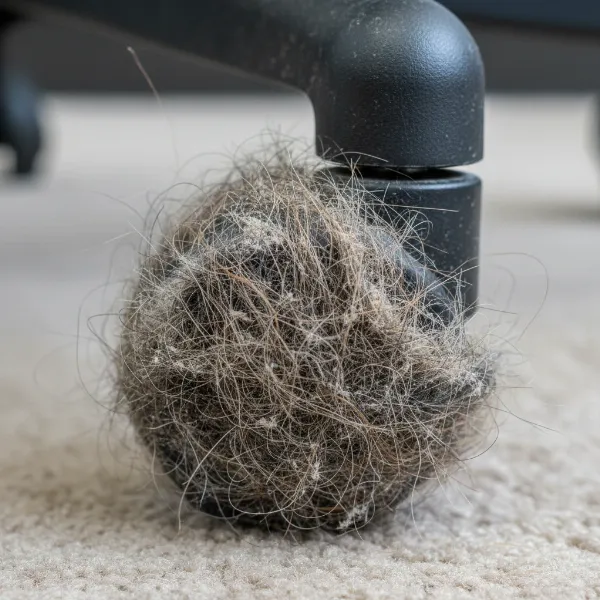 Close-up of an office chair wheel severely tangled with hair, dust, and pet fur, hindering movement.
1.2. Why Hair and Debris Accumulate
The design of most office chair wheels, particularly the tight spaces between the wheel and the housing, creates perfect traps for hair and other small debris. Every rotation picks up more strands, which then compact and tighten around the axle, forming an almost impenetrable barrier. This issue is exacerbated by certain flooring types, like carpets, which shed fibers that contribute to the entanglement. The material of the wheels can also play a role, with some surfaces being more prone to collecting static and attracting hair. Regular movement and the natural shedding of hair from people and pets contribute to a continuous cycle of accumulation, making consistent cleaning crucial for maintaining the performance of your ergonomic chair.
2. Key Tools and Methods for Cleaning Your Ergonomic Chair’s Wheels
Tackling tangled hair requires the right approach and a few simple tools, many of which you likely already have around the house. Preparing your toolkit beforehand will make the cleaning process far smoother and more efficient.
2.1. Essential Tools You’ll Need (Preparing for the Clean)
Before you begin, gather these common items that will prove invaluable in your hair removal mission:
- Sharp, pointed tools: Scissors, a utility knife, or a box cutter are essential for cutting through dense hair.
- Prying/Hooking tools: Tweezers, needle-nose pliers, a crochet hook, or even a dental pick can help pull out stubborn strands from tight crevices.
- Cleaning aids: A vacuum cleaner with a hose attachment, a lint roller, strong adhesive tape, or a stiff brush (like an old toothbrush or a wire brush) will assist in surface cleaning and scrubbing.
- Lubrication: A silicone spray or WD-40 can help loosen debris and improve wheel movement after cleaning.
- Safety gear: Gloves are highly recommended to protect your hands from dirt and sharp tools.
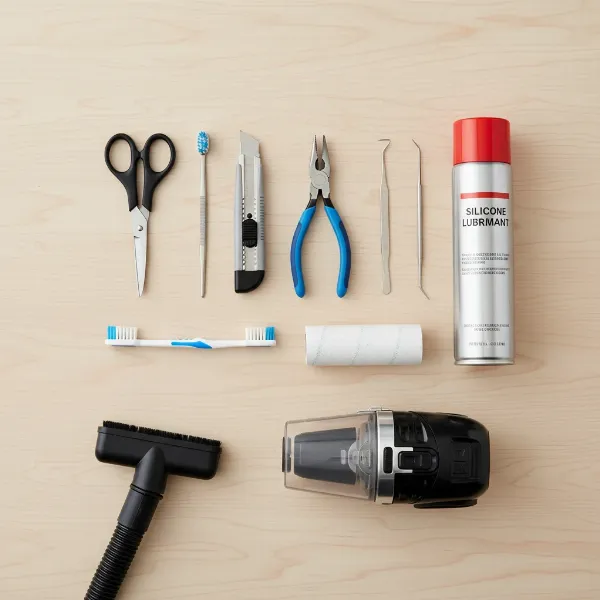 A collection of essential tools for cleaning office chair wheels: scissors, tweezers, brush, vacuum, and lubricant.
2.2. The Anatomy of an Office Chair Caster: Where Hair Hides
To effectively remove hair, it helps to understand the structure of your chair’s casters. Each caster typically consists of a stem that plugs into the chair base, a housing, and one or two wheels mounted on an axle. Hair usually accumulates around the axle, specifically in the narrow gaps between the wheel and the housing or between twin wheels. This area is notoriously difficult to access without specialized tools or disassembling the caster. The goal of cleaning is to reach these constricted spaces and free the axle from the suffocating grip of tangled hair, allowing the wheels to spin freely once more.
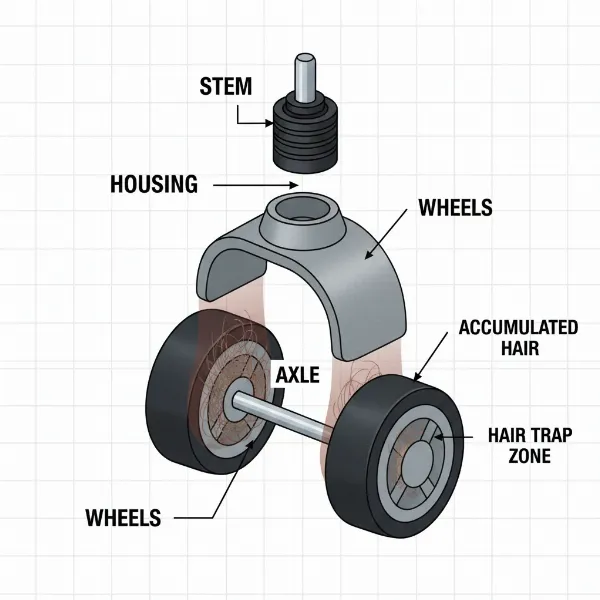 Detailed diagram or close-up of an office chair caster highlighting the axle and hair accumulation areas.
3. Step-by-Step Hair Removal Techniques for Your Office Chair Wheels
Addressing hair buildup can range from a quick touch-up to a more thorough deep clean. This section outlines various techniques, allowing you to choose the best approach based on the severity of the entanglement and the tools you have available.
| Method | Tools Required | Steps | Effectiveness & Notes |
|---|---|---|---|
| 1. Surface Removal | Lint roller, strong adhesive tape, vacuum cleaner | 1. Invert the chair. 2. Roll a lint roller or press strong adhesive tape over the wheels to pick up loose hair and debris. 3. Use a vacuum cleaner with a brush or crevice attachment to suck up any visible hair and dirt from around the wheels and inside the housing. |
Best for light surface hair and dust. A good preventative measure for regular maintenance. May not reach deeply embedded hair. |
| 2. Cutting & Pulling (No Disassembly) | Scissors, utility knife/box cutter, tweezers, needle-nose pliers, crochet hook/dental pick | 1. Invert the chair. 2. Carefully use a small, sharp pair of scissors or a utility knife to cut through any tightly wound hair visible around the wheel axle and within the gaps. Be extremely cautious not to damage the wheel plastic. 3. Use tweezers, pliers, or a crochet hook to grab and pull out the severed hair clumps. Twist and pull to loosen stubborn strands. |
Effective for moderately tangled hair. Requires patience and precision to avoid damaging the wheels or injuring yourself. A dental pick or crochet hook is excellent for reaching tight spots. |
| 3. Soap & Water Scrub | Cloth, mild soap, water, stiff brush (toothbrush) | 1. (Optional but recommended) Remove the casters from the chair base for easier access. 2. Dip a cloth or stiff brush in warm, soapy water. 3. Scrub the wheels vigorously, focusing on areas with compacted hair. The soap and water help loosen grime and some hair. 4. Rinse the wheels thoroughly and let them dry completely before reattaching. |
Helps loosen dirt and some hair, making it easier to pull out. Best when combined with cutting and pulling. Ensure wheels are fully dry to prevent rust or damage. |
| 4. Caster/Wheel Disassembly | Flat-head screwdriver, channel-lock pliers (if needed) | 1. Invert the chair. 2. To remove entire caster: Grip the caster housing firmly and pull it straight down. Most casters are push-fit and will pop out. 3. To remove individual wheels (if possible): Use a flat-head screwdriver to pry the wheels off their axles. Apply a quick, sharp force near the axle to pop them off. 4. Once disassembled, you have full access to cut and pull out all hair. |
Most effective for severe, deeply embedded hair. Provides the best access for thorough cleaning. Reassembly is usually a simple push-fit. Note that repeatedly prying off wheels can weaken the joint over time. |
“Regular maintenance of your office chair wheels is not just about aesthetics; it’s crucial for preserving the chair’s functionality and your long-term comfort. A few minutes of cleaning can save you from premature wear and the frustration of a sticky situation.” – Dr. Elena Petrova, Ergonomics Specialist
4. Comprehensive Guide to Maintaining Your Office Chair Wheels
Maintaining your office chair wheels effectively involves not just cleaning but also understanding when to use specific methods, prioritizing safety, and implementing preventative measures.
4.1. Assessing Your Situation and Choosing the Right Method
Before you start, take a moment to assess the extent of the hair buildup. Is it just a few strands, or are the wheels almost completely immobilized by thick mats of hair?
- Light buildup: Start with surface removal methods like a lint roller or vacuum.
- Moderate buildup: Move to cutting and pulling with scissors, tweezers, or a dental pick.
- Severe buildup: Disassembly of the casters or individual wheels will likely be necessary for a thorough clean. If wheels are stuck solid, attempting to force them might cause damage.
Always opt for the least invasive method first and escalate only if needed. Your ergonomic chair will thank you for the careful approach.
4.2. Safety First: Essential Precautions for Cleaning
When dealing with sharp tools, it’s paramount to prioritize safety.
- Wear gloves: Protect your hands from dirt, grime, and accidental cuts.
- Work in a well-lit area: Good visibility reduces the risk of injury and helps you spot all the tangled hair.
- Exercise caution with sharp objects: Always cut away from your body and the chair components. Take your time; rushing can lead to mistakes.
- Avoid extreme measures: While some suggest drain cleaner or fire, these are generally not recommended. Drain cleaner can damage plastic or metal finishes and poses significant chemical risks. Fire is incredibly dangerous, causes unpleasant fumes, and is rarely necessary. Stick to mechanical methods.
4.3. Advanced Techniques: When to Disassemble Casters
For deeply embedded hair that resists surface and basic tool removal, disassembling the casters is often the most effective solution. Most office chair casters simply pull straight out from the chair’s base. For some, a small amount of leverage with a flat-head screwdriver at the base of the stem might be needed. Once removed, you’ll have much better access to the wheel components. If your caster design allows, you can even pry the individual wheels off their axles using a flat-head screwdriver. This gives you direct access to the axle for a complete hair removal, then simply push the wheels back on until they click into place.
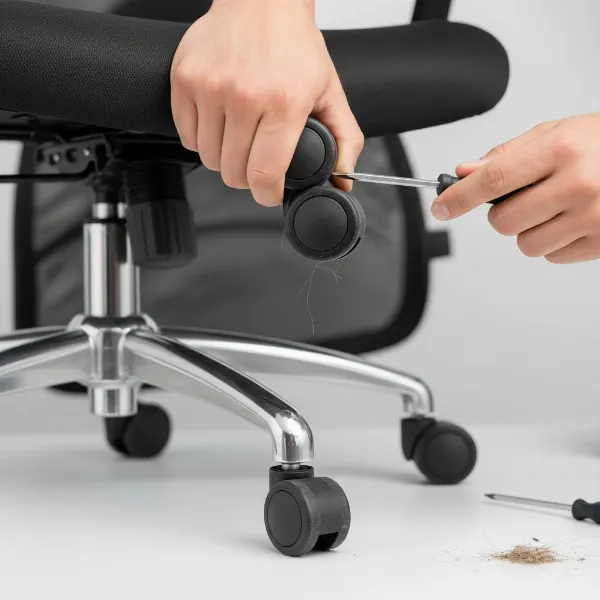 A person demonstrating how to disassemble an office chair caster for thorough hair removal and cleaning.
4.4. Preventive Measures for a Hair-Free Experience
The best way to deal with tangled hair is to prevent it in the first place.
- Regular vacuuming: Frequently vacuuming the area around your desk can significantly reduce the amount of hair and debris available to get caught in your wheels.
- Tie back long hair: If you have long hair, tying it back or using a hairnet while at your desk can prevent it from falling to the floor and becoming a wheel hazard.
- Use a chair mat: A chair mat provides a smooth surface that reduces friction and helps keep debris from reaching the wheels. It also makes cleaning the area easier.
- Regular quick checks: Periodically flip your ergonomic chair over for a quick visual inspection. Catching a few strands early is far easier than battling a dense hairball.
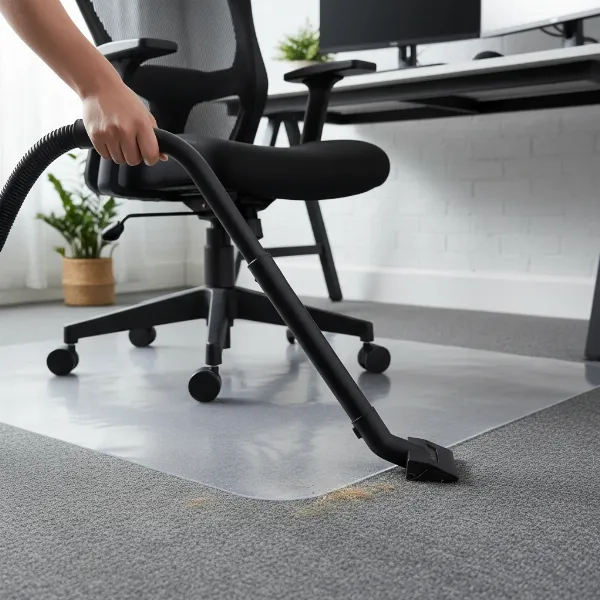 An ergonomic office chair on a protective mat, with someone vacuuming the area to prevent hair buildup.
4.5. When to Replace Your Office Chair Wheels
Despite your best efforts, sometimes the damage or entanglement is too severe for cleaning. If your wheels are cracked, broken, or permanently jammed even after a thorough cleaning, it might be time for a replacement. Most office chair casters are designed to be easily replaceable. You can often purchase new sets of casters online or from office supply stores. Consider upgrading to “rollerblade style” casters, which often feature larger, smoother wheels and sealed bearings that are less prone to hair entanglement and offer a quieter, smoother glide, especially on hard floors.
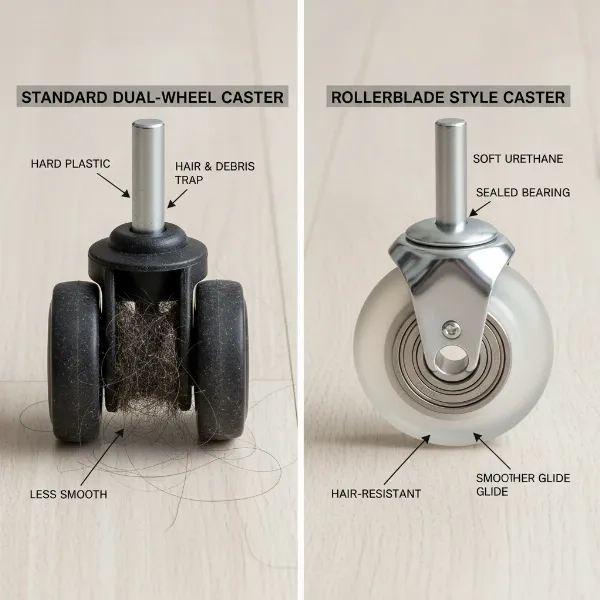 Comparison of standard office chair wheels and rollerblade style casters, highlighting design differences for upgrade.
5. Solving Stubborn Clogs and Considering Wheel Upgrades
Even after attempting various methods, you might encounter persistent issues. Knowing how to handle the most stubborn clogs and understanding your options for upgrading can save you further frustration.
5.1. Dealing with Extremely Tangled Hair
When hair is so tightly wound that it feels like a solid mass, don’t give up. This is where meticulous disassembly and patient work with sharp tools truly pay off. Remove the casters entirely from the chair. Use a sharp utility knife or box cutter to carefully slice through the hair parallel to the axle, being mindful of the plastic wheel components. Make several small cuts around the circumference. Once the hair is scored, use needle-nose pliers or a strong dental pick to pry and pull the cut sections away. It might be a slow process, but persistent effort will eventually free the wheels. Finish by cleaning with soap and water to remove any remaining grime.
5.2. DIY Solutions vs. Professional Help
For most individuals, the DIY methods described above are more than sufficient to tackle tangled office chair wheels. These solutions are cost-effective and empower you to maintain your ergonomic chair without external assistance. However, if you have a high-end or complex ergonomic chair with unique caster designs, or if you feel uncomfortable disassembling parts, a professional furniture repair service might be an option. They have specialized tools and expertise for intricate cleaning or repairs. For the vast majority of office chairs, however, a few common household tools and a bit of patience are all you need.
5.3. Upgrading Your Wheels for Better Performance
If you frequently deal with hair entanglement or desire a significant upgrade in your chair’s mobility, consider investing in new casters. Many modern ergonomic chairs are compatible with “rollerblade” style wheels. These casters often feature:
- Larger, softer wheels: They glide more smoothly and quietly, especially on hard floors, and are less likely to scratch surfaces.
- Sealed bearings: This design significantly reduces the gaps where hair can easily get caught, offering a superior defense against entanglement.
- Enhanced durability: Often made with higher-quality materials, they can withstand more rigorous use.
Upgrading your wheels is a simple, yet impactful, way to improve your ergonomic chair’s performance and reduce future maintenance headaches.
Conclusion
Tangled hair in your office chair wheels is a common nuisance that can degrade your ergonomic chair’s performance and interrupt your workflow. Fortunately, with a combination of accessible tools and a systematic approach, you can easily remove these obstructions and restore your chair’s smooth, effortless movement. Remember that regular checks and preventative measures are your best defense against future buildups. By keeping your chair wheels clean, you’re not only maintaining a vital piece of office equipment but also investing in your comfort, productivity, and the longevity of your Ergonomic Chair. What’s your go-to method for keeping your chair wheels spinning freely?
Frequently Asked Questions
How often should I clean my office chair wheels?
The frequency depends on your environment. If you have pets or long hair, checking and performing a quick clean every 1-2 months is a good idea. For less challenging environments, every 3-6 months should suffice to prevent significant hair buildup and maintain smooth rolling.
Can I use household cleaning sprays on my chair wheels?
Mild soap and water are generally safe. Avoid harsh chemical cleaners, especially those not designed for plastics or metals, as they can corrode or degrade the wheel materials and finishes over time. Always test on an inconspicuous area first.
Is it difficult to remove office chair casters?
Most office chair casters are designed for easy removal and replacement. They typically fit into the chair base with a simple push-fit stem. You usually just need to pull them straight down with firm, steady pressure. Some might require a little wiggling or gentle prying with a flat-head screwdriver.
What are rollerblade casters and are they better?
Rollerblade casters are chair wheels designed with larger, smoother wheels and often feature sealed bearings, similar to rollerblade wheels. They are generally considered superior for hard floors, offering quieter operation, smoother gliding, and increased resistance to hair and debris entanglement compared to standard casters.
Can old, stiff wheels be “fixed” without replacing them?
If the stiffness is solely due to hair buildup, cleaning them will fix it. However, if the wheels themselves are worn out, the bearings are seized, or the plastic is damaged, cleaning alone won’t restore them. In such cases, replacing the casters is the most effective solution for optimal performance.