Investing in a high-quality ergonomic chair is a decision for your health, comfort, and productivity. It’s a commitment to a better workday, reducing strain and supporting your body through countless hours of work. But like any sophisticated piece of equipment, its longevity and peak performance aren’t guaranteed by the initial purchase alone. As an experienced technician with over a decade in the ergonomic chair industry, I’ve seen firsthand how proper care can transform a chair’s lifespan, turning a good investment into an exceptional one. This guide will walk you through the essential steps to maintain your ergonomic chair’s intricate mechanisms, ensuring it remains a reliable foundation for your well-being for years to come.
1. Why Ergonomic Chair Mechanism Maintenance Matters for Longevity
An ergonomic chair is more than just a place to sit; it’s a precisely engineered tool designed to support your body’s natural posture and movements. Its numerous adjustable components work in concert to provide tailored comfort and reduce the risk of musculoskeletal issues. Neglecting these complex mechanisms can lead to a rapid decline in performance, comfort, and ultimately, a shorter lifespan for your valuable chair.
1.1. The Intricacies of Ergonomic Design
|
Our Picks for the Best Ergonomic Chair in 2026
As an Amazon Associate I earn from qualifying purchases.
|
||
| Num | Product | Action |
|---|---|---|
| 1 | Sweetcrispy Office Computer Desk Chair, Ergonomic High-Back Mesh Rolling Work Chairs with Wheels and Adjustable Headrests, Comfortable Lumbar Support, Comfy Flip-up Arms for Home, Bedroom, Study,Black |

|
| 2 | Ergonomic Office Chair with Footrest - Adjustable Lumbar Support & Headrest, 90-160° Reclining Mesh Back Computer Chair - Home Office/Gaming, 350lbs Capacity (SGS Certified) |
|
| 3 | Marsail Ergonomic Office Chair Ergonomic Gaming Chair with Lumbar Support, 2D Headrest, Adjustable Armrests, Contoured Seat Cushion, Computer Desk Chair with Wheels for Home and Office |
|
| 4 | Fizzin Ergonomic Office Chair, 400 LBS Computer Chairs with Adjustable Lumbar Support, Breathable Mesh Desk Chair Ergonomic with Thickened Cushion, Comfy Home Office Desk Chair (Black) |
|
| 5 | PatioMage Ergonomic Office Chair, Big and Tall Desk Chair with Adjustable Lumbar Support & Seat Depth, High Back Computer Chair, Swivel Mesh Chairs with Wheels for Home Office, Black |
|
| 6 | Ergonomic Office Chair with Footrest - Adjustable Lumbar Support & Headrest, 90-160° Reclining Mesh Back Computer Chair - Home Office/Gaming, 350lbs Capacity (SGS Certified) |
|
| 7 | TRALT Office Chair - Ergonomic Desk Chair with Adjustable Lumbar Support, Mesh Computer Chair, Executive Chairs for Home Office Comfortable Lumbar Support (Black) |
|
| 8 | Ergonomic Office Chair, Mesh Seat Cushion with 3D Armrests and 3D Headrest, Adjustable Lumbar Support with 90-120° Rocking Function, SGS Class 4 Gas Clylinder, Black |
|
| 9 | TRALT Office Chair Ergonomic Desk Chair, 330 LBS Home Mesh Office Desk Chairs with Wheels, Comfortable Gaming Chair, High Back Office Chair for Long Hours (Black) |
|
| 10 | Marsail Ergonomic Office Chair: Office Desk Chair with High Back Mesh and Adjustable Lumbar Support Rolling Work Swivel Task Chairs with Wheel 3D Armrests and Headrest |
|
Unlike basic office chairs, ergonomic models feature sophisticated mechanisms that allow for fine-tuned adjustments—from seat height and depth to backrest tilt and lumbar support. These systems involve springs, levers, gas cylinders, and various pivot points, all designed for smooth, precise operation. Over time, dust, debris, and general wear can compromise these delicate interactions, leading to stiffness, squeaking, or outright failure.
1.2. Sustaining Comfort and Preventing Wear
A well-maintained chair consistently delivers its promised ergonomic benefits. When mechanisms operate smoothly, adjustments hold their positions, and components remain in good condition, the chair effectively supports your body. Conversely, a neglected chair might develop issues like a lumbar support that won’t stay put, armrests that droop, or a tilt mechanism that sticks, forcing you into unhealthy postures and accelerating wear on other parts. Regular care ensures continuous comfort and prevents premature deterioration.
1.3. Protecting Your Investment
A quality ergonomic chair represents a significant financial investment, often ranging from several hundred to thousands of dollars. Think of maintenance as a way to protect this asset. Proactive cleaning, lubrication, and inspection can double or even triple the functional lifespan of your chair, allowing you to reap its benefits for 10-15 years or more. This approach not only saves money in the long run by delaying costly replacements but also ensures you consistently benefit from optimal ergonomic support.
2. Key Mechanisms of Your Ergonomic Chair and Their Maintenance Needs
Understanding the critical components of your ergonomic chair is the first step toward effective maintenance. Each part plays a vital role in your comfort and the chair’s overall functionality, and each has specific care requirements.
2.1. Gas Lift Cylinder: The Heart of Height Adjustment
The pneumatic gas cylinder is arguably the most stressed component in any adjustable chair. It allows for smooth height adjustment and should hold your desired position without sinking. Dust and debris can accumulate around the cylinder, impeding its motion or, more critically, the internal seals can degrade over time, leading to gradual height loss. Maintaining a clean cylinder ensures its longevity and consistent performance.
2.2. Tilt and Recline Mechanisms: Smooth Movement for Dynamic Sitting
The tilt and recline mechanisms, often found beneath the seat, allow the chair’s backrest and sometimes the seat to move. These systems typically involve springs, tension adjustments, and pivot points that enable you to lean back comfortably. If these mechanisms become stiff or squeaky, it usually indicates a need for cleaning and lubrication, as friction can increase wear on metal components.
2.3. Armrest Adjustments: Supporting Your Posture
Adjustable armrests are crucial for proper ergonomic posture, helping to support your shoulders and reduce neck strain. Many armrests feature mechanisms for height, depth, and pivot adjustments. These sliding and pivoting parts can collect dust and skin oils, leading to sticky or difficult adjustments. Regular cleaning and occasional lubrication are key to keeping them moving freely.
2.4. Chair Base and Casters: Stability and Mobility
The chair base, typically a five-star design, provides stability, while the casters (wheels) allow for effortless movement across your workspace. Casters are prone to accumulating hair, dust, and other debris, which can hinder their rolling ability and even scratch your floors. The swivel mechanism where the gas cylinder connects to the base can also benefit from occasional inspection and lubrication to ensure smooth rotation.
2.5. Lumbar Support Mechanisms: Tailored Back Care
Many ergonomic chairs offer adjustable lumbar support, either through internal mechanisms in the backrest or external pads. These mechanisms often involve sliding tracks or rotational elements that allow you to customize the support curve for your lower back. Like other moving parts, they can become stiff if neglected, compromising their ability to provide consistent, personalized support.
3. Essential Tools and Products for Chair Mechanism Care
Proper maintenance doesn’t require a professional toolkit, but having a few key items on hand will make the process much smoother and more effective.
3.1. Cleaning Supplies: Microfiber Cloths, Vacuum, Mild Detergents
For general cleaning, a soft microfiber cloth is indispensable for wiping down surfaces and removing dust. A vacuum cleaner with a brush attachment is excellent for removing debris from mesh, fabric, and tight crevices around mechanisms. For tougher spots, a mild soap solution (a few drops of dish soap in water) or a specialized cleaner appropriate for your chair’s upholstery material can be used. Always test cleaners on an inconspicuous area first.
3.2. Lubricants: Silicone-Based Sprays (and why they are preferred)
Lubrication is critical for smooth operation. A high-quality silicone-based lubricant spray is your best friend for chair mechanisms. It’s safe for both metal and most plastic components, creates a smooth, low-friction surface, and resists attracting dust. Avoid petroleum-based lubricants like WD-40 on plastic parts, as they can cause degradation and damage over time. Always apply sparingly and wipe away any excess.
3.3. Tools for Tightening: Allen Keys, Screwdrivers
Loose screws and bolts are common culprits for wobbling and squeaking. Keep a set of Allen keys (hex wrenches) and various screwdrivers (Phillips and flathead) handy. Many ergonomic chairs come with the necessary tools, so check your original packaging or manufacturer’s manual. Periodically checking and tightening these fasteners will maintain structural integrity and prevent unexpected issues.
3.4. Protective Gear: Chair Mats
While not a direct maintenance tool, a chair mat is an essential accessory for longevity. On carpet, it reduces the strain on casters, making it easier to roll and preventing excessive wear on the wheels. On hard floors, a mat protects both your flooring from scratches and the casters from premature abrasion, ultimately extending the life of your chair’s mobility components.
4. A Step-by-Step Maintenance Guide for Longevity
Consistent, routine maintenance is far more effective than sporadic deep cleaning. By incorporating these steps into your routine, you can significantly extend the life and performance of your ergonomic chair.
4.1. Weekly Quick Checks: Visual Inspection and Surface Wipe-Down
Dedicate just a few minutes each week to these preventive tasks.
- Quick Visual Inspection: Before you start your work week, give your chair a once-over. Check that all adjustment levers move freely and return to their positions. Look for any visible loose screws or bolts, particularly on the armrests and base. Note any unusual sounds, like minor squeaks or clicks, when you sit down or adjust the chair; these can indicate developing issues.
- Surface Wipe-Down: Use a slightly damp microfiber cloth to wipe down the armrests and any plastic components. These areas accumulate oils from your skin and can become grimy. For mesh chairs, a quick wipe of the frame removes dust. This simple habit prevents buildup that becomes much harder to clean later.
4.2. Monthly Deep Dive: Thorough Cleaning and Tightening
Once a month, set aside about 15-20 minutes for more thorough maintenance.
- Deep Clean the Seat and Back:
- Mesh chairs: Vacuum the mesh using a brush attachment to remove dust and debris trapped in the weave. For stains, use a mild soap solution applied with a soft brush, working gently. Rinse by dabbing with a clean, damp cloth and air dry.
- Fabric chairs: Vacuum thoroughly. Spot-clean with a fabric cleaner or mild soap solution, always testing on an inconspicuous area first.
- Leather and leatherette: Wipe with a damp cloth, then apply a leather conditioner every few months to prevent cracking.
- Clean the Base and Casters: Carefully flip your chair over. Examine the casters for hair, threads, and debris wrapped around the wheels. Use scissors to cut away wrapped material, then wipe the caster housings with a damp cloth. If casters are very dirty, most can be pulled straight out for a more thorough cleaning. While inverted, wipe down the five-star base and the gas cylinder column, as dust here can work its way into mechanisms.
- Tighten All Fasteners: Systematically go through all visible screws and bolts on the chair’s base, armrests, backrest, and under the seat, and gently tighten them. This prevents wobbling and maintains structural integrity.
4.3. Quarterly Lubrication and System Checks
Every three to six months, perform these more comprehensive maintenance checks.
> “Routine lubrication is paramount for dynamic components. Applying a silicone-based spray every few months keeps tilt mechanisms and adjustable armrests gliding effortlessly, preventing wear that can shorten their operational life.” – Sarah Chen, Product Testing Lead
- Lubricating Moving Parts: Apply a small amount of silicone-based lubricant to moving mechanisms. Focus on the tilt mechanism’s pivot points, armrest adjustment slides, and any mechanical lumbar support adjustments. Move the parts back and forth several times after application to work the lubricant in. Remember, a little goes a long way.
- Checking Gas Cylinder Function: Sit in the chair and raise it to maximum height, then lower it to minimum height. The motion should be smooth, and the chair should hold its position without slowly sinking. If you notice the chair gradually losing height while you’re seated, the cylinder seal may be failing—a common wear item that is often replaceable.
- Inspecting Upholstery and Structure: Look closely at high-wear areas like the seat’s front edge, the backrest’s center, and armrest pads for thinning fabric, compressed foam, stretched mesh, or cracking leather. Early identification of wear allows for timely intervention before comfort or support is compromised. Also, check the base for any cracks or significant structural damage, which would necessitate immediate action.
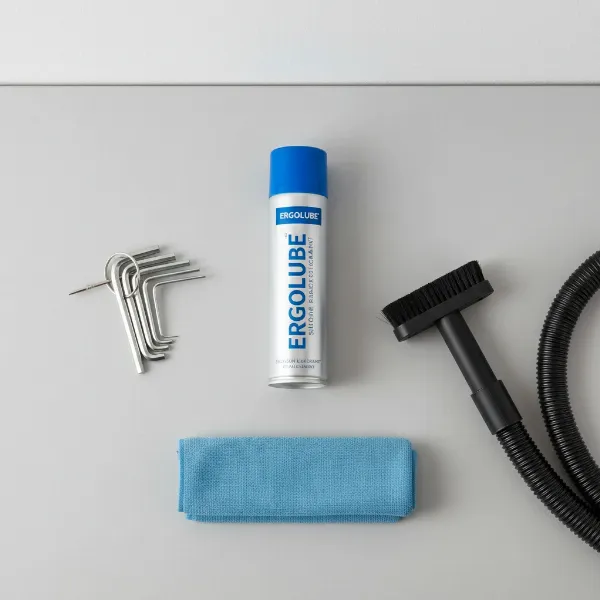 Essential tools and supplies for maintaining an ergonomic chair, including lubricant, wrench, and cleaning cloth
4.4. Annual Overhaul: Comprehensive Review and Part Replacement Readiness
Once a year, give your chair a thorough going-over. This is a good time to consider if any parts are reaching the end of their life and need replacement. Inspect all major components, assess overall stability, and review its continued ergonomic suitability.
5. Best Practices for Extending Your Chair’s Life
Beyond routine maintenance, your daily habits and environment significantly impact your chair’s longevity. Adopting these best practices will further safeguard your investment.
5.1. Adhere to Weight Limits and Proper Usage
Every ergonomic chair has a maximum weight capacity specified by the manufacturer. Exceeding this limit places undue stress on all components—especially the gas lift, base, and tilt mechanism—accelerating wear and potentially voiding your warranty. Furthermore, avoid rough usage like excessive leaning or tilting beyond the chair’s design limits, or perching on armrests, which are not designed to bear your full weight. Gentle, intentional use within its design parameters is key.
5.2. Environmental Considerations: Placement and Protection
The environment your chair resides in can impact its materials and mechanisms.
- Avoid Direct Sunlight: Prolonged exposure to direct sunlight can fade fabrics, dry out and crack leather, and even weaken plastic components. Position your chair away from windows or use blinds.
- Moderate Temperature and Humidity: Extreme temperatures and high humidity can degrade materials over time, leading to stiffness or even rust on metal parts. A stable indoor environment is ideal.
- Protect from Spills: Keep beverages and food away from your chair. Spills can seep into cushions and mechanisms, causing stains, odors, and potential damage to internal components.
5.3. Knowing When to Repair vs. Replace Parts
Quality ergonomic chairs are often designed with replaceable components, offering a more sustainable and cost-effective solution than buying a whole new chair.
- Common Replacement Items:
- Casters: Replace if they no longer roll smoothly, are cracked, or are scratching your floors. Upgraded “rollerblade” style casters can improve performance on hard surfaces.
- Gas Cylinder: If the chair won’t hold height or makes hissing sounds, replacing the gas cylinder is a common and relatively straightforward DIY job for most chairs.
- Armrest Pads: Many manufacturers offer replacement pads when the originals become worn, compressed, or sticky.
- When to Consider a New Chair: Even with perfect maintenance, chairs eventually wear out. Consider replacement when the foam is permanently compressed, multiple adjustment mechanisms have failed, structural components show significant damage, or the cost of replacing parts approaches half the cost of a new chair.
5.4. The Long-Term Value of Quality and Care
A well-maintained, high-quality ergonomic chair is more than just furniture; it’s a partner in your daily work, supporting your posture and productivity. By dedicating a small amount of time to its care, you’re not just extending its physical life, but also preserving the ergonomic benefits it provides. This mindful approach ensures your investment continues to pay dividends in comfort and well-being for years to come.
Conclusion
Your ergonomic chair is a vital tool for your health and productivity, and like any precision instrument, it thrives on consistent care. From the daily wipe-downs to the quarterly lubrication of its sophisticated mechanisms, each step contributes to its longevity and ensures it continues to provide the exceptional support you rely on. By embracing this proactive approach to maintenance, you not only protect your significant investment but also guarantee that your chair remains a comfortable, functional, and reliable foundation for your work for many years. Don’t let neglect shorten its journey; empower your ergonomic chair with the care it deserves. What is one small maintenance task you can commit to doing this week to extend the life of your ergonomic chair?
Frequently Asked Questions
How often should I lubricate my ergonomic chair?
You should lubricate your ergonomic chair’s moving mechanisms every three to six months. This frequency helps maintain smooth operation, reduces friction, and prevents squeaking and stiffness. Regular lubrication is key to preserving the integrity of the chair’s adjustable parts.
What kind of lubricant should I use for my chair’s mechanism?
Always use a silicone-based lubricant spray for your chair’s mechanisms. Silicone-based products are safe for both metal and most plastic components, resisting degradation. Avoid petroleum-based lubricants like WD-40, especially on plastic parts, as they can cause damage and attract more dust.
Can I use WD-40 on my ergonomic chair?
It is generally recommended to avoid using WD-40 on your Ergonomic Chair, particularly on plastic components. While it can loosen stiff parts, its petroleum base can degrade plastics over time and may attract dust, leading to more issues. Opt for a silicone-based lubricant for safer and more effective maintenance.
How do I fix a sinking office chair?
A sinking office chair typically indicates a failing gas lift cylinder. This is a common wear item that can usually be replaced. You can purchase a replacement cylinder online or from the manufacturer and follow specific instructions to remove the old one and install the new one, restoring height adjustment.
How do I clean my chair’s casters?
To clean your chair’s casters, carefully flip the chair over. Use scissors or a utility knife to cut away any hair, threads, or debris wrapped around the wheels. Then, wipe the caster housings and wheels with a damp cloth. For very stubborn grime, remove the casters (most pull straight out) for a more thorough cleaning.
When is it time to replace parts on my ergonomic chair?
It’s time to replace parts like casters if they don’t roll smoothly or are cracked, and the gas cylinder if the chair won’t hold height. Armrest pads can be replaced when worn or compressed. Generally, if a single component fails and is replaceable, opting for a new part is more cost-effective than replacing the entire chair.
What are signs that my ergonomic chair’s mechanism is failing?
Signs of a failing mechanism include persistent squeaking or grinding noises during adjustments, difficulty in raising or lowering the seat (gas lift), armrests that won’t hold their position, a tilt mechanism that sticks or lurches, or visible cracks in the chair’s base. Address these issues promptly to prevent further damage or injury.