Choosing between the Herman Miller Embody and Aeron is a quintessential dilemma for anyone serious about investing in a premium ergonomic office chair. Both stand as pinnacles of design, comfort, and spinal health, yet they offer distinct experiences. While the Aeron boasts a storied legacy of precise, foundational support, the Embody champions dynamic, adaptive comfort for modern, active sitting. This in-depth comparison will dissect their core philosophies, feature sets, and ideal user profiles, guiding you to the Herman Miller masterpiece that best aligns with your unique needs, workflow, and budget.
1. Understanding the Ergonomic Philosophies: Embody vs. Aeron
At their core, the Herman Miller Embody and Aeron chairs are designed to enhance health and productivity, but they approach ergonomics from fundamentally different perspectives. Understanding these philosophies is crucial to appreciating their distinct user experiences.
1.1. The Herman Miller Aeron: A Legacy of Focused Support
|
Our Picks for the Best Ergonomic Chair in 2026
As an Amazon Associate I earn from qualifying purchases.
|
||
| Num | Product | Action |
|---|---|---|
| 1 | Marsail Ergonomic Office Chair: Office Desk Chair with High Back Mesh and Adjustable Lumbar Support Rolling Work Swivel Task Chairs with Wheel 3D Armrests and Headrest |

|
| 2 | Fizzin Ergonomic Office Chair, 400 LBS Computer Chairs with Adjustable Lumbar Support, Breathable Mesh Desk Chair Ergonomic with Thickened Cushion, Comfy Home Office Desk Chair (Black) |
|
| 3 | Ergonomic Office Chair with Footrest - Adjustable Lumbar Support & Headrest, 90-160° Reclining Mesh Back Computer Chair - Home Office/Gaming, 350lbs Capacity (SGS Certified) |
|
| 4 | Sweetcrispy Office Computer Desk Chair, Ergonomic High-Back Mesh Rolling Work Chairs with Wheels and Adjustable Headrests, Comfortable Lumbar Support, Comfy Flip-up Arms for Home, Bedroom, Study,Black |
|
| 5 | TRALT Office Chair Ergonomic Desk Chair, 330 LBS Home Mesh Office Desk Chairs with Wheels, Comfortable Gaming Chair, High Back Office Chair for Long Hours (Black) |
|
| 6 | PatioMage Ergonomic Office Chair, Big and Tall Desk Chair with Adjustable Lumbar Support & Seat Depth, High Back Computer Chair, Swivel Mesh Chairs with Wheels for Home Office, Black |
|
| 7 | Marsail Ergonomic Office Chair Ergonomic Gaming Chair with Lumbar Support, 2D Headrest, Adjustable Armrests, Contoured Seat Cushion, Computer Desk Chair with Wheels for Home and Office |
|
| 8 | Ergonomic Office Chair, Mesh Seat Cushion with 3D Armrests and 3D Headrest, Adjustable Lumbar Support with 90-120° Rocking Function, SGS Class 4 Gas Clylinder, Black |
|
| 9 | Ergonomic Office Chair with Footrest - Adjustable Lumbar Support & Headrest, 90-160° Reclining Mesh Back Computer Chair - Home Office/Gaming, 350lbs Capacity (SGS Certified) |
|
| 10 | TRALT Office Chair - Ergonomic Desk Chair with Adjustable Lumbar Support, Mesh Computer Chair, Executive Chairs for Home Office Comfortable Lumbar Support (Black) |
|
Introduced in 1994, the Aeron revolutionized office seating with its groundbreaking Pellicle mesh material and post-modern design. Its ergonomic philosophy is rooted in static, conforming support, aiming to hold the user in an optimally aligned posture. The Aeron is meticulously engineered to cradle the body, providing firm, consistent support across its breathable mesh seat and backrest. Its design promotes a more “locked-in” feeling, encouraging good posture primarily through its structure, with specific adjustments like the PostureFit SL system to fine-tune lumbar and sacral support. This approach focuses on maintaining a healthy, upright sitting position for concentrated task work, minimizing micro-movements by design.
1.2. The Herman Miller Embody: Dynamic Adaptability for Active Sitting
The Embody, launched in 2008, represents a newer generation of ergonomic thinking, emphasizing dynamic adaptability and promoting movement even while seated. Its “pixelated support” system, featuring a matrix of flexible elements in the backrest and seat, continuously conforms to your body’s micro-movements. This design encourages natural shifts in posture, reducing pressure buildup and promoting healthy circulation throughout the day. The Embody’s philosophy is less about forcing a perfect posture and more about supporting the body’s natural inclination to move, offering a softer, more cushioned, and highly responsive seating experience designed to adapt to you.
2. Key Battlegrounds: A Feature-by-Feature Comparison
When comparing the Embody and Aeron, a direct look at their key components reveals where each chair truly shines and where their differences become most apparent.
2.1. Backrest and Lumbar Support: Mesh vs. Pixels
The backrest is perhaps the most defining feature distinguishing these two chairs. The Aeron’s iconic Pellicle mesh back provides firm, breathable support that conforms to your spine. Enhanced with the optional PostureFit SL, it offers targeted support to the sacrum and lumbar regions, promoting the natural S-shape of the spine. Users often describe this as a sensation of being “held” or “cradled” by the chair, which can be excellent for maintaining a consistent, upright posture during focused tasks.
In contrast, the Embody features a unique “pixelated support” backrest, a dynamic matrix of flexible materials designed to move and flex with your body. This innovative system automatically adjusts to your posture, distributing pressure evenly and promoting spinal alignment even as you shift. The Embody offers a taller backrest that extends to the shoulder blades, providing more comprehensive upper back support than the Aeron. Its adaptive nature is ideal for those who prefer to change positions frequently or who appreciate a less restrictive, more “active” sitting experience.
2.2. Seat Design and Comfort: Pellicle Tension vs. Flexible Cushioning
The seat design is another major differentiator. The Aeron’s Pellicle mesh seat provides a firm, tensioned surface that evenly distributes weight while allowing for superior airflow. This breathability is a significant advantage, particularly in warmer environments, preventing heat and moisture buildup. However, some users, especially those with larger thighs or a habit of sitting cross-legged, may find the rigid frame and curved front edge of the Aeron’s seat pan to cause pressure or discomfort.
The Embody, on the other hand, utilizes a layered foam seat with a flexible matrix that mirrors its backrest’s “pixelated support.” This design offers a softer, more cushioned feel and a flexible edge that contours to the user’s thighs, eliminating the hard edges found on the Aeron. The Embody’s seat depth is also adjustable, providing more flexibility for various leg lengths and sitting styles, including cross-legged positions. While providing exceptional comfort, its foam construction is less breathable than the Aeron’s mesh, which some users find can lead to warmth over long periods.
2.3. Armrests: Adjustability and User Experience
Armrests, while seemingly a minor detail, play a crucial role in overall ergonomic comfort and support. The Aeron typically offers fully adjustable armrests that can be set to various heights, depths, and pivots, providing robust support for the forearms and shoulders. Many users find the Aeron’s armrests to be highly stable and intuitive, allowing for precise positioning relative to the desk and keyboard.
The Embody’s armrests also offer significant adjustability in height and width, and in some configurations, pivot. However, user feedback often highlights them as a point of contention. Some find the Embody’s armrests to be less sturdy or to get in the way when trying to sit very close to a desk. The design can make it challenging for some users to find an optimal position for tasks that require close proximity to the workstation, although strategic adjustments can help mitigate this.
2.4. Recline Mechanism and Tilt Functions
Both chairs excel in their recline capabilities, offering smooth and supportive mechanisms that allow users to shift postures throughout the day. The Aeron features a sophisticated harmonic tilt that moves the seat and back in sync, providing continuous support. It also uniquely offers a forward tilt option, which can be invaluable for tasks requiring intense focus or leaning forward, such as typing or drawing.
The Embody’s recline is equally fluid, designed to maintain spinal support and pressure distribution even in a fully reclined position due to its dynamic backrest. While it doesn’t have a distinct forward tilt like the Aeron, its adaptive nature supports various sitting angles. The Embody focuses on dynamic movement across its entire range of motion, making it excellent for transitioning between upright work and more relaxed postures.
2.5. Sizing and Fit: Tailored vs. Universal
A key difference in fit is how each chair accommodates different body types. The Aeron is available in three distinct sizes (A, B, and C), designed to provide a highly tailored fit based on a user’s height and weight. Choosing the correct size is paramount to experiencing the Aeron’s full ergonomic benefits and avoiding pressure points.
The Embody comes in a single size, but it boasts a remarkable degree of adjustability, including seat depth and backfit adjustment, which allows it to adapt to a wider range of body types. This “universal fit” approach means that while it doesn’t have multiple frames, its numerous adjustments aim to make it suitable for most users. Some taller individuals (over 6 feet) have reported issues with the Embody’s upper back support, finding the top edge can dig into their shoulder blades.
2.6. Aesthetics and Build Quality
Aesthetically, the Aeron features an industrial, high-tech, and somewhat minimalist look, celebrated for its transparency and form-follows-function design. Its mesh construction provides a lighter visual footprint. The build quality of the Aeron is consistently praised for its durability and silent operation.
The Embody presents a more organic, futuristic, and upholstered appearance, with its visible “spine” structure on the backrest. It often appeals to those looking for a modern, sleek chair with a sculptural quality. While its build quality is high, some users have reported the Embody developing minor squeaks or noises over time, particularly in the backrest, which can be a concern for a chair in this price range.
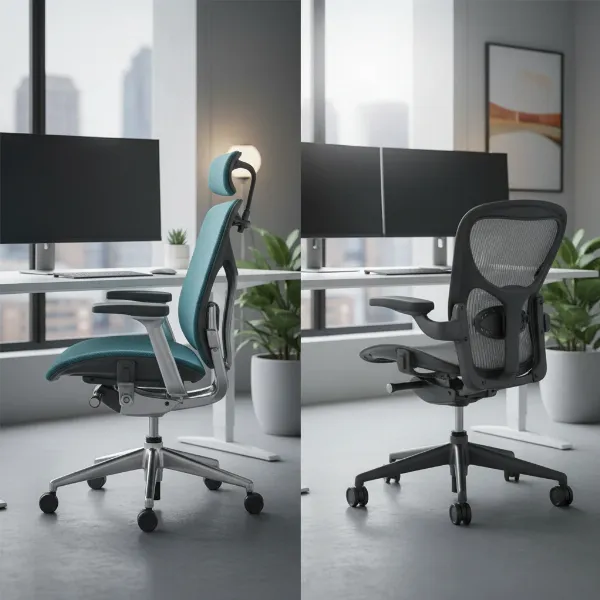 A detailed side-by-side view comparing the Herman Miller Embody and Aeron chairs, highlighting their distinct backrest designs and seat materials.
3. Ergonomics in Practice: Choosing Your Ideal Herman Miller Chair
Deciding between the Embody and Aeron often comes down to your personal sitting habits, body type, and the primary tasks you perform. Both chairs are designed to promote ergonomic health, but they do so with different strengths.
3.1. Best for Different Body Types and Postural Habits
The Aeron truly shines for individuals who fit well within its three size options (A, B, or C) and prefer a more structured, disciplined sitting experience. If you tend to sit upright for extended periods and appreciate a chair that actively encourages good posture, the Aeron’s firm support and tailored fit will likely be a superior choice. Its ability to “force” an ergonomic position can be beneficial, particularly for those prone to slouching.
Conversely, the Embody is ideal for those who enjoy or require more freedom of movement while seated. If you frequently shift positions, sit cross-legged, or lean back to think or relax, the Embody’s dynamic, adaptive support will embrace these movements without compromising ergonomic benefits. Its flexible seat pan without hard edges makes it more forgiving for varied sitting postures.
3.2. Optimizing for Specific Tasks: Work, Gaming, and Lounging
For intense, focused task work that involves leaning forward, the Aeron’s forward tilt mechanism can be a significant advantage, providing excellent support in an engaged posture. It’s often lauded as the quintessential “task chair” for demanding office environments.
When it comes to gaming or more relaxed, lounging postures, the Embody often gets the nod. Its dynamic backrest and cushioned seat are more accommodating for reclining, shifting, and even sitting in unconventional ways. The Embody Gaming Chair, a collaboration with Logitech G, further enhances this with specific materials and aesthetics tuned for gamers. The Aeron can also be great for gaming, especially for those who prefer to sit upright and engaged, but its rigidity can be less forgiving for casual lounging.
3.3. Addressing Comfort and Health Concerns
For individuals prioritizing breathability and a cool sitting experience, especially in warmer climates or if you tend to overheat, the Aeron’s Pellicle mesh is unmatched. Its open weave allows for continuous airflow, preventing moisture and heat buildup.
If pressure relief and a softer, more adaptable feel are paramount, the Embody’s pixelated support and layered foam seat excel at distributing weight and conforming to the body, which can be beneficial for those with sensitive pressure points or specific back pain concerns. However, some users with lower back issues have reported the Aeron’s firm lumbar support to be more effective for their needs. For those recovering from lumbar surgery or prone to slouching, the Aeron’s forward tilt and structured support might provide better assistance in maintaining an upright, healthy posture.
4. Herman Miller Embody vs. Aeron: A Detailed Comparison Table
| Feature | Herman Miller Aeron | Herman Miller Embody |
|---|---|---|
| Ergonomic Philosophy | Static, conforming support; promotes fixed posture. | Dynamic, adaptive support; encourages active sitting. |
| Backrest | Pellicle mesh; firm support; PostureFit SL lumbar. | “Pixelated support” matrix; moves with user; taller. |
| Seat | Pellicle mesh; firm tension; breathable; fixed edge. | Layered foam; flexible matrix; soft, adaptive edge. |
| Sizing | 3 sizes (A, B, C) for tailored fit. | 1 universal size; highly adjustable. |
| Armrests | Fully adjustable (height, depth, pivot); stable. | Adjustable (height, width); some users find less sturdy. |
| Tilt/Recline | Harmonic tilt; distinct forward tilt feature. | Smooth, dynamic recline; maintains spinal support. |
| Breathability | Excellent (mesh). | Moderate (foam seat); can get warm. |
| Comfort Profile | Firm, cradling, structured; less fidgeting. | Softer, adaptive, flexible; encourages movement. |
| Ideal For | Focused task work, upright posture, users who prefer firm support, warmer climates. | Active sitting, gaming, lounging, varied postures, pressure relief. |
| Aesthetics | Industrial, minimalist, transparent. | Organic, futuristic, upholstered, visible spine. |
| Durability | Exceptional; often noted for silent operation. | Very high; some reports of minor squeaks. |
| Price Range | Premium | Premium (often slightly higher) |
5. Making Your Decision: A Herman Miller Buying Guide
Investing in a Herman Miller chair is a significant decision. To ensure you make the best choice between the Embody and Aeron, consider these factors carefully.
5.1. Identify Your Priorities: Comfort, Functionality, or Aesthetics?
Start by honestly assessing what matters most to you in an ergonomic chair. Are you primarily seeking firm, consistent support to maintain an upright posture during long work sessions? If so, the Aeron’s structured embrace might be ideal. Do you value the freedom to shift, recline, or even sit cross-legged, with a chair that adapts fluidly to your movements? The Embody’s dynamic support system could be more suitable. Consider your daily habits: How long do you sit? Do you fidget a lot? What kind of tasks do you perform? Your answers will point you towards the chair whose design philosophy aligns best with your actual use. Aesthetic preference also plays a role, as both chairs have distinct visual identities.
5.2. Budget and Investment: Long-Term Value
Both the Herman Miller Embody and Aeron represent a substantial financial investment, typically ranging from $1,500 to over $2,000, depending on configurations and retailers. While the Embody sometimes carries a slightly higher price tag, both chairs are designed for extreme durability and come with an industry-leading 12-year warranty. This longevity means your investment is spread over many years, often resulting in a lower cost per year compared to cheaper, less durable alternatives. Consider this a long-term investment in your health and productivity, not just a purchase.
5.3. The Crucial Step: Testing and Personal Experience
Despite all the research and comparisons, the most critical step in choosing between the Embody and Aeron is to try them out yourself. What feels comfortable and supportive for one person may not for another, as ergonomics are highly personal. Visit a Herman Miller dealer or an authorized retailer if possible, and spend ample time in each chair. Adjust all the settings, recline, sit in your typical work posture, and even try a few of your common “fidgeting” positions. Pay attention to how your back, hips, and thighs feel, and consider how breathability might impact your long-term comfort. This hands-on experience is invaluable for making an informed decision.
> “The best Ergonomic Chair isn’t just about features; it’s about how those features integrate with your unique body and sitting style. Always test before you invest.” – Dr. Elena Petrova, Certified Ergonomics Specialist
6. Popular Models and Gaming Editions
Both Herman Miller flagships have seen updates and specialized versions, ensuring their relevance in evolving workspaces and lifestyle needs.
6.1. Aeron Remastered
The Aeron Remastered is an updated version of the classic Aeron, launched in 2016. It features modern improvements to its tilt mechanism, more intuitive controls, and an enhanced Pellicle mesh (8Z Pellicle) that offers varying tensions across the seat and back for even more refined support. It maintains the Aeron’s iconic design and comes in the same three sizes, ensuring it remains a top choice for traditional office work.
6.2. Embody Gaming Chair
Recognizing the demanding needs of gamers who spend extended hours seated, Herman Miller collaborated with Logitech G to create the Embody Gaming Chair. This version incorporates specific enhancements like additional copper-infused foam in the seat to help dissipate heat, and a more vibrant, gaming-centric aesthetic. It retains the core ergonomic benefits of the original Embody, making it an excellent option for gamers who prioritize dynamic support, pressure distribution, and freedom of movement. Similarly, Herman Miller also offers an Aeron Gaming Chair, distinguished by its darker aesthetic and specific color options, yet retaining the core functionalities of the Aeron Remastered.
Conclusion
The Herman Miller Embody and Aeron are undeniably titans in the world of ergonomic seating, each offering unparalleled support, design, and durability. Your choice ultimately hinges on personal preference, specific sitting habits, and priorities. The Aeron stands as a testament to structured, firm support, ideal for focused task work and those who thrive with a consistent posture. Its breathable mesh and tailored sizing make it a classic choice for many. In contrast, the Embody champions dynamic, adaptive comfort, perfectly suited for individuals who move frequently, prioritize pressure relief, or desire more flexibility in their sitting positions, particularly for gaming or relaxed lounging.
Neither chair is objectively “better” than the other; they are simply designed for different ergonomic philosophies and user experiences. By considering your unique needs, understanding their core differences, and ideally, experiencing both chairs firsthand, you can confidently invest in the Herman Miller flagship that will elevate your comfort, health, and productivity for years to come. Which Herman Miller legacy will you choose to support your workday?
Frequently Asked Questions
Which Herman Miller chair is better for back pain?
Both the Embody and Aeron are designed to alleviate back pain, but through different approaches. The Aeron, with its firm PostureFit SL lumbar support and structured design, can be excellent for maintaining proper spinal alignment, especially for those who benefit from consistent, upright posture. The Embody’s dynamic pixelated backrest actively conforms to your spine and promotes movement, which can reduce pressure points and improve circulation, making it beneficial for those who need more adaptability or suffer from general back discomfort. The best choice depends on the specific nature of your back pain and your preferred sitting style.
Is the Herman Miller Embody worth the extra cost over the Aeron?
The Embody often has a slightly higher price point than the Aeron, and whether it’s “worth” the extra cost depends entirely on your individual preferences. If you prioritize dynamic support, freedom of movement, a softer seat, or the ability to sit in varied postures (like cross-legged), the Embody’s unique design and features justify the investment. However, if firm, breathable, and structured support with a robust forward tilt is more aligned with your needs, the Aeron provides exceptional value without the extra cost. Many consider the investment worthwhile for the chair that best suits their long-term comfort and health.
Can I sit cross-legged in a Herman Miller Aeron or Embody?
You can sit cross-legged more comfortably in the Herman Miller Embody than in the Aeron. The Embody features a flexible seat pan with soft edges that can accommodate various sitting positions, including cross-legged, without causing pressure. The Aeron, by contrast, has a rigid frame and a distinct hard plastic rim around its Pellicle mesh seat. While some users might manage to sit cross-legged, many find this edge to be uncomfortable or to put pressure on their thighs and legs over time.
Which chair is better for tall users, Embody or Aeron?
For tall users, the Aeron (specifically in Size C) is often recommended due to its tailored fit designed for larger and taller individuals. It provides consistent support across the entire frame. While the Embody is highly adjustable, some very tall users (over 6 feet) have reported that the top edge of its backrest can sometimes dig into their shoulder blades, depending on their torso length and sitting posture. However, others find the Embody’s adaptable backrest and adjustable seat depth sufficient. Personal testing is especially crucial for tall individuals.