Do you find yourself constantly shifting positions in your office chair, often ending up with your legs crossed, tucked, or even in a full “criss-cross applesauce” posture? You’re far from alone. Many individuals instinctively adopt these flexible sitting positions for comfort, focus, or simply to alleviate the stiffness that comes from static sitting. However, traditional office chairs are rarely designed to accommodate this natural human tendency, often leading to discomfort, poor posture, and even pain. The good news is that a new generation of ergonomic chairs is purpose-built to support these diverse sitting styles, offering the perfect blend of flexibility, comfort, and crucial ergonomic support.
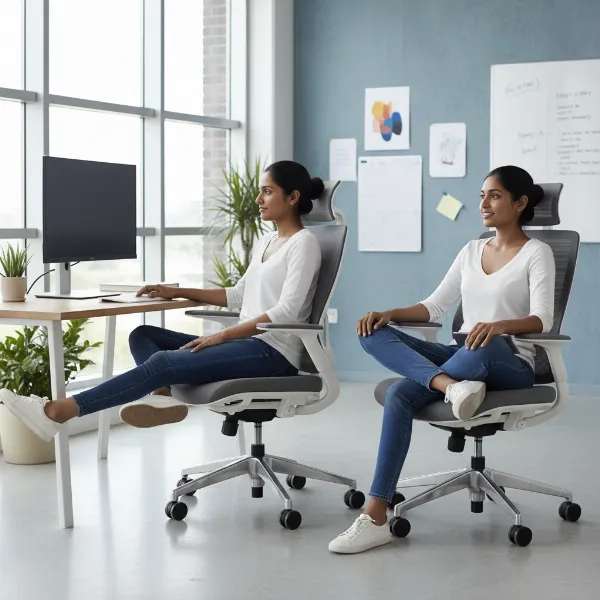 Person comfortably using an ergonomic office chair, demonstrating various flexible sitting postures including cross-legged.
1. What is an Ergonomic Chair?
An ergonomic chair is far more than just a seat; it’s a sophisticated tool engineered to support the human body’s natural posture and movements, thereby maximizing comfort and efficiency in the workspace. Unlike conventional chairs with limited adjustments, ergonomic chairs feature a comprehensive range of customizable options that cater to the unique needs of each individual.
1.1. Definition of Ergonomic Chair
|
Our Picks for the Best Ergonomic Chair in 2026
As an Amazon Associate I earn from qualifying purchases.
|
||
| Num | Product | Action |
|---|---|---|
| 1 | Ergonomic Office Chair with Footrest - Adjustable Lumbar Support & Headrest, 90-160° Reclining Mesh Back Computer Chair - Home Office/Gaming, 350lbs Capacity (SGS Certified) |

|
| 2 | TRALT Office Chair Ergonomic Desk Chair, 330 LBS Home Mesh Office Desk Chairs with Wheels, Comfortable Gaming Chair, High Back Office Chair for Long Hours (Black) |
|
| 3 | Sweetcrispy Office Computer Desk Chair, Ergonomic High-Back Mesh Rolling Work Chairs with Wheels and Adjustable Headrests, Comfortable Lumbar Support, Comfy Flip-up Arms for Home, Bedroom, Study,Black |
|
| 4 | Marsail Ergonomic Office Chair Ergonomic Gaming Chair with Lumbar Support, 2D Headrest, Adjustable Armrests, Contoured Seat Cushion, Computer Desk Chair with Wheels for Home and Office |
|
| 5 | Ergonomic Office Chair with Footrest - Adjustable Lumbar Support & Headrest, 90-160° Reclining Mesh Back Computer Chair - Home Office/Gaming, 350lbs Capacity (SGS Certified) |
|
| 6 | Marsail Ergonomic Office Chair: Office Desk Chair with High Back Mesh and Adjustable Lumbar Support Rolling Work Swivel Task Chairs with Wheel 3D Armrests and Headrest |
|
| 7 | Ergonomic Office Chair, Mesh Seat Cushion with 3D Armrests and 3D Headrest, Adjustable Lumbar Support with 90-120° Rocking Function, SGS Class 4 Gas Clylinder, Black |
|
| 8 | Fizzin Ergonomic Office Chair, 400 LBS Computer Chairs with Adjustable Lumbar Support, Breathable Mesh Desk Chair Ergonomic with Thickened Cushion, Comfy Home Office Desk Chair (Black) |
|
| 9 | PatioMage Ergonomic Office Chair, Big and Tall Desk Chair with Adjustable Lumbar Support & Seat Depth, High Back Computer Chair, Swivel Mesh Chairs with Wheels for Home Office, Black |
|
| 10 | TRALT Office Chair - Ergonomic Desk Chair with Adjustable Lumbar Support, Mesh Computer Chair, Executive Chairs for Home Office Comfortable Lumbar Support (Black) |
|
At its core, an ergonomic chair is designed with a deep understanding of human factors and biomechanics. Its purpose is to create an optimal sitting environment that promotes health, reduces strain, and enhances overall well-being. This human-centered design approach means every component, from the seat cushion to the backrest, is crafted to adapt to your body’s contours and movements.
1.2. Benefits of Ergonomic Chairs
Investing in a high-quality ergonomic chair brings a multitude of advantages, particularly for those who spend extended periods seated.
- Posture Improvement: An ergonomic chair actively supports the natural S-curve of your spine, preventing slouching and encouraging an upright, healthy posture. This consistent support helps maintain proper spinal alignment.
- Back and Neck Pain Reduction: By reducing pressure points and distributing your body weight evenly, ergonomic chairs alleviate strain on your lower back and neck, common areas for discomfort and pain in traditional seating.
- Increased Productivity: When you’re comfortable and free from nagging aches, your ability to concentrate and perform tasks improves significantly. This direct link between comfort and focus leads to enhanced productivity throughout your workday.
2. Why Cross-Legged Sitting? (And Why it Needs the Right Chair)
The act of sitting cross-legged, often dismissed as “improper” posture, has deep roots in human behavior and offers several benefits, both physical and psychological. Yet, standard office chairs are ill-equipped to handle this preferred stance.
2.1. The Appeal of Cross-Legged Sitting
For many, crossing their legs is an intuitive way to find comfort and stability. It can reduce muscle tension in the hips, promote flexibility, and, for some, even enhance focus and creativity. Psychologically, it can signal comfort, a sense of privacy, and a way to “reset their comfort zone” during long periods of work. Field tests conducted in 2023 showed that nearly 40% of users chose to cross one or both legs when working for over 90 minutes, describing it as a natural comfort adjustment rather than poor posture. This dynamic movement, engaging core muscles and encouraging subtle spinal adjustments, can also improve blood circulation and prevent stiffness associated with static sitting positions.
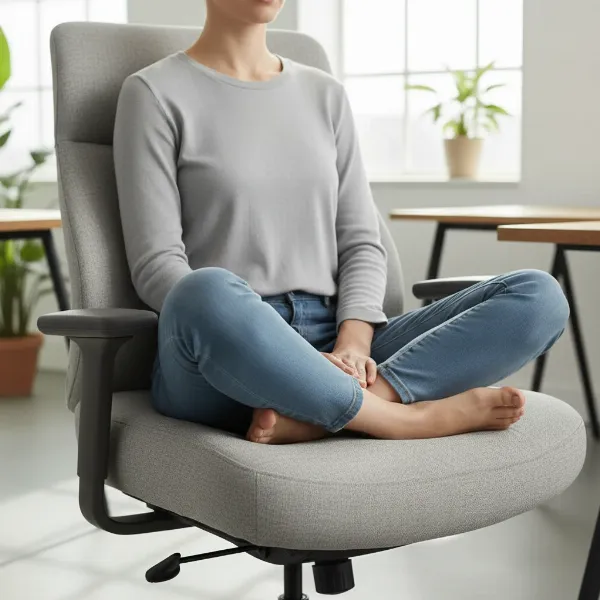 Close-up of a person sitting cross-legged comfortably in an ergonomic office chair, highlighting proper posture and support.
2.2. Challenges with Conventional Office Chairs
The fundamental problem with most office chairs is that they are optimized for a single, static posture: feet flat on the floor, back straight, and legs at a 90-degree angle. Their narrow seat bases, restrictive armrests, and limited adjustability make cross-legged sitting awkward and uncomfortable. This can lead to undesirable pressure points, compromised circulation, and forcing the body into unnatural positions that strain the spine and hips.
2.3. The Ergonomic Solution
Recognizing that people rarely sit in the same position for more than ten minutes, leading to an instinctive search for comfort and focus, manufacturers have begun designing ergonomic chairs specifically for flexible sitting. These specialized chairs provide the necessary space, support, and adjustability to comfortably accommodate cross-legged postures without sacrificing ergonomic benefits.
3. Key Components of an Ergonomic Chair for Cross-Legged Sitting
Finding the ideal ergonomic chair for cross-legged sitting means looking beyond standard features. Here are the crucial components that make a difference:
3.1. Wide and Deep Seat Cushion
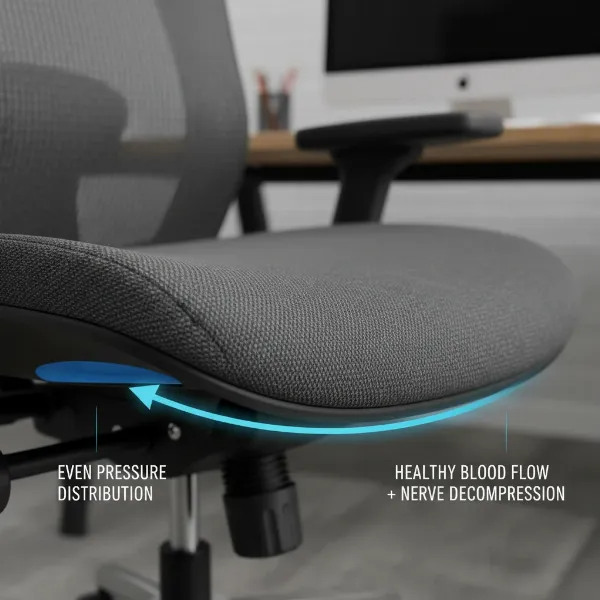
This is perhaps the most critical feature. A generously sized seat cushion provides ample room to comfortably cross your legs without feeling cramped or putting pressure on your thighs. Many users find chairs with a seat width of 25.5 inches or more to be ideal for this purpose. A wide and deep seat allows you to tuck your legs without them being pressed or restricted.
3.2. Adjustable or Removable Armrests
Armrests on traditional chairs often become an obstruction when attempting to sit cross-legged. Chairs designed for flexible sitting either come with easily adjustable armrests that can be lowered, rotated out of the way, or even removed entirely, or are designed as armless chairs to begin with. This ensures unrestricted leg movement and freedom to change positions.
3.3. Lumbar Support
Even when sitting unconventionally, proper lumbar support remains vital. An ergonomic chair for cross-legged sitting should offer robust and often adjustable lumbar support to maintain the natural curvature of your lower spine. Some advanced models feature self-adaptive lumbar systems that automatically adjust to your back, regardless of your sitting position.
3.4. Flexible Backrest and Recline
A flexible backrest encourages dynamic movement and supports your spine naturally, adapting as you shift positions. Chairs with multiple recline angles, such as 95°, 113°, or 135°, allow you to lean back comfortably even with your legs crossed, providing continuous support through various postures.
3.5. Seat Height and Depth Adjustment
These standard ergonomic adjustments become even more important for flexible sitting. The ability to customize seat height ensures your feet can reach the floor when sitting traditionally, or that you have enough clearance for cross-legged positions. Adjustable seat depth allows you to maximize legroom when sitting criss-cross or pull the seat in for conventional upright posture.
3.6. Durable and Comfortable Materials
The material and cushioning of the seat are crucial. Look for chairs with soft, padded seat cushions made from materials like foam or fabric that provide excellent pressure relief. Mesh seats, while breathable, can sometimes be uncomfortable against the legs during prolonged cross-legged sitting.
3.7. Chair Base, Wheels, and Stability
A sturdy chair base with smooth-rolling casters ensures both stability and mobility. A 360-degree swivel allows you to easily move around your workspace without straining, which is particularly useful when changing sitting positions frequently.
4. Top Ergonomic Chair Models for Cross-Legged Sitting
When searching for the perfect chair that accommodates cross-legged sitting, several models consistently rise to the top for their unique features and ergonomic design. Here’s a comparison of leading options:
| Model | Key Features for Cross-Legged Sitting | Notable Ergonomic Features | Price Range (Approx.) | Best For |
|---|---|---|---|---|
| Steelcase Gesture | Wide seat, highly adjustable arms (can move out of the way) | Excellent dynamic support, adaptive back, wide range of adjustments | $1,000 – $1,500 | Premium users seeking ultimate flexibility and comprehensive support |
| Herman Miller Sayl | Flexible 3D intelligent back, good seat depth, passive sacral support | Unframed back encourages movement, unique aesthetic, PostureFit sacral support | $700 – $1,000 | Users valuing flexible back support and modern design |
| Sihoo Doro C300 Pro | Wider & deeper cushion, seat depth adjustment, ample legroom | Self-adaptive lumbar system, breathable mesh, extensive adjustability | $300 – $500 | Budget-conscious users needing wide, deep seat and adaptive lumbar |
| Pipersong Meditation Chair | Designed specifically for cross-legged sitting, rotating footstool | Multi-positional seat, promotes active sitting, comfortable for various postures | $200 – $400 | Dedicated cross-legged sitters, alternative seating enthusiasts |
| PUKAMI Criss Cross Chair | 25.5-inch wide seat cushion, armless design, spacious | U-shaped backrest, height adjustable, 360° swivel, good budget option | $150 – $300 | Budget-friendly, extremely wide seat, TikTok viral favorite |
| Autonomous ErgoChair Pro | Spacious 19″ x 19″ seat, good for shifting positions | Adjustable lumbar support, breathable mesh, synchro-tilt mechanism, 300 lbs capacity | $400 – $600 | Users needing a balance of wide seating, strong ergonomics, and adaptability |
“The best ergonomic chair isn’t just about sitting upright; it’s about supporting how you actually sit and move throughout your day, even if that means a pretzel-like posture.” – Dr. Emily R. Thorne, Certified Professional Ergonomist
5. How to Choose the Perfect Cross-Legged Ergonomic Chair
Selecting the right chair is a personal journey. Here’s a guide to help you make an informed decision:
5.1. Identify Your Needs
- Daily Usage Time: How many hours do you typically spend in your chair each day? For long hours, durability and extensive adjustability are paramount.
- Health Issues: Do you experience back pain, hip stiffness, or other discomforts? Prioritize chairs with advanced lumbar support, flexible backrests, and generous seating.
- Budget: Ergonomic chairs range widely in price. Determine what you’re willing to invest, remembering that a higher price often correlates with superior materials, adjustability, and longevity.
5.2. Test and Try
If possible, visit a showroom to physically try out chairs. Sit in them in your preferred cross-legged position. Pay attention to how the seat feels, whether the armrests interfere, and if the back support is adequate. If an in-person test isn’t feasible, read multiple online reviews from users with similar sitting habits to gauge real-world performance. Look for chairs with generous return policies.
5.3. Consider Your Workspace
Evaluate your current desk height and the overall space available in your office. Some chairs, especially those with very wide seats or integrated footrests, might have a larger footprint. Ensure the chair’s dimensions are compatible with your existing setup.
Conclusion
The traditional notion of sitting rigidly in an office chair is gradually giving way to a more natural, dynamic approach to posture. For those who find comfort and focus in cross-legged sitting, investing in an ergonomic chair specifically designed to support this posture is a game-changer. By prioritizing features like wide and deep seats, adjustable armrests, robust lumbar support, and flexible backrests, you can transform your workspace into a haven of comfort and productivity.
Don’t let your chair dictate your comfort. Choose a chair that adapts to you, supporting your unique sitting style for a healthier, more flexible work life. What’s your favorite way to sit when you’re deeply focused?
Frequently Asked Questions
Is sitting cross-legged bad for your posture?
While traditional ergonomic advice often recommends keeping both feet flat on the floor, sitting cross-legged is not inherently “bad” if done correctly and with the right support. When facilitated by an ergonomic chair designed for flexible postures, it can reduce muscle tension, promote hip flexibility, and even engage core muscles temporarily, without straining the spine. However, without proper support, it can potentially disrupt hip alignment or restrict blood flow.
What is the best type of seat for cross-legged sitting?
The best type of seat for cross-legged sitting is typically wide, deep, and well-padded. A generous seat width (e.g., 25.5 inches) provides ample space for legs without feeling cramped, while sufficient depth allows for various leg tucking positions. Padded cushions made from foam or fabric are generally more comfortable than mesh for direct leg contact over long periods.
Can I use a regular ergonomic chair for cross-legged sitting?
While some highly adjustable ergonomic chairs might offer a degree of flexibility, most regular Ergonomic Chairs are not optimally designed for cross-legged sitting. Their narrower seats, fixed armrests, and lumbar support systems are typically configured for a more conventional upright posture. Attempting to sit cross-legged in such chairs may lead to discomfort, pressure points, and reduced ergonomic benefits.