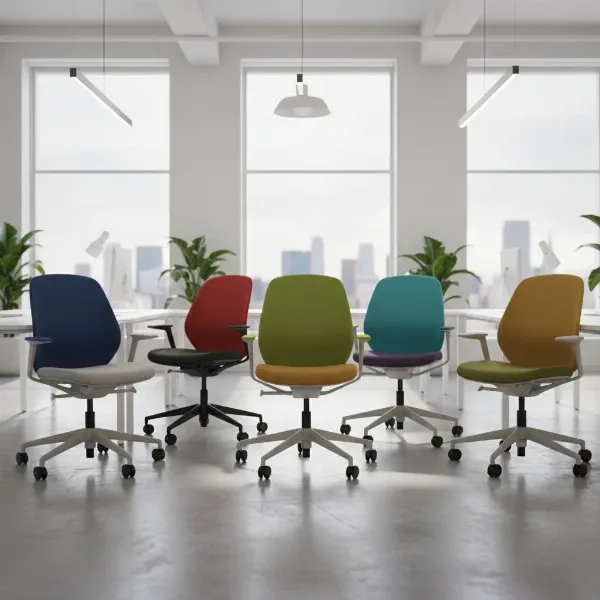
Working long hours at a desk can take a toll on your body, often leading to discomfort, pain, and reduced productivity. While an ergonomic chair is a fantastic starting point, truly optimizing your workspace for health and efficiency means looking beyond the chair itself. The right office chair accessories—specifically high-quality cushions, supportive footrests, and protective mats—can transform your sitting experience, providing targeted support, improving posture, and safeguarding your floors. These seemingly small additions can make a monumental difference in your daily comfort and long-term well-being, helping you maintain focus and energy throughout your workday.
1. What is an Ergonomic Chair?
An ergonomic chair is specifically designed to support the human body in a healthy, natural posture, promoting comfort and reducing the risk of musculoskeletal issues often associated with prolonged sitting. Unlike conventional office chairs, ergonomic models offer extensive adjustability to conform to an individual’s unique body shape and work requirements. This adaptability is crucial for maintaining proper spinal alignment and evenly distributing body weight.
1.1. Definition of Ergonomic Chair
|
Our Picks for the Best Ergonomic Chair in 2026
As an Amazon Associate I earn from qualifying purchases.
|
||
| Num | Product | Action |
|---|---|---|
| 1 | Ergonomic Office Chair with Footrest - Adjustable Lumbar Support & Headrest, 90-160° Reclining Mesh Back Computer Chair - Home Office/Gaming, 350lbs Capacity (SGS Certified) |

|
| 2 | TRALT Office Chair - Ergonomic Desk Chair with Adjustable Lumbar Support, Mesh Computer Chair, Executive Chairs for Home Office Comfortable Lumbar Support (Black) |
|
| 3 | TRALT Office Chair Ergonomic Desk Chair, 330 LBS Home Mesh Office Desk Chairs with Wheels, Comfortable Gaming Chair, High Back Office Chair for Long Hours (Black) |
|
| 4 | Sweetcrispy Office Computer Desk Chair, Ergonomic High-Back Mesh Rolling Work Chairs with Wheels and Adjustable Headrests, Comfortable Lumbar Support, Comfy Flip-up Arms for Home, Bedroom, Study,Black |
|
| 5 | Marsail Ergonomic Office Chair: Office Desk Chair with High Back Mesh and Adjustable Lumbar Support Rolling Work Swivel Task Chairs with Wheel 3D Armrests and Headrest |
|
| 6 | PatioMage Ergonomic Office Chair, Big and Tall Desk Chair with Adjustable Lumbar Support & Seat Depth, High Back Computer Chair, Swivel Mesh Chairs with Wheels for Home Office, Black |
|
| 7 | Marsail Ergonomic Office Chair Ergonomic Gaming Chair with Lumbar Support, 2D Headrest, Adjustable Armrests, Contoured Seat Cushion, Computer Desk Chair with Wheels for Home and Office |
|
| 8 | Ergonomic Office Chair, Mesh Seat Cushion with 3D Armrests and 3D Headrest, Adjustable Lumbar Support with 90-120° Rocking Function, SGS Class 4 Gas Clylinder, Black |
|
| 9 | Fizzin Ergonomic Office Chair, 400 LBS Computer Chairs with Adjustable Lumbar Support, Breathable Mesh Desk Chair Ergonomic with Thickened Cushion, Comfy Home Office Desk Chair (Black) |
|
| 10 | Ergonomic Office Chair with Footrest - Adjustable Lumbar Support & Headrest, 90-160° Reclining Mesh Back Computer Chair - Home Office/Gaming, 350lbs Capacity (SGS Certified) |
|
An ergonomic chair is a seating solution engineered with advanced adjustability and contoured support to maximize user comfort, health, and efficiency in a seated position. Its design considers anthropometric data and biomechanical principles to support the natural curves of the spine, reduce pressure points, and encourage dynamic sitting. This proactive approach helps mitigate common issues like back pain, neck strain, and poor circulation.
1.2. Benefits of Ergonomic Chair
Investing in an ergonomic chair offers a wealth of benefits that extend far beyond simple comfort, impacting your health, focus, and overall quality of life at work.
- Posture Improvement: An ergonomic chair helps maintain the natural S-curve of your spine, preventing slouching and promoting an upright, healthy posture. This reduces strain on your back muscles and ligaments.
- Back and Neck Pain Reduction: With superior lumbar support, adjustable headrests, and proper alignment features, ergonomic chairs significantly reduce pressure on your spine, alleviating existing back and neck pain and preventing new issues from developing.
- Increased Productivity: When you’re comfortable and free from pain, your ability to concentrate improves dramatically. By minimizing distractions caused by physical discomfort, an ergonomic chair allows you to work more efficiently and maintain higher levels of focus throughout the day.
2. Key Components of an Ergonomic Chair
Understanding the various adjustable components of an ergonomic chair is essential to fully utilize its potential for comfort and support. Each part plays a specific role in tailoring the chair to your body.
2.1. Headrest
An ergonomic headrest supports your head and neck, reducing tension in the upper spine and shoulders. Ideally, it should be adjustable in height and angle, allowing you to recline comfortably while maintaining proper cervical alignment. This is especially beneficial during breaks or when engaging in tasks that require leaning back.
2.2. Backrest
The backrest is a critical component for spinal health. It should mimic the natural curvature of your spine, providing firm yet comfortable support, particularly in the lumbar region. Many ergonomic backrests offer height, tilt, and tension adjustments, enabling you to find the perfect recline and resistance for your body.
Lumbar Support
Lumbar support is arguably the most vital feature of an ergonomic backrest. It specifically targets the lower back (lumbar region) to prevent slouching and maintain the inward curve of your spine. Adjustable lumbar support, often found in the form of a movable pad or internal mechanism, allows you to customize the depth and height of this support to precisely fit your unique spinal curve, significantly reducing lower back pain.
2.3. Armrests
Armrests serve to support your arms, shoulders, and wrists, alleviating strain that can accumulate during typing or mouse usage. For optimal ergonomics, armrests should be adjustable in multiple dimensions to allow your elbows to rest at a 90-degree angle, keeping your shoulders relaxed and wrists straight.
Height and Angle Adjustment
Truly ergonomic armrests offer more than just height adjustment. Look for “2D,” “3D,” or even “4D” armrests that can adjust not only up and down but also forward, backward, pivot inward/outward, and sometimes even side-to-side. This comprehensive adjustability ensures your arms are comfortably supported, reducing the risk of repetitive strain injuries and promoting better posture at your desk.
2.4. Seat Cushion
The seat cushion is where your body makes primary contact with the chair, making its quality paramount for comfort and pressure distribution. A well-designed ergonomic seat cushion prevents pressure points, particularly on the tailbone and hips, and promotes healthy blood circulation.
Material and Comfort
Ergonomic seat cushions are typically made from high-density memory foam, often infused with gel or bamboo charcoal for enhanced breathability and cooling. Memory foam conforms to your body shape, distributing weight evenly and relieving pressure on the tailbone (coccyx) and ischial tuberosities (“sit bones”). A “waterfall” front edge can also reduce pressure on the thighs, preventing circulatory issues.
2.5. Chair Base
The chair base provides stability and mobility for your ergonomic chair. A sturdy, five-point star base is standard for most office chairs, offering reliable support and preventing tipping.
Wheels and Stability
The wheels (casters) on an ergonomic chair base are crucial for smooth movement across your workspace. They typically come in two types: soft casters for hard floors (to prevent scratching) and hard casters for carpets (to move freely). Stability is also enhanced by the overall construction of the base, ensuring safe and effortless maneuvering around your desk without compromising balance.
3. Comparison Table of Ergonomic Chairs
While the core focus of this article is accessories, a brief comparison of ergonomic chairs themselves highlights the foundational elements these accessories enhance. Top brands excel in adjustability and material quality.
| Feature / Brand | Herman Miller (e.g., Aeron) | Steelcase (e.g., Gesture) | Haworth (e.g., Zody) | Mid-Range Ergonomic | Budget-Friendly Ergonomic |
|---|---|---|---|---|---|
| Price Range | High ($1,000 – $2,000+) | High ($800 – $1,500+) | High ($700 – $1,200+) | Medium ($300 – $700) | Low ($100 – $300) |
| Adjustability | Extensive (12+ points) | Extensive (10+ points) | Very Good (8-10 points) | Good (5-7 points) | Basic (3-4 points) |
| Lumbar Support | Highly Adjustable, PostureFit SL | Adaptive Bolstering | Asymmetrical Adjustment | Manual Adjustment | Fixed or Basic |
| Materials | High-performance mesh, aluminum | Fabric, leather, steel | Mesh, fabric, aluminum | Mesh, fabric, plastic | Fabric, plastic |
| Durability | Excellent (12-year warranty) | Excellent (12-year warranty) | Excellent (12-year warranty) | Good (5-year warranty) | Fair (1-3 year warranty) |
| User Reviews | Exceptional, industry benchmark | Very Positive, highly adaptable | Positive, unique lumbar | Generally Positive | Mixed |
| Key Selling Point | Iconic design, breathable Pellicle mesh | “Connects to your body,” natural movement | Asymmetrical back support | Value for features | Affordability |
4. Understanding Office Chair Accessories
Even the best ergonomic chair can be further enhanced with the right accessories. These additions fill gaps, provide specialized support, or protect your workspace, elevating your comfort and addressing specific needs.
4.1. Ergonomic Seat Cushions
An ergonomic seat cushion is a standalone accessory designed to improve comfort and support on any chair, whether it’s an office chair, car seat, or even a dining chair. These cushions are engineered to distribute pressure evenly, support the natural curve of your spine, and alleviate discomfort, especially during long periods of sitting.
Benefits of Ergonomic Seat Cushions
Adding an ergonomic seat cushion can provide significant advantages, particularly for those who spend many hours seated. These benefits directly contribute to better health and increased focus.
- Improved Posture: By elevating the hips slightly and supporting the pelvis, cushions encourage a more upright and neutral spinal alignment. This reduces the tendency to slouch and helps maintain the spine’s natural S-shape.
- Reduced Pressure on Tailbone and Hips: Many ergonomic cushions feature a U-shaped cutout at the rear. This design relieves direct pressure on the coccyx (tailbone), which is a common source of pain for many individuals, including those with sciatica or post-injury discomfort. They also distribute weight away from the ischial tuberosities.
- Enhanced Blood Circulation: Preventing pressure points and promoting proper posture helps maintain healthy blood flow to the lower extremities. Improved circulation reduces the risk of numbness, tingling, and fatigue in the legs and feet, keeping you more energized.
- Increased Comfort and Productivity: When you’re physically comfortable, your mind is free to focus on tasks. An ergonomic cushion minimizes fidgeting and discomfort, allowing for sustained concentration and, consequently, higher productivity.
- Support for Existing Chairs: Rather than investing in a brand-new Ergonomic Chair, a quality seat cushion can significantly upgrade the ergonomic properties of an existing chair, offering a cost-effective solution for better support.
Types and Materials
Ergonomic seat cushions come in various designs and materials, each offering specific benefits.
- Memory Foam: The most common material, memory foam, conforms to your body’s contours, providing customized support and even pressure distribution. High-density memory foam is preferred for durability and consistent support.
- Gel-Infused Foam: Combines the conforming properties of memory foam with cooling gel particles or layers. This helps dissipate heat, preventing the cushion from becoming uncomfortably warm during extended use.
- Hybrid Cushions: These combine multiple materials, such as a memory foam base with a gel top layer or a breathable mesh cover, to offer a balance of support, comfort, and airflow.
- Coccyx Cushions: Specifically designed with a U-shaped cutout to relieve pressure on the tailbone. These are ideal for individuals experiencing coccyx pain, sciatica, or postpartum discomfort.
- Wedge Cushions: Designed with a sloped profile to tilt the pelvis slightly forward, promoting a more upright posture and reducing pressure on the lower back.
When choosing a seat cushion, consider factors like your body weight, any specific pain points, and the material’s breathability. A non-slip bottom is also a valuable feature to keep the cushion securely in place.
4.2. Ergonomic Footrests
An ergonomic footrest is a crucial accessory for anyone whose feet don’t sit flat on the floor while using their office chair at the correct ergonomic height. It helps complete the ergonomic triangle of support—feet, back, and arms—ensuring your entire body is properly aligned.
Benefits of Ergonomic Footrests
Utilizing an ergonomic footrest can address several common discomforts and contribute to a healthier sitting posture.
- Promotes Proper Posture: A footrest ensures your feet are flat and firmly supported, allowing your knees to be at a comfortable 90-degree angle, or slightly greater, with your hips. This prevents dangling feet, which can cut off circulation and lead to slouching.
- Enhances Blood Circulation: By elevating your feet slightly, a footrest encourages better blood flow in your legs and reduces pressure on the veins, mitigating swelling, numbness, and the risk of deep vein thrombosis (DVT) during prolonged sitting.
- Reduces Pressure on Lower Back and Thighs: When your feet are properly supported, the pressure is taken off your lower back and the backs of your thighs. This helps prevent sciatic nerve pain and discomfort in the hamstrings.
- Increases Comfort and Flexibility: Many footrests offer adjustable heights and angles, and some even have a rocking function. This allows you to reposition your feet and legs throughout the day, promoting dynamic movement and reducing stiffness.
- Ideal for Shorter Individuals: For those who are shorter than average, a footrest is essential to achieve the correct ergonomic posture when their chair is adjusted to the optimal desk height.
Types and Features
Ergonomic footrests come in various designs, catering to different needs and preferences.
- Adjustable Height and Angle: Most high-quality footrests allow you to adjust the height and tilt angle. This is critical for finding the perfect position that keeps your feet flat and your legs comfortable. Some models offer a “free-floating” or rocking platform for dynamic movement.
- Material:
- Padded Foam/Fabric: Provides a soft, comfortable surface, often with a non-slip cover, ideal for barefoot or sock-wearing use. High-density foam ensures lasting support.
- Hard Plastic/Rubber: Durable and easy to clean, often featuring textured surfaces for massage or grip. Best suited for use with shoes.
- Metal/Wood: Offers robust stability and a more professional aesthetic. May include rubberized tops for grip.
- Size and Shape: Footrests vary in size. Consider a wider platform if you tend to shift your foot position frequently. Some have a symmetrical shape for rocking, while others have a contoured design.
- Integrated vs. Standalone: While most footrests are standalone accessories, some ergonomic office chairs feature integrated, retractable footrests, often designed for reclining and relaxation rather than continuous ergonomic support during work.
When selecting a footrest, look for a non-slip base to ensure it stays in place and a sturdy construction that can withstand daily use.
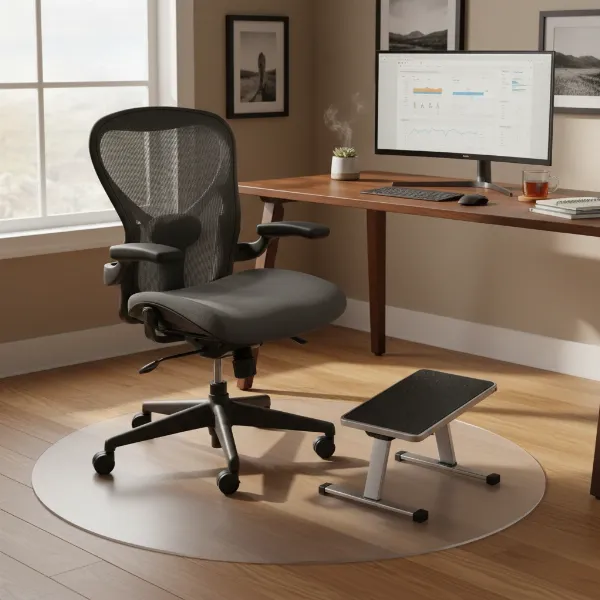 A modern office chair with an ergonomic seat cushion, an adjustable footrest, and a clear chair mat on hardwood floor, bathed in soft, natural light, reflecting productivity and comfort.
4.3. Office Chair Mats
An office chair mat is often an overlooked but essential accessory that serves multiple critical functions for your workspace and flooring. It protects your floors from wear and tear, facilitates smooth chair movement, and can even contribute to your overall comfort.
Benefits of Office Chair Mats
Integrating a chair mat into your workspace offers both practical and ergonomic advantages.
- Floor Protection: This is the primary benefit. Rolling office chair casters, especially on hard floors, can cause scratches, scuffs, and indentations over time. On carpets, repeated wheel movement can compress fibers, leading to unsightly wear patterns and even permanent damage. A chair mat acts as a protective barrier, significantly extending the life of your flooring.
- Enhanced Chair Mobility: A smooth, low-friction surface allows your office chair to glide effortlessly. This is particularly beneficial on carpeted surfaces where casters can get snagged, making movement difficult and requiring more effort. Easy mobility reduces strain on your back and arms from pushing or pulling your chair.
- Reduced Noise: On hard floors, chair casters can produce an irritating scraping sound. A chair mat helps dampen this noise, contributing to a quieter and more peaceful work environment.
- Improved Safety: By providing a stable, even surface for your chair, mats can reduce the risk of tripping over bunched-up carpets or uneven floor transitions.
- Aesthetic Appeal: Modern chair mats come in various materials and designs, including transparent options that allow your flooring to show through, maintaining the aesthetic of your office while providing protection.
Types and Materials
Choosing the right chair mat depends heavily on your flooring type and personal preferences.
- Hard Floor Mats:
- Design: Feature a smooth, flat underside that grips hard surfaces (hardwood, laminate, tile, vinyl) without leaving marks.
- Materials:
- Polycarbonate: Highly durable, impact-resistant, clear or translucent, and provides an excellent rolling surface. It’s a premium plastic that resists cracking.
- Vinyl (PVC): A common and affordable option. It offers good protection but can sometimes become brittle or warp over time, especially with heavy use.
- Tempered Glass: The most premium option. Extremely durable, capable of supporting heavy weights (up to 1000 lbs), scratch-resistant, and offers the smoothest glide. It’s completely transparent and won’t discolour, but is typically the most expensive.
- Carpet Mats:
- Design: Feature a studded or “cleated” underside with small spikes that grip into carpet fibers, preventing the mat from shifting or sliding. The length of the cleats should match your carpet pile (shorter for low pile, longer for high pile).
- Materials:
- Polycarbonate: Offers excellent durability and clarity for carpeted floors, with specialized cleats.
- Vinyl (PVC): A cost-effective option for carpets, also with a studded backing.
- Specialty Mats:
- Anti-Fatigue Mats: While not traditional chair mats, these are sometimes used at standing desks or alongside chairs for foot cushioning. They are designed to reduce strain when standing for long periods.
- Bamboo Mats: An eco-friendly alternative, providing a unique aesthetic and sturdy surface.
When selecting a mat, ensure it’s specifically designed for your floor type. Using a carpet mat on a hard floor can scratch the surface, and a hard floor mat on carpet will slide around. Consider the size and shape to ensure adequate coverage for your entire range of chair movement.
5. Buying Guide: Choosing the Best Office Chair Accessories
Navigating the market for ergonomic office chair accessories can be overwhelming. This guide will help you identify what truly matters to make an informed decision for cushions, footrests, and mats.
5.1. Identify Your Needs
Before shopping, take a moment to assess your current setup and any discomforts you experience. This will guide your choices toward the most effective solutions.
- Daily Usage Time: How many hours do you spend in your chair each day? If it’s more than 4-6 hours, investing in higher-quality, durable accessories is critical for long-term comfort and health.
- Health Issues: Do you suffer from lower back pain, sciatica, tailbone pain, knee issues, or poor circulation? Specific accessories (e.g., coccyx cushion, adjustable footrest) are designed to target these problems.
- Budget: Determine how much you’re willing to spend. While premium accessories offer superior performance and durability, many mid-range options provide excellent value.
5.2. Essential Features to Look For
Different accessories have different must-have features. Prioritize these to ensure you get the most out of your investment.
For Ergonomic Seat Cushions:
- Pressure Relief Design: Look for a U-shaped cutout for tailbone relief and a contoured shape that distributes weight evenly.
- Material: High-density memory foam (for support) often combined with cooling gel or breathable fabric (for comfort).
- Non-Slip Base: Essential to keep the cushion from sliding around on your chair.
For Ergonomic Footrests:
- Adjustable Height and Angle: Allows you to customize the position for optimal leg and foot support. Dynamic or rocking footrests can also be beneficial for movement.
- Non-Slip Surface and Base: Ensures your feet stay put and the footrest doesn’t slide on the floor.
- Sturdy Construction: Durability is key, especially if you plan to use it daily.
For Office Chair Mats:
- Compatibility with Floor Type: Crucial! Smooth back for hard floors, studded/cleated back for carpets (matching pile height).
- Material: Polycarbonate or tempered glass offer superior durability and glide; PVC is a more budget-friendly option.
- Size and Shape: Ensure it covers your entire range of motion, extending beyond the chair’s footprint.
5.3. Material Considerations
The material choice significantly impacts the performance, durability, and feel of your accessories.
- Cushions:
- Memory Foam: Excellent for contouring and pressure relief.
- Gel: Adds cooling properties and firmer support.
- Breathable Fabric (Mesh): Important for airflow, especially with memory foam.
- Footrests:
- Padded Foam/Fabric: Best for comfort when used barefoot or with socks.
- Hard Plastic/Metal: Durable and often with textured surfaces, suitable for shoes.
- Mats:
- Polycarbonate: Clear, durable, resistant to cracking, good for both hard floors and low-pile carpets.
- Tempered Glass: Ultra-durable, fully transparent, premium feel, but more expensive.
- PVC/Vinyl: Affordable, but may degrade over time.
5.4. Reputable Brands
While this article does not endorse specific products, knowing reputable brands in the ergonomic space can guide your search for quality accessories. Look for brands known for their commitment to ergonomics and durable products.
- Cushions: ComfiLife, Purple, Cushion Lab, Everlasting Comfort
- Footrests: ErgoFoam, Humanscale, Fellowes, 3M
- Mats: Floortex, Deflecto, Amazon Basics, Vitrazza (glass mats)
5.5. Testing and Trying
Whenever possible, physical interaction with accessories can provide invaluable insight.
- Visit a Store: If feasible, visit an office supply or furniture store to physically try out different cushions and footrests. Sit on them, adjust them, and see how they feel with your current chair.
- Read Online Reviews: Look for comprehensive reviews from verified purchasers, paying attention to comments about long-term durability, comfort, and effectiveness for specific conditions. User experiences often highlight nuances that product descriptions might miss.
“The true test of an ergonomic accessory isn’t just how it feels for a few minutes, but how it supports your body consistently over weeks and months of daily use.” – Dr. Elena Petrova, Certified Ergonomist
6. Popular Ergonomic Chair Accessory Models
While specific product recommendations are outside the scope of this article, understanding categories helps.
6.1. High-End Ergonomic Cushions
These often feature advanced materials like multi-layer memory foam with cooling gel, innovative contours, and durable, breathable covers. They provide superior pressure relief and long-lasting support, often coming with higher price tags but offering enhanced comfort and durability.
6.2. Budget-Friendly Ergonomic Footrests
Basic, yet effective footrests are available that offer essential height and angle adjustability, often made from sturdy plastic or basic padded foam. These can significantly improve posture and circulation without a hefty investment.
6.3. Heavy-Duty Chair Mats
For demanding environments or heavier users, robust chair mats made from tempered glass or thick polycarbonate are popular. These are designed to withstand significant weight and constant rolling, providing unparalleled floor protection and glide.
Conclusion
Optimizing your workspace with the right ergonomic office chair accessories is a proactive step toward a healthier, more productive work life. Whether you’re seeking to alleviate nagging back pain, improve circulation, or protect your valuable flooring, thoughtfully chosen cushions, footrests, and mats can make a profound difference. These accessories are not just add-ons; they are essential components of a truly ergonomic setup, working in harmony with your chair to support your body’s natural alignment and enhance your comfort. By considering your individual needs and prioritizing quality features, you can create a workspace that not only looks good but also actively promotes your well-being. Are you ready to transform your daily work experience?
Frequently Asked Questions
What is the most important office chair accessory for back pain?
For individuals suffering from back pain, an ergonomic seat cushion, particularly one with a U-shaped cutout for coccyx relief and supportive memory foam, is often considered the most crucial accessory. It helps improve spinal alignment, reduces pressure on the lower back and tailbone, and supports natural posture.
Can an office chair footrest help with circulation?
Yes, an office chair footrest can significantly improve circulation. By elevating your feet and allowing your knees to be at a 90-degree angle or slightly greater, it prevents pressure on the backs of your thighs, where blood vessels can be compressed. This promotes better blood flow to your lower legs and feet, reducing swelling and discomfort.
How do I choose the right office chair mat for my flooring?
To choose the right office chair mat, you must first identify your flooring type. For hard floors like wood or tile, select a mat with a smooth, flat underside to prevent scratches. For carpeted floors, choose a mat with cleats or studs on the bottom designed to grip the carpet fibers and prevent sliding. Ensure the cleat length matches your carpet pile.