Have you ever jumped out of your ergonomic mesh chair, only to be met with a surprising jolt of static electricity? That sudden, unpleasant zap isn’t just startling; it can disrupt your focus and make your otherwise comfortable workspace feel less inviting. As an expert in ergonomic seating with over a decade of experience, I understand that even the most advanced ergonomic chairs can sometimes fall victim to this common phenomenon. But don’t worry, you don’t have to live with the shocks. This guide will delve into the science behind static on mesh chairs and provide you with practical, effective solutions to reclaim your comfort and productivity.
1. Understanding Your Ergonomic Chair
Before we tackle the shocks, let’s briefly appreciate the marvel of modern seating. An ergonomic chair is more than just a place to sit; it’s a carefully engineered tool designed to support your body in a neutral, healthy posture. These chairs are built with adjustability in mind, allowing you to customize everything from lumbar support to armrest height, ensuring your spine is aligned, pressure points are minimized, and circulation is maintained. The goal is to enhance your well-being and productivity during long hours of sitting.
1.1. Definition of Ergonomic Chair
|
Our Picks for the Best Ergonomic Chair in 2026
As an Amazon Associate I earn from qualifying purchases.
|
||
| Num | Product | Action |
|---|---|---|
| 1 | Fizzin Ergonomic Office Chair, 400 LBS Computer Chairs with Adjustable Lumbar Support, Breathable Mesh Desk Chair Ergonomic with Thickened Cushion, Comfy Home Office Desk Chair (Black) |

|
| 2 | Ergonomic Office Chair with Footrest - Adjustable Lumbar Support & Headrest, 90-160° Reclining Mesh Back Computer Chair - Home Office/Gaming, 350lbs Capacity (SGS Certified) |
|
| 3 | Sweetcrispy Office Computer Desk Chair, Ergonomic High-Back Mesh Rolling Work Chairs with Wheels and Adjustable Headrests, Comfortable Lumbar Support, Comfy Flip-up Arms for Home, Bedroom, Study,Black |
|
| 4 | Ergonomic Office Chair with Footrest - Adjustable Lumbar Support & Headrest, 90-160° Reclining Mesh Back Computer Chair - Home Office/Gaming, 350lbs Capacity (SGS Certified) |
|
| 5 | Marsail Ergonomic Office Chair Ergonomic Gaming Chair with Lumbar Support, 2D Headrest, Adjustable Armrests, Contoured Seat Cushion, Computer Desk Chair with Wheels for Home and Office |
|
| 6 | TRALT Office Chair - Ergonomic Desk Chair with Adjustable Lumbar Support, Mesh Computer Chair, Executive Chairs for Home Office Comfortable Lumbar Support (Black) |
|
| 7 | Marsail Ergonomic Office Chair: Office Desk Chair with High Back Mesh and Adjustable Lumbar Support Rolling Work Swivel Task Chairs with Wheel 3D Armrests and Headrest |
|
| 8 | TRALT Office Chair Ergonomic Desk Chair, 330 LBS Home Mesh Office Desk Chairs with Wheels, Comfortable Gaming Chair, High Back Office Chair for Long Hours (Black) |
|
| 9 | PatioMage Ergonomic Office Chair, Big and Tall Desk Chair with Adjustable Lumbar Support & Seat Depth, High Back Computer Chair, Swivel Mesh Chairs with Wheels for Home Office, Black |
|
| 10 | Ergonomic Office Chair, Mesh Seat Cushion with 3D Armrests and 3D Headrest, Adjustable Lumbar Support with 90-120° Rocking Function, SGS Class 4 Gas Clylinder, Black |
|
An ergonomic chair is a type of seating specifically designed to provide optimal support, comfort, and health benefits to the user. It adapts to the individual’s body mechanics, promoting good posture and reducing the risk of musculoskeletal issues often associated with prolonged sitting.
1.2. Benefits of Ergonomic Chairs
The advantages of investing in an ergonomic chair are numerous.
- Posture Improvement: By supporting the natural curve of your spine, ergonomic chairs help maintain proper alignment, preventing slouching and promoting a healthier seated posture.
- Back and Neck Pain Reduction: Adjustable features like lumbar support and headrests alleviate strain on your back and neck, significantly reducing discomfort and pain over time.
- Increased Productivity: When you’re comfortable and free from pain, you can concentrate better and work more efficiently, leading to enhanced focus and overall productivity.
2. Why Your Mesh Chair Gives You Static Shocks
Even with all the benefits, the material science of mesh chairs can sometimes lead to an annoying problem: static electricity. Understanding why these shocks occur is the first step toward stopping them.
2.1. Definition of Static Electricity
Static electricity is an imbalance of electric charges within or on the surface of a material. It occurs when electrons transfer from one object to another due to friction, resulting in one object having a net positive charge and the other a net negative charge. When you touch a conductive object, these accumulated charges rapidly discharge, creating the familiar “zap” or shock.
2.2. Common Causes of Static Build-up
Several factors contribute to the frustrating build-up of static electricity on your mesh ergonomic chair and your body.
Dry Air and Low Humidity
This is arguably the biggest culprit. Dry air lacks the moisture content needed to dissipate electrical charges. In environments with low humidity, especially during winter months when heating systems dry out the air, electrons can accumulate more easily on surfaces and bodies, leading to frequent static discharges.
Friction from Movement
As you sit, shift, and get up from your chair, the friction between your clothing, your skin, and the mesh fabric of the chair causes electrons to transfer. This triboelectric effect is a primary generator of static charge. The constant rubbing creates an electrical imbalance, setting the stage for a shock when you next touch a grounded object.
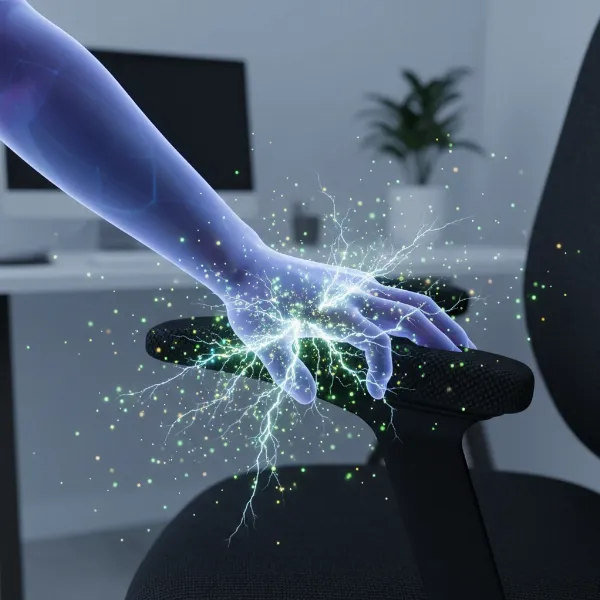 Visual representation of static electricity friction between clothing and a mesh chair, leading to a discharge.
Synthetic Materials in Chairs, Clothing, and Flooring
Many modern ergonomic chairs, especially mesh chairs, utilize synthetic materials like polyester or nylon for their durability, breathability, and structural integrity. Similarly, many common clothing fabrics (like fleece, rayon, and some athletic wear) and carpets are also synthetic. These materials are excellent insulators, meaning they tend to hold onto electrical charges rather than allowing them to dissipate. When synthetic materials rub together, they are highly prone to generating static.
Lack of Grounding
For static electricity to dissipate harmlessly, there needs to be a path to the ground. In many office or home environments, individuals and chairs can become electrically isolated. Rubber-soled shoes, plastic chair casters, and non-conductive flooring materials can all prevent charges from safely flowing away, allowing them to build up until a discharge occurs.
Dust and Debris
Surprisingly, dust and pet hair can also contribute to static build-up. These tiny particles can become electrically charged themselves and adhere to surfaces due to static cling, exacerbating the problem by adding more charged elements to your environment.
3. How to Stop the Shock: Effective Solutions for Mesh Chairs
Armed with an understanding of why static happens, you can now proactively implement strategies to prevent those annoying shocks. Many of these solutions tackle the root causes directly, making your workspace a more comfortable, static-free zone.
3.1. Increasing Room Humidity
Since dry air is a major contributor to static, increasing the moisture in your environment is one of the most effective solutions.
- Humidifiers: A small room humidifier placed near your workspace can significantly boost air moisture levels, allowing static charges to dissipate more readily. Aim for indoor humidity levels between 40-60%.
- Water Bowls: If a humidifier isn’t an option, placing bowls of water near heating vents or radiators can add some moisture to the air.
- Indoor Plants: Houseplants naturally release moisture into the air, offering a green and effective way to combat dryness.
- Wipe Down Surfaces: Occasionally wiping down your chair, desk, and other surfaces with a slightly damp cloth can neutralize existing charges and temporarily reduce static cling.
3.2. Anti-Static Treatments for Your Chair
Directly treating your mesh chair can create a barrier against static build-up.
- Commercial Sprays: Products like Static Guard are specifically designed to neutralize static electricity on fabrics. A light misting on your mesh chair and even your carpet can work wonders.
- DIY Solutions: You can create your own anti-static spray. A mixture of one part liquid fabric softener to eight parts water in a spray bottle, lightly misted onto the mesh, can help. Another option is a mix of water and white vinegar (e.g., 75% water, 25% white vinegar), which can also prevent static accumulation. Always test a small, inconspicuous area first to ensure it doesn’t stain or damage the material.
- Dryer Sheets: Lightly rubbing a dryer sheet over the mesh of your chair can quickly reduce static. These sheets contain chemicals that transfer to the fabric, helping to neutralize charges.
3.3. Adjusting Your Attire and Footwear
What you wear plays a significant role in static generation.
- Opting for Natural Fibers: Choose clothing made from natural materials like cotton, wool, silk, or linen. These fabrics are less prone to generating and holding static charges compared to synthetics.
- Avoiding Rubber Soles: Rubber and synthetic shoe soles are excellent insulators, preventing static charges from dissipating through your body to the ground. Opt for leather-soled shoes if possible, as leather is more conductive.
3.4. Grounding Techniques
Creating a path for static electricity to flow safely away is crucial.
- Direct Grounding: Before getting up from your chair, make it a habit to touch a grounded metal object, such as a metal desk leg or a computer tower, with your palm or knuckles. This allows the charge to discharge gradually and painlessly. Using your knuckles or palm has fewer nerve endings, making any residual shock less jarring.
- Grounding Mats and Wristbands: For a more consistent solution, consider using an anti-static mat under your chair or an ESD (Electrostatic Discharge) wristband connected to a grounded point. These devices continuously dissipate static charges from your body.
- Anti-Static Chair Casters: Some ergonomic chairs come with or can be upgraded with anti-static casters that help ground the chair, especially on anti-static flooring.
3.5. Chair Maintenance and Material Choices
Regular care and informed material choices can also mitigate static.
- Regular Cleaning: Dust and pet hair contribute to static. Regularly vacuuming or wiping down your chair and surrounding area can help.
- Choosing Anti-Static Mesh Materials: When purchasing a new ergonomic chair, inquire about its anti-static properties. Some mesh fabrics, like certain polyesters, are engineered to have a specific conductivity level or are treated with anti-static agents during manufacturing to reduce friction and dissipate charges more easily.
4. Comparing Solutions: A Quick Overview
Choosing the right approach depends on your specific situation. Here’s a comparison to help you decide:
| Solution Type | Effectiveness | Cost | Effort | Longevity |
|---|---|---|---|---|
| Increase Humidity | High | Medium | Low/Medium | Ongoing |
| Anti-Static Sprays (Comm.) | High | Low/Medium | Low | Temporary (re-apply) |
| DIY Anti-Static Sprays | Medium/High | Low | Low | Temporary (re-apply) |
| Dryer Sheets | Medium | Low | Low | Very Temporary |
| Natural Fiber Clothing | High | Varies | Low | Constant |
| Leather-Soled Shoes | Medium/High | Varies | Low | Constant |
| Grounding Mats/Wristbands | High | Medium | Low | Long-term |
| Anti-Static Mesh Chairs | High | High | Low | Long-term |
| Regular Cleaning | Low/Medium | Low | Low | Ongoing |
5. Buying Guide for a Static-Free Ergonomic Chair Experience
While the goal of an ergonomic chair is comfort and support, considering static prevention during your selection process can save you future frustration.
5.1. Identify Your Needs
Think about your environment. Is your office consistently dry? Do you often wear synthetic clothing? Identifying these factors helps you prioritize solutions. Your budget will also influence your options, from simple sprays to a new chair.
5.2. Essential Features
Look for chairs with materials known for lower static generation. While mesh is popular for breathability, some manufacturers use specialized anti-static treatments or more conductive fibers. Adjustable features are paramount for ergonomics, but also consider the chair’s overall material composition.
5.3. Material
When choosing a mesh ergonomic chair, inquire about the specific type of mesh. Polyester is common, but advanced polyester fabrics can be engineered to be more conductive. Natural fiber upholstery, while less common for mesh, would inherently reduce static. For office flooring, an anti-static mat is a simpler solution than replacing carpet.
5.4. Reputable Brands
Leading ergonomic chair brands like Herman Miller, Steelcase, and Haworth often invest in advanced materials and manufacturing processes. While static prevention might not be their primary selling point, their high-quality materials are generally less problematic than cheaper alternatives. Some industrial-grade ergonomic chairs are specifically designed with ESD (Electrostatic Discharge) properties for sensitive environments, though these might be overkill for a standard office.
5.5. Testing and Trying
If possible, visit a showroom to try out chairs. Pay attention to how the chair’s material interacts with your clothing. Reading online reviews can also provide valuable insights from other users regarding static issues with specific models.
6. Popular Ergonomic Chair Models for Static-Conscious Users
While no chair is entirely immune to static in extremely dry conditions or with certain clothing, some models and features can help.
6.1. High-End Ergonomic Chairs
Premium chairs often feature high-quality materials that, while synthetic, are often less prone to static than cheaper alternatives. For instance, some advanced mesh weaves are designed for better breathability and may also incorporate properties that minimize friction. Look for chairs with metal components that can help in grounding.
6.2. Budget-Friendly Ergonomic Chairs
For those on a tighter budget, focusing on environmental solutions (humidifiers, sprays) and personal attire choices will be key. If purchasing a new budget chair, prioritize models with durable, tightly woven mesh or consider adding an anti-static cushion cover made from natural fibers.
6.3. Ergonomic Chairs for Gamers
Gaming chairs, often known for their aggressive styling, frequently use synthetic leathers or heavily padded fabrics, which can be static magnets. If you’re a gamer, apply the solutions diligently: use anti-static sprays, manage room humidity, and be mindful of your clothing choices to avoid disruptive shocks during intense sessions.
The pervasive zap of static electricity from your ergonomic mesh chair is more than just a nuisance; it’s a solvable problem that can significantly impact your comfort and concentration. By understanding the interplay of dry air, friction, and materials, you can implement a range of effective strategies, from simple humidifier use to advanced grounding techniques. Embrace natural fibers, treat your environment, and proactively manage static to ensure your Ergonomic Chair truly serves its purpose: providing a comfortable, supportive, and now, static-free foundation for your productivity and well-being.
What anti-static measures have you found most effective in your workspace?
Frequently Asked Questions
Why do I get static shocks more often in winter?
You often experience more static shocks in winter because cold air holds less moisture, leading to lower indoor humidity levels. Dry air allows electrical charges to build up more easily on surfaces and your body, increasing the likelihood of a sudden discharge or “zap” when you touch a conductive object. Using a humidifier can counteract this effect.
Is static electricity harmful?
While the sudden shock from static electricity can be startling and uncomfortable, it is generally not harmful to humans. The voltage can be very high, but the current is extremely low and short-lived, which means it doesn’t pose a significant health risk. However, it can damage sensitive electronic equipment, making static prevention important in certain professional settings.