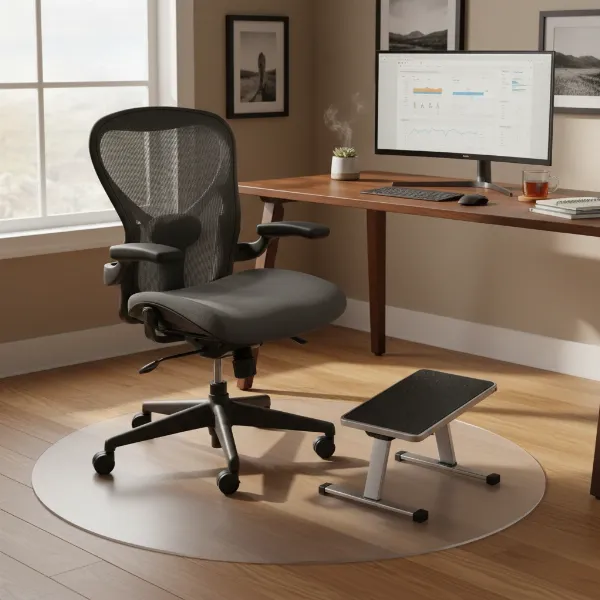
Spending countless hours at your desk can take a serious toll on your body, often leading to a familiar slump as you lean forward to focus. You might find yourself hunched over your keyboard, losing contact with your chair’s backrest and putting undue strain on your spine. This common posture, driven by the demands of detailed work, can negate many benefits of a standard ergonomic chair. The solution? An ergonomic chair equipped with a forward tilt mechanism, a less common but profoundly beneficial feature designed to support your body even when your work demands a lean-in approach. It’s time to explore how this specialized adjustment can revolutionize your sitting experience, promoting healthier posture, reducing pain, and boosting your productivity.
1. What is an Ergonomic Chair with Forward Tilt?
An ergonomic chair with forward tilt is specifically engineered to adapt to the body’s natural tendency to lean forward during concentrated tasks. Unlike traditional office chairs that primarily support reclining or upright neutral positions, these chairs provide crucial support precisely when you need it most – when engaging with your desk up close.
1.1. Definition of Forward Tilt Mechanism
|
Our Picks for the Best Ergonomic Chair in 2026
As an Amazon Associate I earn from qualifying purchases.
|
||
| Num | Product | Action |
|---|---|---|
| 1 | Ergonomic Office Chair with Footrest - Adjustable Lumbar Support & Headrest, 90-160° Reclining Mesh Back Computer Chair - Home Office/Gaming, 350lbs Capacity (SGS Certified) |

|
| 2 | TRALT Office Chair Ergonomic Desk Chair, 330 LBS Home Mesh Office Desk Chairs with Wheels, Comfortable Gaming Chair, High Back Office Chair for Long Hours (Black) |
|
| 3 | Sweetcrispy Office Computer Desk Chair, Ergonomic High-Back Mesh Rolling Work Chairs with Wheels and Adjustable Headrests, Comfortable Lumbar Support, Comfy Flip-up Arms for Home, Bedroom, Study,Black |
|
| 4 | Ergonomic Office Chair, Mesh Seat Cushion with 3D Armrests and 3D Headrest, Adjustable Lumbar Support with 90-120° Rocking Function, SGS Class 4 Gas Clylinder, Black |
|
| 5 | Marsail Ergonomic Office Chair Ergonomic Gaming Chair with Lumbar Support, 2D Headrest, Adjustable Armrests, Contoured Seat Cushion, Computer Desk Chair with Wheels for Home and Office |
|
| 6 | Fizzin Ergonomic Office Chair, 400 LBS Computer Chairs with Adjustable Lumbar Support, Breathable Mesh Desk Chair Ergonomic with Thickened Cushion, Comfy Home Office Desk Chair (Black) |
|
| 7 | Ergonomic Office Chair with Footrest - Adjustable Lumbar Support & Headrest, 90-160° Reclining Mesh Back Computer Chair - Home Office/Gaming, 350lbs Capacity (SGS Certified) |
|
| 8 | PatioMage Ergonomic Office Chair, Big and Tall Desk Chair with Adjustable Lumbar Support & Seat Depth, High Back Computer Chair, Swivel Mesh Chairs with Wheels for Home Office, Black |
|
| 9 | TRALT Office Chair - Ergonomic Desk Chair with Adjustable Lumbar Support, Mesh Computer Chair, Executive Chairs for Home Office Comfortable Lumbar Support (Black) |
|
| 10 | Marsail Ergonomic Office Chair: Office Desk Chair with High Back Mesh and Adjustable Lumbar Support Rolling Work Swivel Task Chairs with Wheel 3D Armrests and Headrest |
|
The forward tilt mechanism allows the seat pan of an ergonomic chair to angle slightly downward, typically between 5 to 15 degrees, towards the front. This subtle adjustment encourages your pelvis to rotate forward, which is key to maintaining the natural “S” curve of your spine, known as lumbar lordosis, even when you are leaning into your work. This position helps prevent the pelvis from tilting backward, a common culprit in flattening the lumbar curve and leading to a rounded upper back, often termed “C-slumping.” Instead, forward tilt promotes what ergonomists call “active sitting,” engaging your core and supporting a more dynamic and aligned posture.
1.2. Benefits of Ergonomic Chairs with Forward Tilt
Integrating forward tilt into your seating strategy offers a cascade of health and productivity benefits, addressing specific challenges that traditional chairs often overlook.
- Improved Posture: By tilting the seat forward, the chair helps maintain the spine’s natural curvature, preventing slouching and encouraging an upright, balanced position. This supports a healthier alignment from your lower back all the way up to your neck.
- Reduced Back and Neck Pain: When the pelvis is correctly rotated forward, pressure on the lumbar spine is significantly reduced. This minimizes strain on the lower back and neck, common areas of discomfort for desk workers who frequently lean forward without support.
- Increased Productivity and Focus: A supported, active sitting posture reduces fatigue and discomfort, allowing you to maintain concentration for longer periods. The improved spinal alignment and core engagement contribute to a feeling of alertness and readiness for tasks.
- Enhanced Core Engagement and Circulation: Forward tilt transforms static sitting into a more active experience, subtly engaging your core muscles. Additionally, by opening the hip angle (often to 100-110 degrees), it promotes better blood flow to your lower limbs, preventing numbness, tingling, and discomfort in the legs and feet.
- Facilitates Natural Movements: For tasks requiring close attention or reaching across the desk, forward tilt allows for more fluid and natural movements. It reduces the effort needed to adjust your position, keeping you comfortable and supported as you interact with your workstation.
2. Optimizing Your Posture: How Forward Tilt Works with Chair Components
While the forward tilt mechanism is the star, its effectiveness is amplified by how it integrates with other adjustable components of an ergonomic chair. These elements work in concert to ensure comprehensive support in this unique forward-leaning posture.
2.1. The Forward Tilt Mechanism Itself
At its core, the forward tilt is a sophisticated mechanical movement integrated into the seat pan. It typically features a lockable mechanism, allowing users to set a specific forward angle or to engage a free-floating tilt for dynamic movement. A robust mechanism is essential, as the added engineering complexity contributes to the chair’s overall stability and durability. This adjustment is usually controlled by a dedicated lever or knob, distinct from the main recline controls.
2.2. Backrest with Lumbar Support
Even in a forward-tilted position, appropriate backrest and lumbar support remain critical. A well-designed chair will allow the backrest to maintain contact with your lower back, supporting the natural curve even as your pelvis tilts forward. This ensures continuous spinal support, preventing the lumbar area from flattening and minimizing strain. Look for chairs where the backrest can adjust independently or where the forward tilt works harmoniously with the backrest’s recline, providing consistent support.
2.3. Seat Cushion Material and Comfort
The seat cushion plays a vital role in comfort and weight distribution, especially with forward tilt. High-density foam or breathable mesh materials can distribute pressure evenly, preventing discomfort even when more weight is shifted towards the front of the seat. The shape of the seat pan should also be contoured to support the forward pelvic rotation without creating undue pressure points on the thighs or hamstrings.
2.4. Adjustable Armrests
When leaning forward, your arms often need robust support to alleviate strain on the shoulders and neck. Armrests that are highly adjustable – in height, depth, and pivot – are invaluable. They allow you to position your forearms parallel to the floor, regardless of your forward lean, ensuring your shoulders remain relaxed and your wrists are in a neutral position while typing or using a mouse.
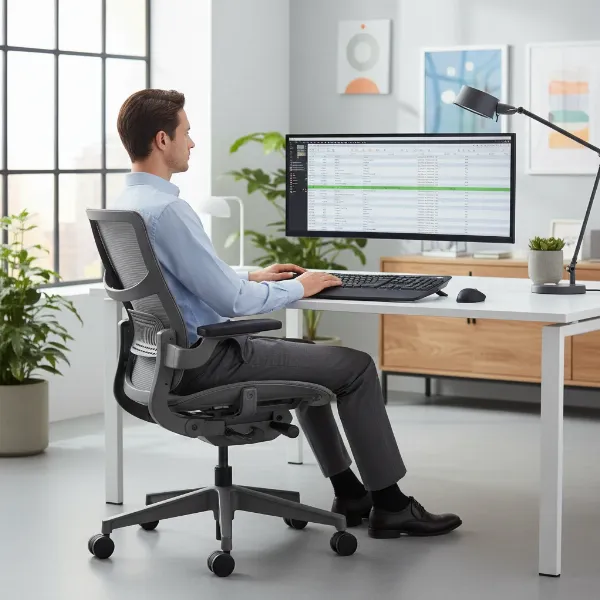 An individual sitting in an ergonomic chair with a slight forward tilt, demonstrating excellent posture and engagement with their desk.
3. Why is Forward Tilt Considered a Rare Feature?
Despite its significant benefits, the forward tilt mechanism isn’t a standard feature on most office chairs. This rarity stems from several factors, primarily related to design complexity, cost, and the perceived general seating posture.
Integrating a robust and adjustable forward tilt mechanism increases the engineering complexity of a chair by a significant margin (some estimates suggest 30-50%). This additional complexity often translates directly into higher manufacturing costs, making chairs with this feature more expensive than their traditional counterparts. Many mass-market office chairs prioritize a simpler, more universal design focused on reclining or static upright sitting, which appeals to a broader consumer base at a lower price point.
Furthermore, there’s a general lack of awareness about the specific advantages of forward tilt. Many users are accustomed to traditional seating and may not realize the unique support forward tilt offers, especially for highly focused, lean-in tasks. The initial sensation of forward tilt can also feel unusual, requiring an adjustment period, which might deter some users during a brief trial.
4. Who Needs a Forward Tilt Ergonomic Chair?
While any ergonomic chair promotes better health, the forward tilt feature caters to specific needs and work styles. Identifying if you are a candidate for this rare feature can make a substantial difference in your comfort and long-term well-being.
4.1. Identify Your Needs: Professions and Habits
If your work or hobbies frequently involve leaning forward, a forward tilt chair could be transformative.
- Creative Professionals: Designers, architects, illustrators, and artists often lean into their work when sketching, drawing, or focusing on detailed screen work.
- Writers and Programmers: Individuals who spend extended periods typing, coding, or writing, often find themselves naturally gravitating towards the screen.
- Gamers: Many competitive gamers adopt an alert, forward-leaning posture to maintain focus and quick reflexes.
- Students: Those who spend hours studying or taking notes at a desk can benefit from sustained ergonomic support.
- Individuals with Forward Lean Habit: If you consistently find yourself losing contact with your backrest and slouching forward in a standard chair, this feature directly addresses that habit.
4.2. Address Health Issues
For certain health concerns, forward tilt offers targeted relief.
- Chronic Lower Back or Neck Pain: If you experience pain when leaning forward in a standard chair due to unsupported spinal flexion, forward tilt can help maintain your natural lumbar curve and reduce strain.
- Poor Posture: It actively encourages a healthier, more upright posture, which can help retrain your body over time.
- Circulation Problems: Those experiencing numbness or tingling in the legs and feet from prolonged sitting may benefit from the improved blood flow facilitated by an open hip angle.
4.3. Daily Usage Time
The longer you spend seated and engaged in focused tasks, the more critical robust ergonomic support becomes. For individuals spending 6-8+ hours daily at a desk with frequent forward-leaning, the benefits of a forward tilt chair are significantly amplified.
4.4. Budget Considerations
As a premium feature, chairs with forward tilt typically fall into the mid-to-high-end price range. It’s an investment in your long-term health and productivity, often outweighing the initial cost by preventing discomfort and potential medical issues.
5. How to Choose and Maximize Your Forward Tilt Chair
Selecting the right forward tilt chair and knowing how to use it effectively are crucial steps to harnessing its full potential.
5.1. Essential Features to Look For
When shopping for an ergonomic chair with forward tilt, prioritize chairs that offer:
- Adequate Forward Tilt Range: Look for chairs offering at least 5-10 degrees of forward tilt, ideally with a locking mechanism to secure your preferred angle.
- Independent Adjustments: The best chairs will allow you to adjust the seat height, seat depth, backrest height, and armrest dimensions independently of the forward tilt.
- Synchronized Tilt (Optional but beneficial): Some advanced chairs offer a synchronized tilt where the backrest and seat move in a coordinated ratio, even during forward lean, to maintain continuous support.
- Quality Build Materials: Durability is key, especially for a feature that involves dynamic movement. Robust mechanisms and high-quality materials ensure longevity.
5.2. Reputable Brands and Models
Several manufacturers are known for incorporating effective forward tilt mechanisms into their chairs.
- Herman Miller: The Aeron chair, for example, is famously associated with its forward tilt (“perch mode”), which is a highly valued feature among its users for focused desk work.
- Steelcase: Another leader in ergonomic design, Steelcase offers models with advanced tilting mechanisms that can accommodate forward-leaning postures.
- Haworth: Known for innovative office solutions, some Haworth chairs provide comprehensive adjustability that includes forward-tilting capabilities.
- Boulies: Specific models like the Boulies OP180 and OP300 are cited for their forward tilt capabilities (e.g., 2° and 1.7° respectively, with position lock), designed to support an upright leaning posture.
- Hbada: The Hbada X7 is noted for intelligent lumbar-tracking components that can adjust to forward tilt.
5.3. Testing and Trying Your Ergonomic Chair
Before committing, if possible, visit a showroom to try the chair in person. Engage the forward tilt feature and spend some time in that position, simulating your typical work tasks. Pay attention to how your body feels – specifically your lower back, hips, and circulation in your legs. Read online reviews from other users who specifically use the forward tilt feature to understand their experiences and any potential adjustment periods.
> “Many users report an initial adjustment period with forward tilt, as it encourages a more active posture than they’re accustomed to. However, once adapted, it often becomes an indispensable feature for sustained focus and comfort, particularly for those who naturally gravitate towards their work.” – Dr. Evelyn Reed, Certified Professional Ergonomist
Conclusion
The forward tilt mechanism in an ergonomic chair is more than just another adjustment; it’s a specialized feature addressing a critical gap in traditional seating design. By facilitating a natural forward pelvic rotation, it empowers you to maintain optimal spinal alignment, reduce pain, improve circulation, and enhance focus even during the most intensive, lean-in tasks. While it may be a rarer feature, its profound impact on health and productivity makes it a worthwhile investment for professionals, gamers, and anyone committed to optimizing their long-term well-being at their desk. Isn’t it time your chair worked with your natural focus, rather than against it?
Frequently Asked Questions
Is forward tilt good for lower back pain?
Yes, forward tilt can be very beneficial for lower back pain. It works by gently rotating your pelvis forward, which helps maintain the natural inward curve (lordosis) of your lumbar spine. This reduces the pressure and strain on your lower back discs and ligaments that often occurs when you slouch or flatten your back while leaning forward in a traditional chair.
What is the ideal angle for forward tilt in an ergonomic chair?
The ideal forward tilt angle typically ranges from 5 to 15 degrees, though it depends on individual preference and the task at hand. A slight forward angle helps open the hip angle, improving circulation and promoting a more upright posture without feeling like you’re sliding off the chair. It’s important to find an angle that feels comfortable and supportive for your body.
Do all ergonomic chairs have forward tilt?
No, forward tilt is not a standard feature in all Ergonomic Chairs. It is often found in higher-end or specialized ergonomic models, as its inclusion adds to the complexity and cost of the chair’s design. Many chairs prioritize recline and basic upright support, making dedicated forward tilt a rarer, but valuable, enhancement.
How does forward tilt differ from reclining?
Forward tilt involves angling the seat pan slightly downward towards the front, encouraging a forward pelvic rotation for active, upright sitting. Reclining, on the other hand, involves leaning the backrest (and often the seat) backward, promoting a relaxed, laid-back posture. They serve opposite ergonomic purposes: forward tilt for focused work, recline for relaxation.
Who specifically benefits most from a forward tilt chair?
Individuals who spend long hours at a desk performing tasks that require them to lean forward to focus, such as designers, artists, writers, programmers, and gamers, benefit most. It also greatly helps those with chronic lower back pain, poor posture habits, or circulation issues in their legs, by providing continuous ergonomic support in these typically unsupported positions.