That persistent squeak from your office chair can transform a quiet workspace into an irritating symphony, disrupting your concentration and even making you self-conscious during important calls. Whether it’s a minor creak with every shift or a loud groan when you lean back, an annoying squeaky chair signals that something needs attention. The good news is that most squeaking chairs can be silenced with a few simple tools and a bit of effort. This guide will walk you through the common culprits behind a noisy chair and provide a step-by-step approach to bring back the peace and quiet to your workday.
1. What Causes Your Office Chair to Squeak?
Understanding the root cause of the noise is the first step to effectively silencing your chair. Squeaks and creaks primarily arise from friction between moving parts, often due to a lack of lubrication or components becoming loose over time.
1.1. Lack of Lubrication
|
Our Picks for the Best Ergonomic Chair in 2026
As an Amazon Associate I earn from qualifying purchases.
|
||
| Num | Product | Action |
|---|---|---|
| 1 | PatioMage Ergonomic Office Chair, Big and Tall Desk Chair with Adjustable Lumbar Support & Seat Depth, High Back Computer Chair, Swivel Mesh Chairs with Wheels for Home Office, Black |

|
| 2 | Ergonomic Office Chair, Mesh Seat Cushion with 3D Armrests and 3D Headrest, Adjustable Lumbar Support with 90-120° Rocking Function, SGS Class 4 Gas Clylinder, Black |
|
| 3 | Marsail Ergonomic Office Chair: Office Desk Chair with High Back Mesh and Adjustable Lumbar Support Rolling Work Swivel Task Chairs with Wheel 3D Armrests and Headrest |
|
| 4 | Marsail Ergonomic Office Chair Ergonomic Gaming Chair with Lumbar Support, 2D Headrest, Adjustable Armrests, Contoured Seat Cushion, Computer Desk Chair with Wheels for Home and Office |
|
| 5 | Fizzin Ergonomic Office Chair, 400 LBS Computer Chairs with Adjustable Lumbar Support, Breathable Mesh Desk Chair Ergonomic with Thickened Cushion, Comfy Home Office Desk Chair (Black) |
|
| 6 | Ergonomic Office Chair with Footrest - Adjustable Lumbar Support & Headrest, 90-160° Reclining Mesh Back Computer Chair - Home Office/Gaming, 350lbs Capacity (SGS Certified) |
|
| 7 | TRALT Office Chair - Ergonomic Desk Chair with Adjustable Lumbar Support, Mesh Computer Chair, Executive Chairs for Home Office Comfortable Lumbar Support (Black) |
|
| 8 | TRALT Office Chair Ergonomic Desk Chair, 330 LBS Home Mesh Office Desk Chairs with Wheels, Comfortable Gaming Chair, High Back Office Chair for Long Hours (Black) |
|
| 9 | Sweetcrispy Office Computer Desk Chair, Ergonomic High-Back Mesh Rolling Work Chairs with Wheels and Adjustable Headrests, Comfortable Lumbar Support, Comfy Flip-up Arms for Home, Bedroom, Study,Black |
|
| 10 | Ergonomic Office Chair with Footrest - Adjustable Lumbar Support & Headrest, 90-160° Reclining Mesh Back Computer Chair - Home Office/Gaming, 350lbs Capacity (SGS Certified) |
|
Over time, the factory lubrication on your chair’s moving parts can dry out or disappear. When metal or plastic components rub against each other without adequate lubrication, friction increases, leading to those familiar squeaking sounds. This is a common issue for parts like seat springs and the tilt mechanism.
1.2. Loose Components
Your office chair is assembled with numerous screws, bolts, and fasteners. With daily use, these can gradually loosen, allowing parts that should be firmly connected to shift slightly. This minor movement creates friction and, consequently, squeaks whenever you adjust your position or shift your weight.
1.3. Wear and Tear / Rusted Parts
Constant use subjects your chair to significant stress. Components can wear down, leading to increased play between parts. In environments with higher humidity, metal parts may also begin to rust. Rust creates a rough surface that dramatically increases friction, making squeaks louder and more frequent.
1.4. Debris in Casters
The wheels or casters of your office chair are another common source of noise. Over time, hair, dust, and other debris can accumulate in the wheel bearings, hindering their smooth rotation. This accumulation, coupled with a lack of lubrication, can cause the casters to squeak, groan, or drag.
2. Essential Tools and Lubricants for a Squeak-Free Chair
Before you begin your silencing mission, gather the necessary tools and select the appropriate lubricant. Having everything on hand will make the process smoother and more efficient.
2.1. Tools You’ll Need
You won’t need a professional workshop to fix most squeaky chairs. Here are the common items you’ll likely use:
- Screwdriver set: Phillips head and flathead screwdrivers for various screws.
- Wrench set or adjustable wrench: For tightening nuts and bolts.
- Soft cloth or rag: For wiping away excess lubricant and cleaning.
- Newspaper or old sheet: To protect your floor from lubricant drips.
- Vacuum cleaner (optional): For cleaning casters.
2.2. Choosing the Right Lubricant
The type of lubricant you use can impact the longevity of your fix and the chair’s performance.
- WD-40 or similar penetrating oil: Excellent for initial penetration into tight spots and freeing up rusted or stuck parts. It’s readily available and effective for many metal-on-metal squeaks.
- Silicone spray lubricant: A great all-around choice. It lasts longer than standard WD-40, doesn’t attract dust, and works well on both metal and plastic components. Many experts recommend a “quick-dry” silicone spray to minimize drips and stains.
- White lithium grease: Ideal for higher-pressure points and areas requiring long-lasting lubrication, such as wheel bearings or heavy-duty mechanisms.
- Light machine oil or petroleum-based lubricant (e.g., Vaseline): Can also be effective for certain friction points, though may attract more dust over time.
> “Using the right lubricant is key; a silicone-based spray is often the safest bet as it provides lasting lubrication without attracting excessive dirt or causing stains.” – Johnathan Reed, Ergonomics Specialist
Avoid using cooking oils, as they can become sticky and attract dust, making the problem worse in the long run.
3. Step-by-Step Guide: How to Locate and Fix the Squeak
Silence your chair by systematically inspecting and treating each potential source of noise. A methodical approach ensures you don’t miss any problem areas.
3.1. Identifying the Squeak’s Source
The first crucial step is to pinpoint exactly where the noise is coming from.
- Sit and Shift: Sit in the chair and move around naturally. Lean back, lean forward, rotate, and shift your weight from side to side. Listen carefully to where the squeak originates.
- Isolate Movements: Test specific movements. Does it squeak when you recline? When you spin? When you roll? This helps narrow down the area.
- Inspect Visually: Flip the chair over or tilt it to get a good look at the underside, including the base, mechanism, and casters. Look for any visible loose parts, signs of wear, or accumulated debris.
3.2. Tightening Loose Bolts and Screws
Loose fasteners are a common cause of squeaking. This is often the easiest fix.
- Access Components: Depending on your chair model, you might need to remove cushions or plastic covers to expose all the bolts and screws.
- Inspect and Tighten: Using your screwdriver or wrench, check every visible screw and bolt on the chair’s frame, armrests, backrest, and especially the seat mechanism under the chair. Tighten anything that feels even slightly loose. Be careful not to overtighten, which could strip the threads.
- Check Alignment: Ensure all bolts are aligned correctly and perpendicular to the chair’s base. If any seem misaligned, unscrew, re-position, and retighten them.
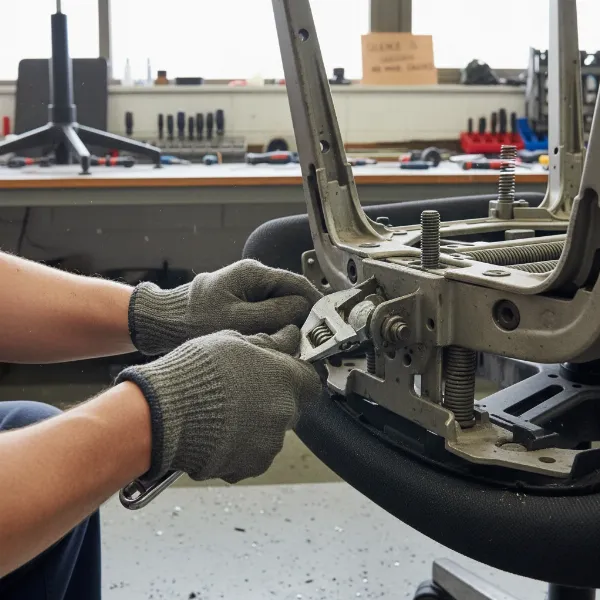 A person tightening a bolt on the underside of an office chair's mechanism with a wrench, focusing on secure connections for a squeak-free experience.
3.3. Lubricating Key Chair Components
Once all components are tight, it’s time to lubricate the moving parts. Remember to place newspaper or an old sheet under the chair to catch any drips.
3.3.1. Seat Mechanism and Springs
The seat mechanism, which includes the tilt and height adjustment parts, is a frequent source of squeaks.
- Access: You might need to remove the seat cushion for better access to the springs and internal mechanisms. Some chairs have specific tabs or levers to detach the seat.
- Apply Lubricant: Generously spray your chosen lubricant (silicone spray is often recommended here) onto all visible springs, pivot points, and friction areas within the seat mechanism. Pay close attention to any areas where metal rubs against metal.
- Work it In: After applying, sit in the chair and move around, recline, and adjust the height several times to help the lubricant penetrate and spread evenly.
3.3.2. Backrest and Tilt Mechanism
If your chair squeaks when you lean back or adjust the recline, the backrest and its connecting mechanism are the culprits.
- Focus on Connection Points: Spray lubricant where the backrest attaches to the seat frame and any visible pivot points in the tilt mechanism.
- Tension Knob: If the squeaking occurs when you lean back, try loosening the seat tension knob, applying lubricant to the spring mechanism, and then retightening it.
- Engage Mechanism: Recline and return the backrest several times to distribute the lubricant.
3.3.3. Armrests
Adjustable armrests can also become noisy over time due to friction in their adjustment mechanisms.
- Target Joints: Apply lubricant to the height adjustment points and any swivel joints on the armrests.
- Move Armrests: Move the armrests up and down, and swivel them if they have that feature, to work the lubricant into all the moving parts.
3.3.4. Wheel Casters and Base
Noisy wheels can be surprisingly annoying.
- Flip Chair: Turn the chair upside down for easy access to the casters and chair base.
- Clean Casters: First, remove any hair, dust, or debris that has wrapped around the wheel axles. A small screwdriver or tweezers can help.
- Lubricate Axles: Spray a small amount of silicone lubricant or apply white lithium grease to the wheel axles and the swivel points where the casters connect to the chair base. Roll the chair around to ensure the lubricant spreads.
3.4. Addressing Wooden Components (if applicable)
For chairs with wooden frames or components, squeaks can arise from loose joints.
- Inspect Joints: Look for any loose wooden joints or dowels.
- Apply Wood Glue: For minor squeaks in wooden joints, a small amount of wood glue can often seal the gap and eliminate the noise.
- Wood-Swelling Liquid: If dowels have shrunk significantly, a wood-swelling liquid might be necessary to expand them and create a tighter fit.
- Allow to Dry: Ensure adequate drying time before using the chair again.
4. When to Consider Replacement or Professional Help
While most squeaks can be fixed at home, there are times when DIY solutions aren’t enough.
4.1. Persistent Squeaks After Troubleshooting
If you’ve meticulously followed all the troubleshooting steps—tightening, lubricating every possible point—and the annoying squeak persists, the problem might be more deeply rooted or involve inaccessible components.
4.2. Visible Damage or Rust
Severe rust on critical structural components, or visible cracks and damage to the chair’s frame or mechanism, indicates a need for more than just lubrication. These issues can compromise the chair’s safety and integrity. If lubrication fails to resolve squeaks on rusted parts, replacement of those specific parts might be necessary.
4.3. Chair Age and Warranty
Consider the age of your chair. Older chairs naturally suffer more wear and tear. If your chair is still under warranty, contact the manufacturer. They might offer a free repair, replacement parts, or even a full chair replacement. If it’s an older, inexpensive chair, the cost of professional repair or replacement parts might exceed the value of the chair itself, making a new purchase a more economical choice.
5. Preventing Future Squeaks: Maintenance Tips
Once you’ve achieved a squeak-free chair, regular maintenance can help keep it that way for longer. Prevention is always better than a cure.
5.1. Regular Inspection and Tightening
Make it a habit to periodically inspect your office chair. Every few months, quickly check all accessible bolts and screws and tighten any that feel loose. This simple routine can prevent issues before they become major squeaks.
5.2. Periodic Lubrication
Even if your chair isn’t squeaking, a light application of silicone spray to key pivot points and mechanisms once or twice a year can significantly prolong its quiet operation. Focus on the tilt mechanism, seat springs, and armrest adjustments.
5.3. Keeping Casters Clean
Casters are magnets for debris. Regularly flip your chair and clean any hair, dust, or dirt from around the wheel axles. A quick vacuum or a wipe down can prevent friction and ensure smooth rolling.
By understanding the causes, using the right tools and lubricants, and performing regular maintenance, you can effectively banish those annoying office chair squeaks. A quiet chair not only improves your focus but also extends the life of your ergonomic investment.
Frequently Asked Questions
Why does my new office chair already squeak?
Even new chairs can develop squeaks if components weren’t tightened sufficiently during assembly or if the factory lubrication is minimal. It’s also possible for transit vibrations to loosen some fasteners. Following the steps to tighten bolts and apply lubricant should resolve these early issues.
Can I use cooking oil to stop my chair from squeaking?
No, it’s not recommended. While cooking oil might offer a temporary fix, it quickly degrades, becomes sticky, and can attract dust and grime, ultimately making the squeaking worse and creating a mess. Always use purpose-made lubricants like silicone spray or WD-40.
How often should I lubricate my office chair?
For optimal performance and to prevent squeaks, a general guideline is to inspect and lightly lubricate key moving parts of your office chair every 6 to 12 months, or whenever you notice the first signs of creaking.
What if my chair squeaks and I can’t access the parts?
Some chairs have enclosed mechanisms, making access difficult. In such cases, try spraying lubricant from different angles into any visible gaps. If the squeak persists, consulting the manufacturer’s manual or contacting their support for specific instructions is recommended.