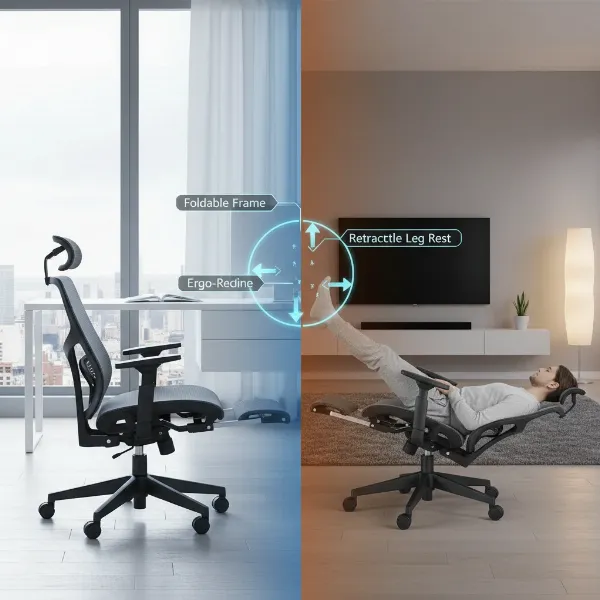
Navigating the market for an office chair when your budget is under $100 can feel like a daunting task. You want comfort and support without breaking the bank, but a nagging question often remains: are these affordable options truly safe for your long-term health, or are you sacrificing essential ergonomic benefits? Many believe that a good office chair must come with a hefty price tag, leading to frustration for those working within strict financial limits. This guide will explore whether budget-friendly office chairs can genuinely provide adequate support, delve into the potential safety concerns, and help you discover how to make the best possible choice for your health and productivity without overspending.
1. What is an Ergonomic Chair?
An ergonomic chair is specifically designed to support the human body in a healthy posture, adapting to various body shapes and sizes to promote comfort and well-being during prolonged sitting.
1.1. Definition of Ergonomic Chair
|
Our Picks for the Best Ergonomic Chair in 2026
As an Amazon Associate I earn from qualifying purchases.
|
||
| Num | Product | Action |
|---|---|---|
| 1 | Ergonomic Office Chair, Mesh Seat Cushion with 3D Armrests and 3D Headrest, Adjustable Lumbar Support with 90-120° Rocking Function, SGS Class 4 Gas Clylinder, Black |

|
| 2 | Ergonomic Office Chair with Footrest - Adjustable Lumbar Support & Headrest, 90-160° Reclining Mesh Back Computer Chair - Home Office/Gaming, 350lbs Capacity (SGS Certified) |
|
| 3 | PatioMage Ergonomic Office Chair, Big and Tall Desk Chair with Adjustable Lumbar Support & Seat Depth, High Back Computer Chair, Swivel Mesh Chairs with Wheels for Home Office, Black |
|
| 4 | TRALT Office Chair Ergonomic Desk Chair, 330 LBS Home Mesh Office Desk Chairs with Wheels, Comfortable Gaming Chair, High Back Office Chair for Long Hours (Black) |
|
| 5 | TRALT Office Chair - Ergonomic Desk Chair with Adjustable Lumbar Support, Mesh Computer Chair, Executive Chairs for Home Office Comfortable Lumbar Support (Black) |
|
| 6 | Marsail Ergonomic Office Chair: Office Desk Chair with High Back Mesh and Adjustable Lumbar Support Rolling Work Swivel Task Chairs with Wheel 3D Armrests and Headrest |
|
| 7 | Marsail Ergonomic Office Chair Ergonomic Gaming Chair with Lumbar Support, 2D Headrest, Adjustable Armrests, Contoured Seat Cushion, Computer Desk Chair with Wheels for Home and Office |
|
| 8 | Sweetcrispy Office Computer Desk Chair, Ergonomic High-Back Mesh Rolling Work Chairs with Wheels and Adjustable Headrests, Comfortable Lumbar Support, Comfy Flip-up Arms for Home, Bedroom, Study,Black |
|
| 9 | Fizzin Ergonomic Office Chair, 400 LBS Computer Chairs with Adjustable Lumbar Support, Breathable Mesh Desk Chair Ergonomic with Thickened Cushion, Comfy Home Office Desk Chair (Black) |
|
| 10 | Ergonomic Office Chair with Footrest - Adjustable Lumbar Support & Headrest, 90-160° Reclining Mesh Back Computer Chair - Home Office/Gaming, 350lbs Capacity (SGS Certified) |
|
At its core, an ergonomic chair is more than just a seat; it’s a tool engineered with principles of ergonomics, the science of designing equipment and workspaces to fit the user. These chairs feature multiple adjustable components that allow you to customize the fit to your body, promoting a neutral posture and reducing strain on your musculoskeletal system. Unlike standard office chairs, ergonomic models prioritize dynamic support, encouraging movement and healthy spinal alignment.
1.2. Benefits of Ergonomic Chair
Investing in an ergonomic chair, even a budget-friendly one, can yield significant benefits for your health and daily work life.
- Posture Improvement: A well-designed ergonomic chair encourages the natural S-curve of your spine, preventing slouching and promoting an upright, healthy posture. This reduces the strain on your back and neck muscles.
- Back and Neck Pain Reduction: By providing targeted support to key areas like the lumbar spine and neck, ergonomic chairs can significantly alleviate existing pain and prevent new discomfort from developing, especially during long working hours.
- Increased Productivity: When you’re free from discomfort and pain, your focus naturally improves. An ergonomic chair helps you maintain concentration, allowing you to work more efficiently and comfortably for extended periods, ultimately boosting your productivity.
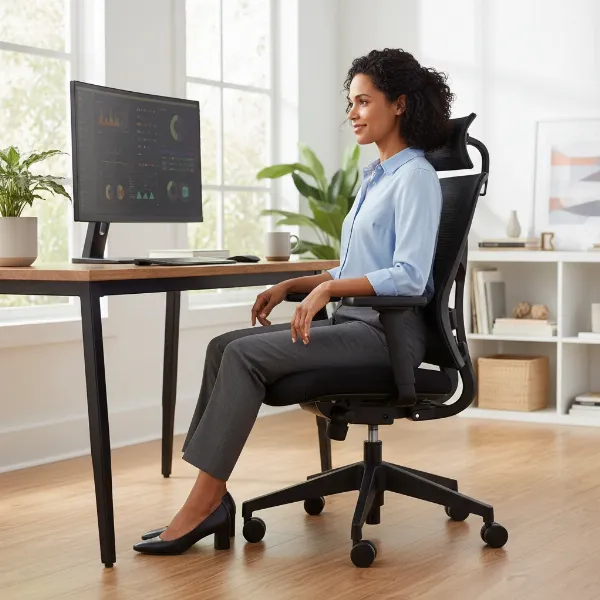 Person sitting in ergonomic chair, showing good posture and comfort, reducing back and neck pain
2. Key Components of an Office Chair
When considering office chairs under $100, understanding their key components is crucial, as the level of adjustability and quality often differs significantly from more expensive models. Expect fundamental features rather than extensive customization.
2.1. Headrest
In budget-friendly chairs, headrests are often a fixed component, primarily offering a place to rest your head when reclining, rather than providing adjustable neck support for active work. Some models may omit a headrest entirely to keep costs down. If a headrest is present, it’s typically a simple, non-adjustable padded section.
2.2. Backrest
The backrest in chairs under $100 is usually a single, non-adjustable piece, sometimes featuring a mesh design for breathability. The recline mechanism might be basic, offering a simple tilt or rock function without advanced tension control or locking positions.
Lumbar Support
Lumbar support in this price range is often fixed, meaning a pre-molded curve in the backrest designed to follow the natural arch of your lower spine. While it aims to provide basic support, it rarely offers the adjustable depth or height found in higher-end Ergonomic Chairs. Users with specific lumbar needs might find this fixed support either insufficient or uncomfortable.
2.3. Armrests
Most office chairs under $100 come with fixed armrests, which cannot be adjusted in height, width, or pivot. While they offer a place to rest your arms, their non-adjustability can sometimes lead to awkward postures if they don’t align with your desk height or body type. Some designs may feature flip-up armrests, which offer the flexibility to push the chair closer to a desk.
2.4. Seat Cushion
The seat cushion in budget chairs typically consists of basic foam padding. While it may feel comfortable initially, the density and quality of the foam might degrade faster with prolonged daily use, potentially leading to a “bottoming out” sensation. Look for chairs that offer a reasonable thickness to ensure adequate comfort.
Material and Comfort
Materials for the seat cushion commonly include fabric or faux leather, while the backrest often features breathable mesh. Mesh is a popular choice for budget chairs as it offers good airflow, preventing heat buildup during long sitting sessions. The overall comfort will be decent for shorter periods, but extended use might reveal limitations in padding and support.
2.5. Chair Base
The chair base, usually made of nylon or plastic, provides stability. It’s essential to check the weight capacity to ensure it can safely support you.
Wheels and Stability
The wheels (casters) are typically basic plastic, designed for easy movement on carpets or hard floors. While generally stable, budget chair bases and casters might not withstand heavy-duty use or rough surfaces as effectively as higher-quality components.
3. The “Are They Safe?” Question: Realistic Expectations
When considering office chairs under $100, a critical question arises: are these chairs truly safe for your body, or do they pose potential health risks? The answer lies in understanding the compromises made at this price point and setting realistic expectations.
3.1. Potential Health Risks of Poor Chairs
Sitting for extended periods in a poorly designed or ill-fitting chair can have serious consequences for your health. A lack of proper support can force your spine into unnatural curves, leading to increased strain on muscles and discs. Common issues include chronic lower back pain, neck and shoulder stiffness, and even long-term spinal problems like degenerative disc conditions or sciatica. Without adequate cushioning, pressure points can develop, affecting blood circulation and causing discomfort in your hips and glutes. These chairs might also promote slouching, which exacerbates postural issues and can diminish overall well-being and concentration.
3.2. What to Prioritize for Safety and Support
Even with a limited budget, you can prioritize certain features to maximize safety and support. Focus on chairs that offer adjustable height, allowing your feet to rest flat on the floor with your knees at a 90-degree angle. Look for a backrest that provides at least a fixed, contoured lumbar support to maintain the natural curve of your lower back. A stable five-star base is crucial for preventing tipping. Breathable materials like mesh for the backrest can enhance comfort by preventing heat buildup. While advanced adjustments are rare, ensure the chair’s basic dimensions align with your body size.
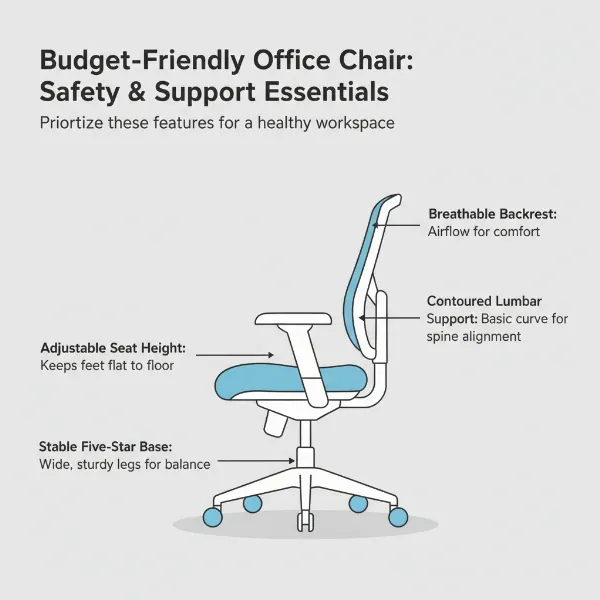 Diagram highlighting essential features to prioritize in a budget office chair for safety
3.3. Understanding Build Quality and Durability
The build quality and durability of chairs under $100 are often where the most significant compromises are made. These chairs typically use less dense foam, thinner plastics, and more basic metal components compared to premium models. This can lead to faster wear and tear, with cushions losing their loft, components becoming wobbly, or mechanisms failing sooner. While some budget chairs can last for a year or two with light to moderate use, they are generally not designed for heavy, daily, or long-term rigorous use. Expecting a lifespan comparable to a chair costing several hundred dollars would be unrealistic.
“While budget chairs can be a temporary solution, prolonged use without proper ergonomic consideration can contribute to musculoskeletal issues. Prioritize fundamental adjustments and good posture, regardless of the chair’s price.”
4. Buying Guide: How to Choose a Sub-$100 Office Chair
Choosing an office chair under $100 requires a strategic approach, focusing on essential features and understanding the inherent limitations.
4.1. Identify Your Needs
Before you start shopping, clarify how you’ll use the chair.
- Daily Usage Time: Will you be sitting in it for 1-2 hours a day, or for 8+ hours? For shorter durations, basic comfort might suffice. For longer periods, even limited ergonomic features become more critical.
- Health Issues: Do you have existing back, neck, or hip pain? If so, even a budget chair should offer at least basic lumbar support and adjustable height to mitigate discomfort.
- Budget: While your overall budget is $100, consider if you can stretch it slightly if a chair just over that mark offers significantly better features or durability.
4.2. Essential Features to Look For
Focus on the non-negotiables that will provide the best value for your money and protect your health.
- Height Adjustment: This is paramount. The ability to adjust the seat height ensures your feet can rest flat on the floor and your arms are level with your desk.
- Backrest Adjustment: While full recline might be limited, look for chairs that offer some degree of tilt or rocking, even if fixed, to allow for micro-movements.
- Lumbar Support: Prioritize chairs with a fixed, contoured backrest that provides some degree of lumbar support. While not adjustable, a well-placed fixed curve can make a difference.
- Adjustable Armrests: These are rare under $100. If fixed, ensure they don’t prevent you from getting close to your desk or create uncomfortable shoulder tension. Flip-up armrests are a good compromise.
4.3. Material
Material choice impacts both comfort and durability.
- Mesh: Often found on backrests, mesh is highly breathable, preventing heat buildup and keeping you cool. It’s a great option for comfort.
- Leather/Faux Leather: Typically used for executive-style budget chairs, these materials can look sleek but may lack breathability and can crack over time.
- Fabric: Common for seat cushions, fabric offers decent comfort and breathability, but can stain more easily than mesh.
4.4. Reputable Brands
While high-end brands like Herman Miller or Steelcase are well beyond this budget, some brands consistently offer decent options in the sub-$100 range. Look for models from brands like Furmax, BestOffice, Smugdesk, Hbada, or AmazonBasics. These brands often have widely reviewed products.
4.5. Testing and Trying
Since advanced chairs are not an option, maximizing your chances of a good fit is crucial.
- Visit a Store: If possible, try out generic office chairs at local retailers to get a feel for basic comfort and dimensions. Even if not the exact model you’ll buy, it helps understand what feels right.
- Read Online Reviews: Pay close attention to reviews from people with similar body types or use cases. Look for mentions of durability issues, comfort over time, and specific complaints or praises regarding support.
5. Popular Budget-Friendly Office Chair Models
Finding a truly “ergonomic” chair under $100 that rivals high-end models is unrealistic. However, several popular chairs offer a reasonable balance of basic comfort and support for their price point. These models are frequently reviewed and can serve as a starting point.
5.1. General Office Use
For everyday office tasks, several chairs deliver basic functionality.
- Furmax Office Chair: This mid-back mesh chair is often lauded for its value. It typically features height adjustment, a breathable mesh back, and a basic lumbar curve. Users often find it comfortable for several hours of work, especially considering its affordable price.
- BestOffice Ergonomic Desk Chair: Similar to the Furmax, this chair usually includes a mesh back, adjustable height, and a simple recline function. It’s a popular choice for those needing a functional chair without significant investment.
- AmazonBasics Mid-Back Office Chair: A straightforward task chair, the AmazonBasics model offers padded seating, a basic backrest, and adjustable height. It’s a no-frills option best suited for shorter work sessions or as a temporary solution.
5.2. Budget-Friendly Ergonomic Chairs
While “ergonomic” features are limited, some chairs in this price range attempt to incorporate better support.
- Smugdesk High Back Office Chair: This model often includes a high back with an integrated headrest and a more pronounced, albeit fixed, lumbar support. It frequently features a mesh back for breathability and offers height adjustment and a tilt mechanism, making it a step up in perceived ergonomics for its price.
- Hbada Office Task Desk Chair: The Hbada task chair typically emphasizes a sleek design with a mesh back, height adjustment, and sometimes flip-up armrests. It’s often chosen for its minimalist aesthetic and reasonable comfort for light to medium use.
5.3. Task Chairs with Minimalist Design
These chairs focus on core functionality and a compact footprint, ideal for smaller workspaces or occasional use. They typically include height adjustment and a simple backrest, prioritizing practicality over extensive ergonomic features.
Conclusion
Finding a functional and acceptably comfortable office chair under $100 is certainly possible, but it requires a realistic understanding of what to expect. While these chairs may lack the advanced ergonomic adjustments and premium durability of their higher-priced counterparts, many offer essential features like height adjustability, basic lumbar support, and breathable materials that can make a significant difference. Prioritizing these core elements and carefully reading user reviews can help you avoid potential health risks associated with prolonged sitting in an unsupportive chair. Remember, the goal is to find the best compromise between your budget and your well-being. By making an informed choice, you can support your posture and productivity without emptying your wallet.
What features would you prioritize most if you were buying an office chair on a tight budget?
Frequently Asked Questions
Are office chairs under $100 bad for your back?
Not necessarily, but they require careful selection. While they lack the advanced ergonomic adjustments of pricier chairs, many offer basic lumbar support and height adjustability. A poorly chosen or improperly used budget chair can lead to back pain, but a well-selected one, used with good posture, can provide adequate support for shorter periods or less intensive use.
What’s the best cheap office chair for long hours?
For genuinely long hours (6-8+ daily), it’s challenging to find a truly supportive chair under $100. However, if your budget is strict, look for models like the Furmax Office Chair or Smugdesk High Back Office Chair, which often feature mesh backs for breathability and a more pronounced, albeit fixed, lumbar support. These may offer better comfort than basic task chairs.
What features can I expect from a $100 office chair?
You can typically expect adjustable seat height, a breathable mesh or fabric backrest, fixed armrests (sometimes flip-up), a basic recline or tilt function, and some form of fixed lumbar support. Advanced features like adjustable seat depth, multi-directional armrests, or highly customizable lumbar support are generally not available in this price range.
How long do budget office chairs last?
The lifespan of an office chair under $100 varies but is generally shorter than premium models. Made with less durable materials, they might last anywhere from 1 to 3 years with regular use. Daily, heavy use can accelerate wear and tear, especially on seat cushions, gas lifts, and casters.
Where can I buy a decent office chair for less than $100?
Online retailers like Amazon, Walmart, and often office supply stores carry a wide selection of chairs in this price range. Brands like Furmax, BestOffice, Smugdesk, and AmazonBasics are frequently featured. Checking local second-hand office furniture stores might also yield a higher-quality used chair within your budget.