Finding the perfect ergonomic office chair can feel like a quest for the holy grail, especially when balancing comfort, extensive features, and budget. The Hbada E3 Ergonomic Office Chair aims to deliver a comprehensive ergonomic experience, promising advanced adjustability and support. But does it truly live up to its ambitious claims, or does it fall short in critical areas? Let’s delve into a detailed review of the Hbada E3, examining its design, features, and real-world performance to help you decide if it’s the right fit for your workspace.
1. What is an Ergonomic Chair?
An ergonomic chair is specifically designed to support the human body’s natural posture, promoting comfort and well-being during prolonged sitting. Unlike conventional office chairs, ergonomic models offer extensive adjustability to conform to an individual’s unique body shape and work habits. The goal is to minimize strain, reduce the risk of musculoskeletal issues, and enhance overall health and productivity.
1.1. Definition of Ergonomic Chair
|
Our Picks for the Best Ergonomic Chair in 2026
As an Amazon Associate I earn from qualifying purchases.
|
||
| Num | Product | Action |
|---|---|---|
| 1 | Ergonomic Office Chair, Mesh Seat Cushion with 3D Armrests and 3D Headrest, Adjustable Lumbar Support with 90-120° Rocking Function, SGS Class 4 Gas Clylinder, Black |

|
| 2 | Ergonomic Office Chair with Footrest - Adjustable Lumbar Support & Headrest, 90-160° Reclining Mesh Back Computer Chair - Home Office/Gaming, 350lbs Capacity (SGS Certified) |
|
| 3 | PatioMage Ergonomic Office Chair, Big and Tall Desk Chair with Adjustable Lumbar Support & Seat Depth, High Back Computer Chair, Swivel Mesh Chairs with Wheels for Home Office, Black |
|
| 4 | Sweetcrispy Office Computer Desk Chair, Ergonomic High-Back Mesh Rolling Work Chairs with Wheels and Adjustable Headrests, Comfortable Lumbar Support, Comfy Flip-up Arms for Home, Bedroom, Study,Black |
|
| 5 | Marsail Ergonomic Office Chair Ergonomic Gaming Chair with Lumbar Support, 2D Headrest, Adjustable Armrests, Contoured Seat Cushion, Computer Desk Chair with Wheels for Home and Office |
|
| 6 | Ergonomic Office Chair with Footrest - Adjustable Lumbar Support & Headrest, 90-160° Reclining Mesh Back Computer Chair - Home Office/Gaming, 350lbs Capacity (SGS Certified) |
|
| 7 | TRALT Office Chair Ergonomic Desk Chair, 330 LBS Home Mesh Office Desk Chairs with Wheels, Comfortable Gaming Chair, High Back Office Chair for Long Hours (Black) |
|
| 8 | Fizzin Ergonomic Office Chair, 400 LBS Computer Chairs with Adjustable Lumbar Support, Breathable Mesh Desk Chair Ergonomic with Thickened Cushion, Comfy Home Office Desk Chair (Black) |
|
| 9 | Marsail Ergonomic Office Chair: Office Desk Chair with High Back Mesh and Adjustable Lumbar Support Rolling Work Swivel Task Chairs with Wheel 3D Armrests and Headrest |
|
| 10 | TRALT Office Chair - Ergonomic Desk Chair with Adjustable Lumbar Support, Mesh Computer Chair, Executive Chairs for Home Office Comfortable Lumbar Support (Black) |
|
An ergonomic chair is more than just a comfortable seat; it’s a tool engineered to optimize your sitting posture and reduce physical stress. Key design principles involve supporting the spine’s natural curvature, promoting blood circulation, and allowing for dynamic movement throughout the day. This adaptability ensures that the chair can be customized to suit different body types and tasks, from intense typing sessions to relaxed reclining.
1.2. Benefits of Ergonomic Chair
Investing in an ergonomic chair offers a multitude of benefits that extend beyond mere comfort. For those spending significant hours at a desk, these advantages can be transformative for both health and performance.
- Posture Improvement: By providing tailored support to the lumbar spine, neck, and shoulders, ergonomic chairs help maintain the natural S-curve of your back. This encourages an upright, healthy posture, preventing slouching and spinal misalignment.
- Back and Neck Pain Reduction: One of the most significant benefits is the alleviation of common aches. Proper support distributes pressure evenly, reducing strain on your back, neck, and shoulders, which are frequently affected by poor sitting habits. Many users experience a noticeable decrease in chronic pain, leading to greater comfort throughout their workday.
- Increased Productivity: When you’re comfortable and free from pain, your focus naturally improves. An ergonomic chair minimizes distractions caused by discomfort, allowing you to concentrate better on tasks. This enhanced comfort and reduced fatigue often translate directly into higher energy levels and improved work efficiency.
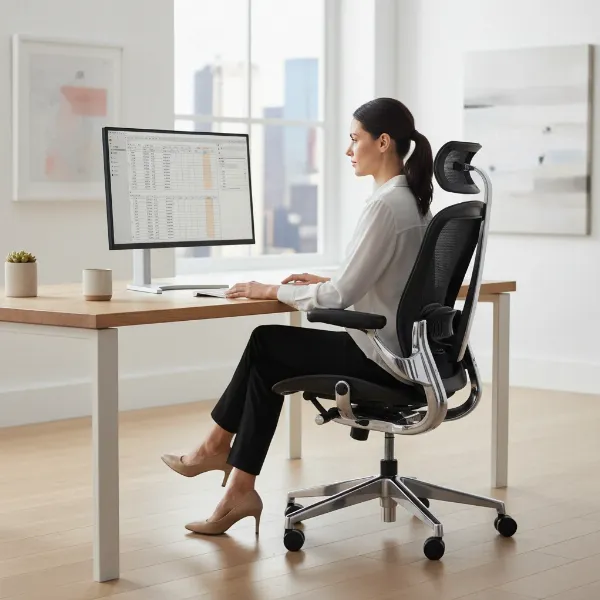 Person sitting with correct posture in a modern ergonomic office chair, illustrating benefits.
2. Key Components of an Ergonomic Chair
Understanding the critical components of an ergonomic chair is essential to appreciate how each part contributes to overall comfort and support. The Hbada E3, in particular, boasts a range of adjustable features designed to provide a tailored experience.
2.1. Headrest
The headrest of an ergonomic chair is crucial for supporting the neck and head, especially during recline or moments of rest. The Hbada E3 features a highly adjustable 4D headrest with dual-axis rotation, allowing for a 70° rotation and adjustments of 2.2 inches front/back and 1.8 inches up/down. This comprehensive movement range aims to precisely fit the neck’s curve, making it quite large and well-curved for user comfort.
2.2. Backrest
The backrest is a cornerstone of spinal support. The Hbada E3 incorporates a “T-shaped support system” designed to address discomfort in the neck, waist, and shoulder regions from prolonged sitting. Its liftable backrest offers a nine-position height adjustment, providing 2.76 inches of vertical movement to accommodate individuals of varying heights.
2.2.1. Lumbar Support
Lumbar support is vital for maintaining the natural curve of the lower back. The Hbada E3 features a “three-zone floating wing” lumbar support system. This innovative design allows for 8-way adjustment, including one inch front/back and 1.6 inches up/down, with side wings that can rotate 40° internally and externally to “wrap around” your waist. This adaptive function is intended to offer dynamic and strong comfort, particularly with lower positioning and winged enclosure.
2.3. Armrests
Armrests provide crucial support for your arms, shoulders, and wrists, reducing strain during typing or mouse use. The Hbada E3 is equipped with “6D adjustable” armrests, which are among the widest available. These armrests offer extensive flexibility, allowing for adjustments in height, forward/backward, left/right, rotation (up to 70°), and even a 40° flip-up motion. All controls for these adjustments are conveniently located on the right side of the seat.
2.4. Seat Cushion
The seat cushion influences comfort, circulation, and pelvic alignment. The Hbada E3 features a relatively flat seat cushion, designed to prevent it from feeling too shallow or excessively deep. This design aims to ensure comfortable sitting, even for extended periods, and includes seat depth adjustment to further customize the fit. The chair’s full mesh coverage on both the seat and back is intended to provide breathability and prevent sweating or numbness.
2.5. Chair Base
The chair base provides stability and mobility. The Hbada E3 utilizes a five-star base, which, despite appearing aluminum, is constructed from steel with a painted finish. It is equipped with a domestic Qiang brand 4-stage gas lift for height adjustment. While designed for stability with its wheels, the material choices can influence its overall feel and durability.
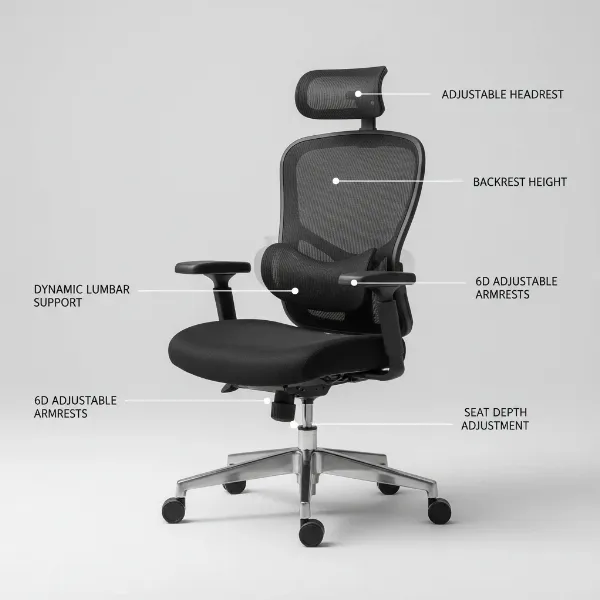 Hbada E3 ergonomic office chair showcasing its adjustable headrest, backrest, armrests, and seat.
3. Hbada E3 Ergonomic Chair: A Detailed Comparison
The Hbada E3 is marketed with a plethora of features, promising a high-end ergonomic experience at a more accessible price point. However, real-world usage reveals a blend of innovative design and notable shortcomings.
Features Highlighted by Hbada (Pros):
- Versatile Adjustability: The chair boasts extensive adjustments for the headrest (4D), lumbar support (8-way, floating wings), armrests (6D), seat height, and depth. This allows for significant customization to fit various user preferences.
- Comfortable Lumbar Support: Many users praise the lumbar support, citing its strong comfort and adaptive winged enclosure, particularly when positioned lower on the back.
- Effective Headrest Design: The large, well-curved, and multi-adjustable headrest is frequently noted for its pleasant use and ability to relieve neck tension during long sessions.
- Dynamic Recline and Footrest: The 140° recline, synchronized armrest motion, and retractable, drawer-style footrest contribute to a comfortable resting position, enhancing the long-term sitting experience.
- Breathable Full Mesh: The complete mesh coverage on both the seat and back promotes airflow, aiming to prevent discomfort from sweating and numbness even after prolonged use.
- Award-Winning Design: The Hbada E3 has received recognition, including the Silver Award at the London Design Awards and the Gold Prize of the French Design Award, highlighting its aesthetic and conceptual design achievements.
- User Capacity: It comfortably supports users up to 240 pounds and heights up to 188 cm (approximately 6’2″).
Real-world Experience & Concerns (Cons):
Despite its impressive feature list, the Hbada E3 faces significant criticism regarding its execution and build quality:
- Challenging Assembly: The assembly process is frequently described as frustrating, taking over two hours due to unclear, poorly written instructions and parts that are difficult to align or install.
- Questionable Build Quality & Instability: The chair has been characterized as “rickety” and “a piece of junk” by some reviewers. Issues include a persistently wobbly headrest, unstable adjustments that frequently slip out of place (particularly the lumbar support and recline lock), and pervasive creaking and rattling noises with minimal movement.
- Flimsy and Misaligned Components: Manufacturing inconsistencies are apparent, with reports of screws not threading correctly, misaligned pre-drilled holes, and hard plastic edges that can cause the mesh fabric to fray prematurely. The transparent mesh design, rather than appearing sleek, often highlights these internal flaws and exposed mechanical bits.
- Subpar Armrest Functionality: While offering 6D adjustments, the armrests are often too high, even at their lowest setting, to fit under standard desks. This forces users to sit uncomfortably far from their desk or at awkward angles, significantly hindering ergonomic posture during work. Furthermore, the armrests are prone to wobbling and rattling.
- Ineffective Lumbar Support: Despite its advanced design, the lumbar support struggles to stay in its set position, often collapsing backward under pressure. The side “wings” can also reportedly poke users if they aren’t seated perfectly centered.
- Unsafe Footrest Design: The retractable footrest is criticized as flimsy and poorly weighted. Using it can cause the entire chair to tip forward, raising significant safety concerns and diminishing its practical utility.
- Overwhelming Size: The chair is notably large and bulky, with a deep and wide seat, a tall backrest, and protruding armrests. This can make it unsuitable for individuals with smaller builds or those with limited office space, often dwarfing the user and their room.
- Perpetual Sales and Marketing: The chair is almost constantly “on sale” at prices around $400-$500, with an inflated MSRP of over $800. This marketing strategy of perpetual discounts can be misleading and suggests an overvaluation of the product.
4. Buying Guide: Is the Hbada E3 Right for You?
Deciding whether the Hbada E3 Ergonomic Office Chair is suitable for your needs requires careful consideration of its strengths and weaknesses against your personal requirements and budget.
4.1. Identify Your Needs
Before investing, honestly assess how you’ll use the chair and what specific issues you need it to address.
- Daily Usage Time: If you spend long hours (8+ per day) in your chair, build quality and consistent support are paramount. For occasional use, some of the E3’s flaws might be less impactful.
- Health Issues: Individuals with existing back or neck pain need reliable, consistent support. While the E3 offers extensive adjustments, reports of wobbling and slipping lumbar support could be a significant drawback.
- Budget: The Hbada E3 positions itself as a feature-rich option in the mid-range. Consider if the potential compromises in stability and build quality are acceptable given its price point, especially when compared to entry-level chairs from more established brands.
4.2. Essential Features
An ergonomic chair should offer several core adjustments to properly support your body.
- Height Adjustment: Essential for ensuring your feet are flat on the floor or a footrest, with knees at a 90-degree angle. The E3’s gas lift provides this.
- Backrest Adjustment: A backrest that can recline and ideally lock in various positions is crucial. The E3’s 140° recline is generous, but the reported issues with the tilt lock’s reliability are a concern.
- Lumbar Support: Adjustable lumbar support is key for maintaining the spine’s natural curve. The E3’s multi-zone lumbar system is theoretically advanced, but its tendency to slip may negate its benefits for some.
- Adjustable Armrests: Armrests that adjust in multiple dimensions help support your arms and shoulders, reducing strain. While the E3 boasts 6D armrests, their height and stability issues could be problematic for desk work.
4.3. Material
The choice of material affects breathability, durability, and comfort.
- Mesh: The Hbada E3 features a full mesh design for breathability. While mesh is excellent for airflow, the E3’s mesh quality has been questioned, with some reports of fraying against hard plastic edges.
- Leather/Fabric: (Not applicable for E3’s primary construction, but for general buying advice, these offer different tactile experiences and maintenance needs.)
4.4. Reputable Brands
When considering an ergonomic chair, it’s often wise to look at brands with a proven track record for quality and durability. While Hbada aims to compete, brands like Herman Miller and Steelcase are industry benchmarks for a reason, offering superior engineering and longevity, albeit at a significantly higher cost. Even refurbished options from these premium brands can often provide better value and reliability than a new, cheaper chair with compromised build quality.
4.5. Testing and Trying
The best way to evaluate an ergonomic chair is to experience it firsthand.
- Visit a Store: If possible, try out the Hbada E3 or similar models in person to assess comfort, adjustability, and overall feel. Pay close attention to how well the adjustments hold and the stability of the components.
- Read Online Reviews: Consult a wide range of reviews, paying particular attention to long-term user experiences and specific issues mentioned, such as assembly difficulties or component instability. A balanced perspective, considering both enthusiastic endorsements and harsh criticisms, is invaluable.
5. Popular Ergonomic Chair Models
While the Hbada E3 offers a comprehensive feature set at a mid-range price, its inconsistent build quality and functionality issues might lead some to consider other options.
5.1. High-End Ergonomic Chairs
For those prioritizing uncompromising quality, durability, and superior ergonomic performance, investing in a high-end chair is often worthwhile. Brands like Herman Miller (e.g., Aeron, Embody) and Steelcase (e.g., Leap, Gesture) are renowned for their meticulous engineering, premium materials, and long-term warranties. These chairs are designed to last for decades and provide consistent, adaptive support, making them a significant investment that often pays off in sustained comfort and health benefits.
5.2. Budget-Friendly Ergonomic Chairs
If the Hbada E3’s price point is still a stretch or its reported drawbacks are a deal-breaker, there are many budget-friendly ergonomic chairs available. While they may not offer the extensive 6D or 4D adjustments of the E3, many can provide fundamental ergonomic support. Focus on chairs with solid lumbar support, adjustable height, and stable construction, even if features like a footrest or multi-directional armrests are more basic. Prioritize foundational ergonomics over a long list of features that might be poorly implemented.
5.3. Ergonomic Chairs for Gamers
Gamers often spend even longer continuous hours in their chairs, requiring robust support and comfort. The Hbada E3 has features that appeal to gamers, like its recline and footrest. However, the stability issues and unreliable adjustments could be frustrating during intense gaming sessions. Dedicated ergonomic gaming chairs from brands like Secretlab or Herman Miller x Logitech offer designs specifically tailored to gaming postures and movements, often with better build quality and more reliable support systems for dynamic use.
Conclusion
The Hbada E3 Ergonomic Office Chair presents a compelling package on paper, boasting an impressive array of adjustments and features designed to enhance comfort and support. Its award-winning design and extensive customization options, including a 4D headrest, multi-zone lumbar support, and 6D armrests, aim to deliver a premium ergonomic experience. However, its real-world performance is a mixed bag. Users frequently report significant challenges with assembly, inconsistencies in build quality, and notable stability issues, particularly with the headrest, armrests, and recline lock. The footrest, while a welcome addition, can compromise the chair’s balance.
Ultimately, the Hbada E3 represents a chair with grand ergonomic aspirations that are sometimes undermined by its execution. While it might appeal to those seeking a feature-rich chair at a mid-range price, potential buyers should weigh its innovative design against the documented concerns regarding its stability and build quality. For someone seeking an abundance of adjustable features and willing to potentially contend with some imperfections, the E3 could be an option. However, for unwavering reliability and foundational ergonomic support, especially during prolonged use, exploring alternatives might be a wiser path.
What do you prioritize most in your Ergonomic Chair: cutting-edge features or rock-solid stability?
Frequently Asked Questions
Is the Hbada E3 easy to assemble?
Many users find the Hbada E3 challenging to assemble, citing confusing instructions and difficulty aligning parts, which can lead to over two hours of frustrating setup time. Some report issues with screws not threading correctly, contributing to a less than smooth build experience.
Is the Hbada E3 good for long hours of sitting?
While the Hbada E3 offers extensive ergonomic adjustments and a breathable mesh design intended for prolonged use, some reviewers report issues with component stability, such as a wobbly headrest and unreliable lumbar support, which could diminish comfort and effectiveness during very long sitting sessions.
How does the Hbada E3 compare to high-end ergonomic chairs?
The Hbada E3 offers many features found in high-end chairs like Herman Miller or Steelcase, but it often falls short in build quality, material refinement, and overall stability. While more affordable, it doesn’t match the durability, consistent support, or seamless functionality of premium models.
What is the weight capacity of the Hbada E3?
The Hbada E3 Ergonomic Office Chair is designed to comfortably support users weighing up to 240 pounds (approximately 109 kg) and with heights up to 188 cm (approximately 6 feet 2 inches). This makes it suitable for a broad range of body types.