The secret to lasting comfort, improved health, and sustained productivity at your desk isn’t just about investing in an ergonomic chair; it’s about choosing one that precisely fits your unique body. Many people make the mistake of buying a chair based on aesthetics or popular reviews, only to find themselves grappling with persistent back pain, neck strain, or general discomfort. This comprehensive guide will equip you with the knowledge and step-by-step instructions to accurately measure your body, ensuring you select an ergonomic chair perfectly tailored to your dimensions. Forget guesswork and embrace a data-driven approach to discover your ideal ergonomic chair.
1. Why Body Measurement is Crucial for Ergonomic Chair Fit
1.1. The Importance of a Proper Fit
|
Our Picks for the Best Ergonomic Chair in 2026
As an Amazon Associate I earn from qualifying purchases.
|
||
| Num | Product | Action |
|---|---|---|
| 1 | Marsail Ergonomic Office Chair Ergonomic Gaming Chair with Lumbar Support, 2D Headrest, Adjustable Armrests, Contoured Seat Cushion, Computer Desk Chair with Wheels for Home and Office |

|
| 2 | PatioMage Ergonomic Office Chair, Big and Tall Desk Chair with Adjustable Lumbar Support & Seat Depth, High Back Computer Chair, Swivel Mesh Chairs with Wheels for Home Office, Black |
|
| 3 | Fizzin Ergonomic Office Chair, 400 LBS Computer Chairs with Adjustable Lumbar Support, Breathable Mesh Desk Chair Ergonomic with Thickened Cushion, Comfy Home Office Desk Chair (Black) |
|
| 4 | Marsail Ergonomic Office Chair: Office Desk Chair with High Back Mesh and Adjustable Lumbar Support Rolling Work Swivel Task Chairs with Wheel 3D Armrests and Headrest |
|
| 5 | Sweetcrispy Office Computer Desk Chair, Ergonomic High-Back Mesh Rolling Work Chairs with Wheels and Adjustable Headrests, Comfortable Lumbar Support, Comfy Flip-up Arms for Home, Bedroom, Study,Black |
|
| 6 | Ergonomic Office Chair with Footrest - Adjustable Lumbar Support & Headrest, 90-160° Reclining Mesh Back Computer Chair - Home Office/Gaming, 350lbs Capacity (SGS Certified) |
|
| 7 | Ergonomic Office Chair, Mesh Seat Cushion with 3D Armrests and 3D Headrest, Adjustable Lumbar Support with 90-120° Rocking Function, SGS Class 4 Gas Clylinder, Black |
|
| 8 | Ergonomic Office Chair with Footrest - Adjustable Lumbar Support & Headrest, 90-160° Reclining Mesh Back Computer Chair - Home Office/Gaming, 350lbs Capacity (SGS Certified) |
|
| 9 | TRALT Office Chair Ergonomic Desk Chair, 330 LBS Home Mesh Office Desk Chairs with Wheels, Comfortable Gaming Chair, High Back Office Chair for Long Hours (Black) |
|
| 10 | TRALT Office Chair - Ergonomic Desk Chair with Adjustable Lumbar Support, Mesh Computer Chair, Executive Chairs for Home Office Comfortable Lumbar Support (Black) |
|
A properly fitted ergonomic chair is fundamental to maintaining a neutral body posture, which minimizes stress on your muscles, tendons, and skeletal system. When your chair aligns with your body’s natural contours, it actively supports your spine, reduces pressure points, and promotes healthy circulation. This precise alignment is key to preventing discomfort and long-term musculoskeletal issues, allowing you to maximize the health benefits an ergonomic chair offers.
1.2. Common Pitfalls of an Ill-Fitting Chair
Ignoring your body’s unique dimensions when choosing a chair can lead to various problems. A seat that is too high can leave your feet dangling, placing uncomfortable pressure on the back of your thighs and impeding blood flow. Conversely, a seat that is too deep can cause you to slouch or exert pressure behind your knees. Misaligned armrests can contribute to shoulder and neck strain, while inadequate back support fosters poor posture, leading to persistent back pain. These issues not only diminish comfort but can also reduce your focus and productivity throughout the workday.
2. Essential Tools for Accurate Measurement
To ensure you get the most precise measurements for your ergonomic chair, gather a few simple tools:
- Measuring Tape: A flexible fabric measuring tape is ideal, but a retractable metal one will also work.
- Notebook and Pen: Or a digital device to record your measurements accurately.
- A Sturdy, Backless Chair or Stool: This will help you achieve the correct sitting posture for certain measurements.
- A Friend or Family Member (Optional but Recommended): Having an extra pair of hands can make some measurements much easier and more accurate.
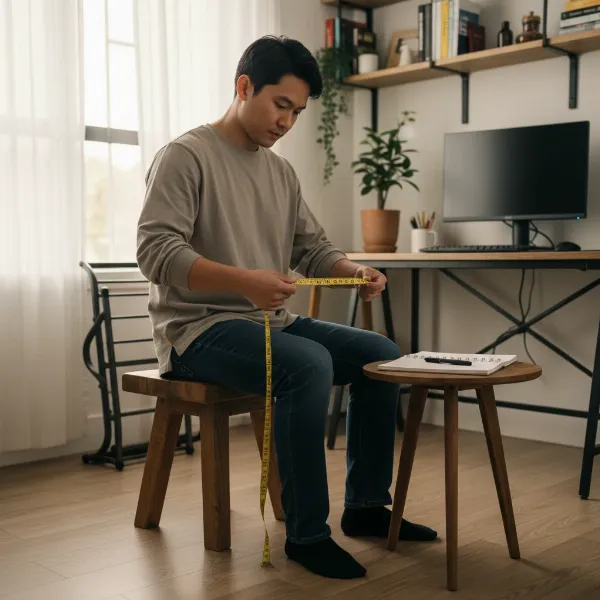 Person preparing to measure body for ergonomic chair with tape, notebook, and stool
3. Step-by-Step Guide: How to Measure Your Body
Follow these instructions carefully to obtain the crucial measurements needed for your perfect chair fit.
3.1. Standing Height
Measuring your standing height provides a general reference point for chair size categories, especially for taller individuals who might require chairs with extended backrests or deeper seats.
- How to Measure: Stand upright against a wall without shoes. Have someone measure from the floor to the top of your head.
3.2. Sitting Height (Popliteal Height)
This measurement is vital for determining the ideal seat height of your ergonomic chair, ensuring your feet remain flat on the floor and your thighs are parallel to the ground.
- How to Measure: Sit on a flat, sturdy surface (like a stool or hard chair) with your back straight against a wall, feet flat on the floor, and knees bent at a 90-degree angle. Measure the vertical distance from the floor to the crease behind your knee (popliteal crease). Remember to account for any typical footwear you’d wear while sitting.
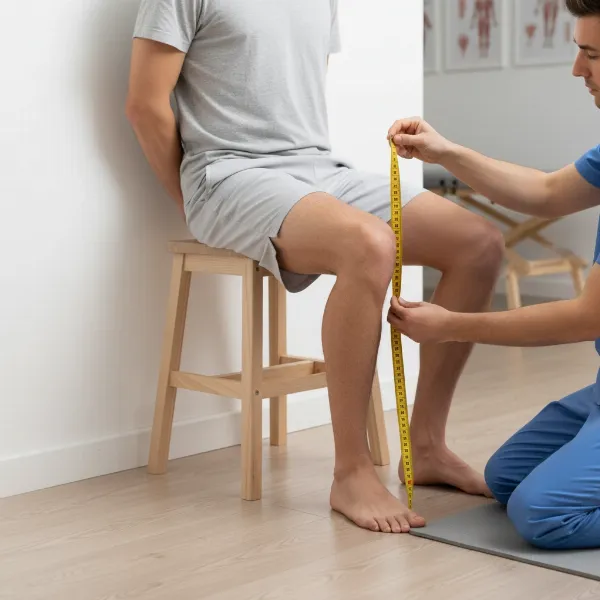 Person accurately measuring popliteal height for ergonomic chair fit
3.3. Seat Depth (Buttock-Popliteal Length)
Correct seat depth prevents pressure behind your knees while ensuring adequate thigh support. You should aim for a small gap between the seat edge and the back of your calves.
- How to Measure: Sit with your back firmly against a wall or the back of a chair, ensuring your feet are flat on the floor. Measure the horizontal distance from the wall to the back of your knee crease. When you sit in a chair, there should be a 2-3 inch (approximately two fingers) clearance between the front edge of the seat and the back of your knees.
3.4. Armrest Height (Elbow Height)
Proper armrest height supports your arms and shoulders, reducing strain on your neck and upper back.
- How to Measure: Sit on your sturdy chair or stool with your shoulders relaxed and your forearms parallel to the floor, forming a 90-degree angle at your elbows. Measure the vertical distance from the seat surface to the bottom of your elbow. This measurement guides the ideal armrest height.
3.5. Backrest Height (Sitting Shoulder Height)
This measurement helps you choose a backrest that provides full support for your upper back and shoulders.
- How to Measure: Sit upright with your back against a wall or a flat surface. Measure the vertical distance from the seat surface to the top of your shoulders. Consider whether you prefer full-back support or a mid-back chair with strong lumbar emphasis.
3.6. Lumbar Height (Sitting Lumbar Height)
Identifying the correct lumbar height ensures the chair’s lumbar support aligns with the natural curve of your lower back, offering targeted support.
- How to Measure: While sitting upright with good posture, identify the most inward curve of your lower back. Measure the vertical distance from the seat surface to the center of this curve. This will guide the optimal placement of adjustable lumbar support.
3.7. Seat Width (Hip Breadth)
Adequate seat width ensures you have enough room to sit comfortably without feeling restricted, allowing for minor shifts in posture.
- How to Measure: Sit on a flat surface. Measure the widest point across your hips. When choosing a chair, allow an additional 1-2 inches on each side for comfort.
4. Translating Your Measurements to Chair Specifications
Once you have your body measurements, the next step is to compare them against the specifications provided by ergonomic chair manufacturers. Look for chairs with adjustable features that allow for fine-tuning to your exact needs.
Consider the following ranges as general guidelines, but prioritize your personal measurements:
| Dimension | Standard Range (Inches) | What to Look for Based on Your Measurement |
|---|---|---|
| Seat Height | 16–21 | Your Popliteal Height + Footwear |
| Seat Depth | 16–18.5 | Your Buttock-Popliteal Length minus 2-3 inches for clearance |
| Backrest Height | 18–22 (above seat) | Your Sitting Shoulder Height |
| Armrest Height | 7–10 (above seat) | Your Elbow Height |
| Seat Width | 17–20 | Your Hip Breadth + 2-4 inches for comfort |
5. What to Look For in an Ergonomic Chair Based on Your Measurements
Understanding your body’s dimensions empowers you to identify specific chair features that are non-negotiable for your comfort and health.
5.1. Adjustable Seat Height
A chair with a wide range of seat height adjustment is crucial to match your popliteal height, ensuring your feet are flat on the floor and thighs parallel to the ground. This prevents pressure points and promotes healthy blood flow.
5.2. Adjustable Seat Depth
Look for chairs with a “seat slider” or adjustable seat depth. This allows you to position the seat so that you maintain the recommended 2-3 inch gap between the seat edge and the back of your knees, preventing discomfort and circulatory issues.
5.3. Lumbar Support Adjustment
Optimal lumbar support aligns with the natural curve of your lower back. Seek chairs where the lumbar support can be adjusted both in height and depth to perfectly match your sitting lumbar height. This feature is paramount for preventing lower back pain.
5.4. 3D/4D Adjustable Armrests
Armrests that can be adjusted in height, depth, width, and pivot (3D or 4D adjustability) are highly beneficial. They allow you to position your arms so your shoulders remain relaxed and your elbows form a 90-degree angle, supporting proper posture while typing or using a mouse.
5.5. Recline and Tilt Mechanisms
While not directly tied to body measurements, dynamic recline and tilt tension mechanisms allow for micro-movements throughout the day. This keeps your muscles engaged, reduces static load on your spine, and can significantly enhance overall comfort.
5.6. Headrest (if desired, adjustable height)
If you prefer a headrest, ensure it’s adjustable in height and angle to support your neck without pushing your head forward. Taller individuals, in particular, benefit from headrests that can extend sufficiently to meet their sitting shoulder height.
6. Tips for Testing and Fine-Tuning Your Chair Fit
Even with precise measurements, personal comfort is subjective. If possible, always try a chair before purchasing. When testing, adjust each feature slowly and systematically. Pay attention to how your body feels; your posture should feel neutral and relaxed, not forced. After acquiring a new ergonomic chair, dedicate time to fine-tune the settings, and don’t hesitate to readjust them as your needs or activities change.
“A truly ergonomic chair isn’t a luxury; it’s a foundational tool for a healthy, productive workspace. The difference between a good chair and the perfect chair lies in its ability to adapt to your unique physiology.”
Conclusion
Finding the perfect ergonomic chair is a powerful investment in your health and productivity. By taking the time to measure your body accurately, you move beyond generic recommendations and towards a personalized seating solution. This systematic approach ensures that every curve and contour of your chair aligns with your body, providing optimal support, reducing pain, and enhancing your overall well-being.
Embrace the power of precise measurements to select a chair that not only looks good but also feels like it was custom-made for you. Ready to transform your workspace? Start by measuring yourself today! What’s the most challenging aspect you’ve faced when choosing an ergonomic chair?
Frequently Asked Questions
How often should I remeasure my body for a chair?
While your core body dimensions typically don’t change drastically, it’s a good idea to remeasure if you experience significant weight changes, new health issues, or are considering a new chair after several years. Periodic checks ensure your chair continues to support you optimally.
Can one ergonomic chair fit multiple users?
For optimal ergonomics, it’s challenging for one chair to perfectly fit multiple users with very different body types without frequent readjustments. However, highly adjustable Ergonomic Chairs can accommodate a range of users more effectively if adjusted correctly for each individual.
What if I can’t find a chair that matches all my measurements exactly?
Focus on the most critical adjustments first: seat height, seat depth, and lumbar support. If you have unique body dimensions, look for modular chairs or those offering various sizes (e.g., small, medium, large) within a model line, as these often provide a closer fit.