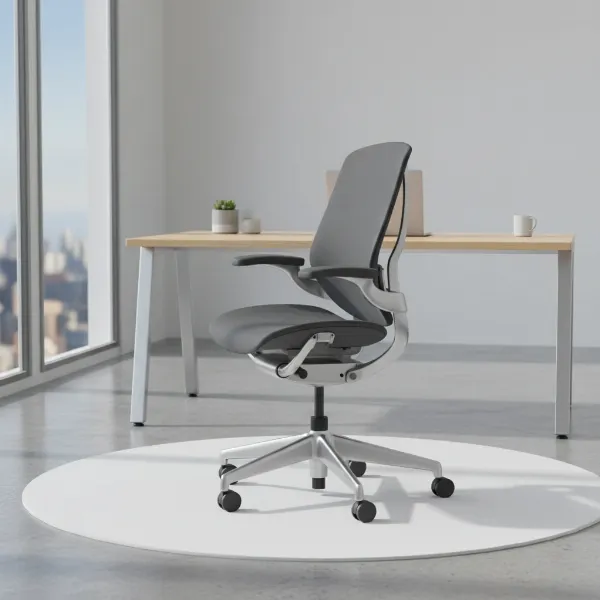
In the ever-evolving landscape of home office essentials, the IKEA Markus ergonomic chair has maintained a surprising foothold for years. Known for its appealing design and budget-friendly price tag, it’s often the go-to choice for many seeking a comfortable office chair without breaking the bank. But as we move further into 2026, with new ergonomic innovations and heightened expectations for workday comfort, does the IKEA Markus still stand strong as a viable option, or has it been overshadowed by its competitors? Let’s take a deep dive to find out if this enduring classic still holds its own.
1. What is the IKEA Markus Ergonomic Chair?
The IKEA Markus is a high-back office chair that has become one of IKEA’s most recognizable and popular offerings in the home office furniture segment. It’s celebrated for its straightforward, modern Scandinavian design, which allows it to blend seamlessly into various home aesthetics rather than appearing as stark office equipment.
1.1. Definition of Ergonomic Chair
|
Our Picks for the Best Ergonomic Chair in 2026
As an Amazon Associate I earn from qualifying purchases.
|
||
| Num | Product | Action |
|---|---|---|
| 1 | Ergonomic Office Chair with Footrest - Adjustable Lumbar Support & Headrest, 90-160° Reclining Mesh Back Computer Chair - Home Office/Gaming, 350lbs Capacity (SGS Certified) |

|
| 2 | PatioMage Ergonomic Office Chair, Big and Tall Desk Chair with Adjustable Lumbar Support & Seat Depth, High Back Computer Chair, Swivel Mesh Chairs with Wheels for Home Office, Black |
|
| 3 | Marsail Ergonomic Office Chair Ergonomic Gaming Chair with Lumbar Support, 2D Headrest, Adjustable Armrests, Contoured Seat Cushion, Computer Desk Chair with Wheels for Home and Office |
|
| 4 | Ergonomic Office Chair with Footrest - Adjustable Lumbar Support & Headrest, 90-160° Reclining Mesh Back Computer Chair - Home Office/Gaming, 350lbs Capacity (SGS Certified) |
|
| 5 | Marsail Ergonomic Office Chair: Office Desk Chair with High Back Mesh and Adjustable Lumbar Support Rolling Work Swivel Task Chairs with Wheel 3D Armrests and Headrest |
|
| 6 | Fizzin Ergonomic Office Chair, 400 LBS Computer Chairs with Adjustable Lumbar Support, Breathable Mesh Desk Chair Ergonomic with Thickened Cushion, Comfy Home Office Desk Chair (Black) |
|
| 7 | Sweetcrispy Office Computer Desk Chair, Ergonomic High-Back Mesh Rolling Work Chairs with Wheels and Adjustable Headrests, Comfortable Lumbar Support, Comfy Flip-up Arms for Home, Bedroom, Study,Black |
|
| 8 | TRALT Office Chair - Ergonomic Desk Chair with Adjustable Lumbar Support, Mesh Computer Chair, Executive Chairs for Home Office Comfortable Lumbar Support (Black) |
|
| 9 | TRALT Office Chair Ergonomic Desk Chair, 330 LBS Home Mesh Office Desk Chairs with Wheels, Comfortable Gaming Chair, High Back Office Chair for Long Hours (Black) |
|
| 10 | Ergonomic Office Chair, Mesh Seat Cushion with 3D Armrests and 3D Headrest, Adjustable Lumbar Support with 90-120° Rocking Function, SGS Class 4 Gas Clylinder, Black |
|
While the term “ergonomic” often implies extensive adjustability to fit diverse body types, the IKEA Markus is an entry-level ergonomic chair. It offers foundational ergonomic features aimed at providing better support than a standard dining chair, focusing on a high back and breathable materials. It prioritizes essential comfort and style at an accessible price point.
1.2. Key Features of the IKEA Markus
The Markus chair typically features a tall, integrated headrest, a breathable mesh backrest for improved airflow, and a padded seat cushion. It includes fundamental adjustments such as seat height and a lockable tilt function, which allows users to recline and rock. The chair’s design emphasizes clean lines and a simple silhouette, making it a stylish choice for many home office setups.
1.3. Price Point in 2026
As of early 2026, the IKEA Markus continues to be positioned as a highly competitive, budget-friendly option, generally retailing in the range of $229 to $250. This price point remains a significant draw, offering a sleek aesthetic and basic ergonomic support that often outshines other chairs in its category. Its affordability makes it an attractive proposition for students, remote workers, or anyone looking to upgrade from a basic chair without a substantial investment.
2. Ergonomics and Comfort: A Deep Dive into the Markus
Understanding the ergonomics and comfort of the IKEA Markus is crucial for determining if it’s the right chair for your needs in 2026. While it offers several benefits, it also comes with notable limitations.
2.1. Posture Improvement & Support
The IKEA Markus is widely praised for its high backrest and integrated headrest, which can provide excellent support for the entire spine, neck, and head, particularly benefiting taller individuals. The breathable mesh back is a significant comfort feature, preventing heat buildup during long working sessions and contributing to a cooler experience. However, its lumbar support, while present, is fixed. This means it might not perfectly align with everyone’s natural spinal curve, potentially leading to discomfort for those who require more tailored lower back support or prefer different seating postures throughout the day. Some users report that the fixed lumbar support feels misplaced unless sitting rigidly upright.
2.2. Adjustability: The Markus’s Main Limitation
This is where the IKEA Markus reveals its budget-friendly compromises. While it offers adjustable seat height and a smooth, lockable tilt mechanism for reclining, it notably lacks more advanced ergonomic adjustments. The armrests, for instance, are fixed in height and angle, which can be problematic. They may not suit all body types, can clash with certain desk heights, and their thin padding can lead to discomfort for elbows. The absence of adjustable lumbar support is another significant drawback, as personalized lower back alignment is a cornerstone of true ergonomic design.
2.3. Seat Comfort
The seat cushion of the IKEA Markus is padded, offering initial comfort. However, for those who spend extended hours sitting, reviews indicate that the seat can feel too flat or thin over time. This lack of contoured support can sometimes lead to pressure points, discomfort, or even numbness in the legs and feet for certain users, especially after prolonged use. While some find the cushioning adequate, it’s a common point of contention for individuals seeking plush, long-lasting comfort.
> “The IKEA Markus provides good foundational ergonomics with its high back, tilt function, and built-in lumbar support. However, its weak point is the lack of adjustability – the armrests and lumbar support are fixed in place. For many users, this is perfectly fine, but if the fixed positions don’t fit your body, there’s no way to change them.” – Spencer Lanoue, Interior Insider
3. Durability and Longevity: A 2026 Perspective
When investing in an office chair, durability is a key consideration. The IKEA Markus has a reputation for holding up reasonably well for its price point, but it’s essential to consider long-term performance in 2026.
3.1. Build Quality
The Markus chair features a sturdy steel frame and a durable base, often made from die-cast aluminum, which contributes to its solid construction. This robust build quality is a significant advantage, particularly for a chair in its price range. Many users report that the chair feels stable and well-put-together, standing up to regular daily use without immediate signs of weakness.
3.2. Warranty
One of the most impressive aspects of the IKEA Markus is its 10-year limited warranty. This lengthy warranty period is exceptional for a chair in the budget segment and speaks to IKEA’s confidence in its fundamental construction and materials. It offers peace of mind against manufacturing defects and significant structural issues.
3.3. Real-world Longevity
While the 10-year warranty is strong, real-world longevity reports are mixed, especially concerning comfort elements. Many users report the chair lasting 4-6 years or even longer with daily use, praising its resilience. However, for individuals who use the chair for 8+ hours daily, some experience a decline in seat cushion padding over 2-5 years, where it can flatten and become less comfortable. Some sources even describe the Markus as a “stop-gap solution” rather than a true long-term ergonomic companion for heavy-duty use.
3.4. Common Wear Points
The most frequently cited wear points include the seat cushion, which can lose its density over time, and the fixed armrests. The armrests’ padding can be thin and may show wear, and the bolts securing them might require occasional tightening to prevent wobbling or squeaking. While some users report no issues with the wheels damaging floors, others suggest using a protective mat to prevent scratches on hardwood. The mesh back, however, generally holds up well, maintaining its breathability and tension for many years.
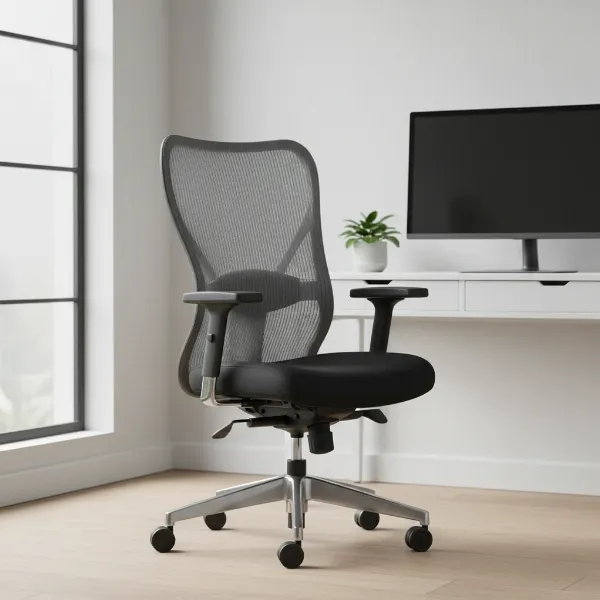 IKEA Markus ergonomic office chair with its mesh back and padded seat for home office use.
4. IKEA Markus in the Modern Ergonomic Landscape: Comparison
To truly assess the IKEA Markus in 2026, it’s helpful to understand how it stacks up against various competitors in the current market.
4.1. Against Budget Competitors (e.g., Staples chairs)
When compared to other budget-friendly office chairs, such as those often found at Staples, the IKEA Markus holds its own, particularly in terms of aesthetic appeal. Its clean, Scandinavian design is often preferred for home office settings over the more utilitarian look of many comparable chairs. However, where the Markus sometimes falls short is in adjustability. Many Staples chairs in a similar price bracket prioritize functional ergonomics, offering more customizable features like height-adjustable armrests and more adaptable lumbar support, which can be crucial for precise ergonomic fitting.
4.2. Against High-End Chairs (e.g., Herman Miller Aeron)
It’s important to set realistic expectations: the IKEA Markus is not a direct competitor to high-end ergonomic chairs like the Herman Miller Aeron or Steelcase Leap. These premium chairs are designed with extensive adjustability, superior materials, and advanced ergonomic science to provide ultimate comfort and support for long-term, heavy use, reflected in their significantly higher price tags. The Markus, by contrast, is a value-oriented option that provides essential comfort but cannot match the comprehensive customization and robust durability of top-tier chairs. It serves as an excellent entry point, but not a replacement for a premium ergonomic solution for those with specific, intensive needs.
4.3. Who is it Best Suited For?
The IKEA Markus remains an excellent choice in 2026 for several specific user profiles:
- Budget-Conscious Individuals: Those who need a stylish and reasonably comfortable chair without a large investment.
- Home Office Workers: Its modern aesthetic blends well into domestic environments.
- Taller Users: The high back and integrated headrest are often a good fit for individuals who struggle to find adequate head and neck support in standard chairs.
- Casual Users: If you don’t spend excessively long hours in your chair daily or don’t require highly specific ergonomic adjustments.
- Those Seeking Basic Comfort: It offers a step up from generic chairs with its breathable mesh and tilt function.
5. Popular Ergonomic Chair Models (Focus: IKEA Markus)
While this section of the original prompt was designed for a broader ergonomic chair article, for a specific review of the IKEA Markus, we’ll use it to summarize its position within categories.
5.1. High-End Ergonomic Chairs
The IKEA Markus does not fall into this category. Chairs like the Herman Miller Aeron and Steelcase Gesture offer unparalleled adjustability, premium materials, and superior ergonomic support for extended use. The Markus is a practical, affordable alternative for those who cannot justify the investment in such high-end options.
5.2. Budget-Friendly Ergonomic Chairs
This is precisely where the IKEA Markus shines. It’s consistently listed among the top budget-friendly ergonomic chairs, offering a blend of style, decent comfort, and a strong warranty for its price. It often competes favorably against other chairs in the $200-$300 range, especially for its design and overall perceived value. Its breathable mesh and high back are features typically found in more expensive models.
5.3. Ergonomic Chairs for Gamers
While not specifically marketed as a gaming chair, the IKEA Markus’s high back, headrest, and recline function make it a popular choice for some gamers, particularly those on a budget. Its breathable mesh can also be a plus during intense gaming sessions. However, its fixed armrests might not be ideal for all gaming setups or postures. Many dedicated gaming chairs offer more aggressive styling and specialized features like higher backrests for leaning back, but at a typically higher price point.
Is the IKEA Markus Still Good in 2026?
In 2026, the IKEA Markus remains a compelling option, but its “goodness” is contingent on your individual needs and expectations. It continues to offer excellent value for its price, boasting a modern design and fundamental ergonomic features like a high, breathable mesh back and a comfortable recline. For many, especially taller individuals or those seeking a stylish chair for moderate daily use, it provides sufficient comfort and support.
However, its significant limitations in adjustability, particularly the fixed armrests and non-customizable lumbar support, mean it won’t be a universal solution. If you require precise ergonomic fitting due to specific body dimensions, prolonged sitting hours, or pre-existing back issues, the Markus might fall short, potentially leading to discomfort over time. While durable for its category, the seat padding may also show wear with heavy use.
Ultimately, the IKEA Markus is still a good chair in 2026 if its fixed dimensions and basic adjustability happen to fit your body well. It serves as an admirable budget-friendly bridge between basic office chairs and high-end ergonomic solutions. It’s a chair that delivers above its price point in style and foundational support, but true ergonomic customization seekers may need to look further up the price ladder.
Conclusion
The IKEA Markus has solidified its place as a perennial favorite in the world of ergonomic office chairs, largely due to its blend of minimalist design, breathable comfort, and accessible price point. As we navigate 2026, it continues to offer undeniable value for those seeking a step up from basic seating, providing a high back, supportive mesh, and a generous 10-year warranty. However, its fixed adjustability, particularly regarding armrests and lumbar support, means it’s not a one-size-fits-all solution for intensive, long-hour use. For individuals whose body types align with its design and who don’t require extensive customization, the Markus remains a smart, budget-conscious choice. But for comprehensive ergonomic support, exploring chairs with greater adjustability might be a wiser investment. Have you considered whether the IKEA Markus perfectly matches your unique ergonomic requirements?
Frequently Asked Questions
Is the IKEA Markus truly ergonomic?
The IKEA Markus provides foundational ergonomic features like a high back and breathable mesh, offering better support than a standard chair. However, its fixed armrests and non-adjustable lumbar support mean it lacks the extensive customization typically found in truly Ergonomic Chairs designed for precise body fitting and prolonged intensive use.
How long does an IKEA Markus chair last?
With its sturdy steel frame and a 10-year warranty, the IKEA Markus is generally considered durable for its price. Many users report it lasting 4-6 years or more with daily use. However, the seat padding may show wear and flatten after 2-5 years of heavy, continuous use, potentially reducing comfort.
Are IKEA Markus armrests adjustable?
No, the armrests on the IKEA Markus chair are fixed in place. Their height and angle cannot be adjusted, which can be a limitation for some users who require customizable arm support to maintain ergonomic posture at their desk.
Is the IKEA Markus good for tall people?
Yes, the IKEA Markus is often recommended for taller individuals due to its exceptionally high backrest and integrated headrest. This design provides ample support for the entire spine, neck, and head that many standard office chairs fail to offer, making it a popular choice for taller users.